Key Takeaways
- Social stories prepare children with autism and ADHD for school situations by breaking down expectations into clear, visual steps
- Personalized stories that feature your child's name, school, and teachers are significantly more effective than generic versions
- School-specific social stories address concrete challenges: classroom routines, transitions, lunch behavior, recess interactions, and emergency procedures
- Research shows social stories reduce anxiety and increase independence when used consistently before new situations
- Creating or customizing stories takes 10-15 minutes but can prevent weeks of school-related stress
How Do Social Stories Help Children Navigate School Challenges?
Social stories work by creating a predictable mental map of situations that feel confusing or overwhelming, reducing anxiety and teaching expected behaviors through narrative rather than direct commands. Children with autism and ADHD often struggle with unwritten social rules, unexpected transitions, and sensory-heavy environments like school. A social story—a short, personalized narrative told from your child's perspective—normalizes these situations before they happen.
Unlike instructions or warnings, social stories feel safe and collaborative. They describe what will happen, why it happens, and how your child might feel. This approach aligns with how many neurodivergent children learn best: through concrete, visual, step-by-step information presented without judgment.
Research from autism specialists shows that 80% of children respond better to visual, narrative-based preparation than to verbal instructions alone.
School presents dozens of unpredictable moments: the bell rings, everyone lines up, the teacher's voice changes, lunch is loud. For children with sensory sensitivities or social anxiety, these moments can trigger shutdowns or meltdowns. A well-crafted social story acts as a rehearsal, allowing your child to mentally practice before the real situation occurs.
Which School Situations Benefit Most from Social Stories?
The most impactful school social stories address high-anxiety moments with unclear expectations: transitions, unstructured time, emergency procedures, and social interactions. Not every school situation needs a story—your child may already handle math class fine. But certain moments create consistent stress.
Key situations to target with social stories:
-
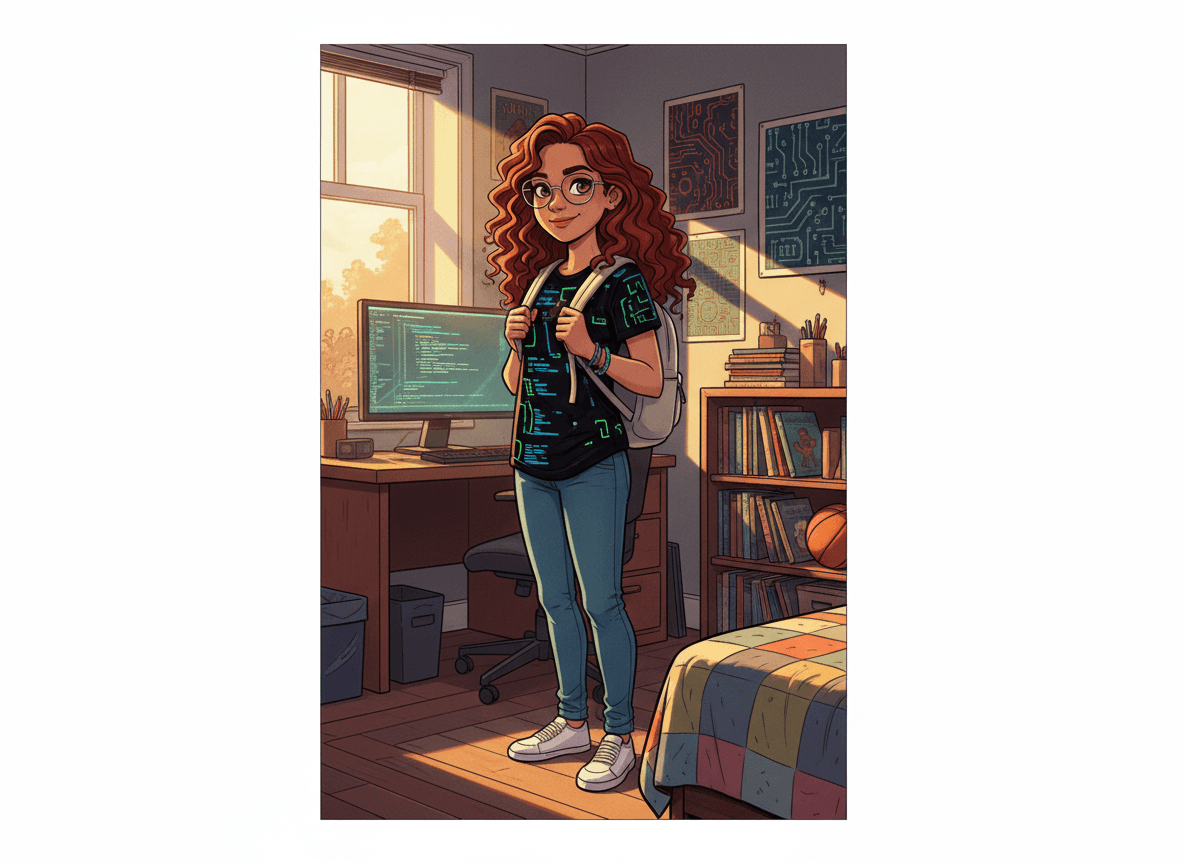
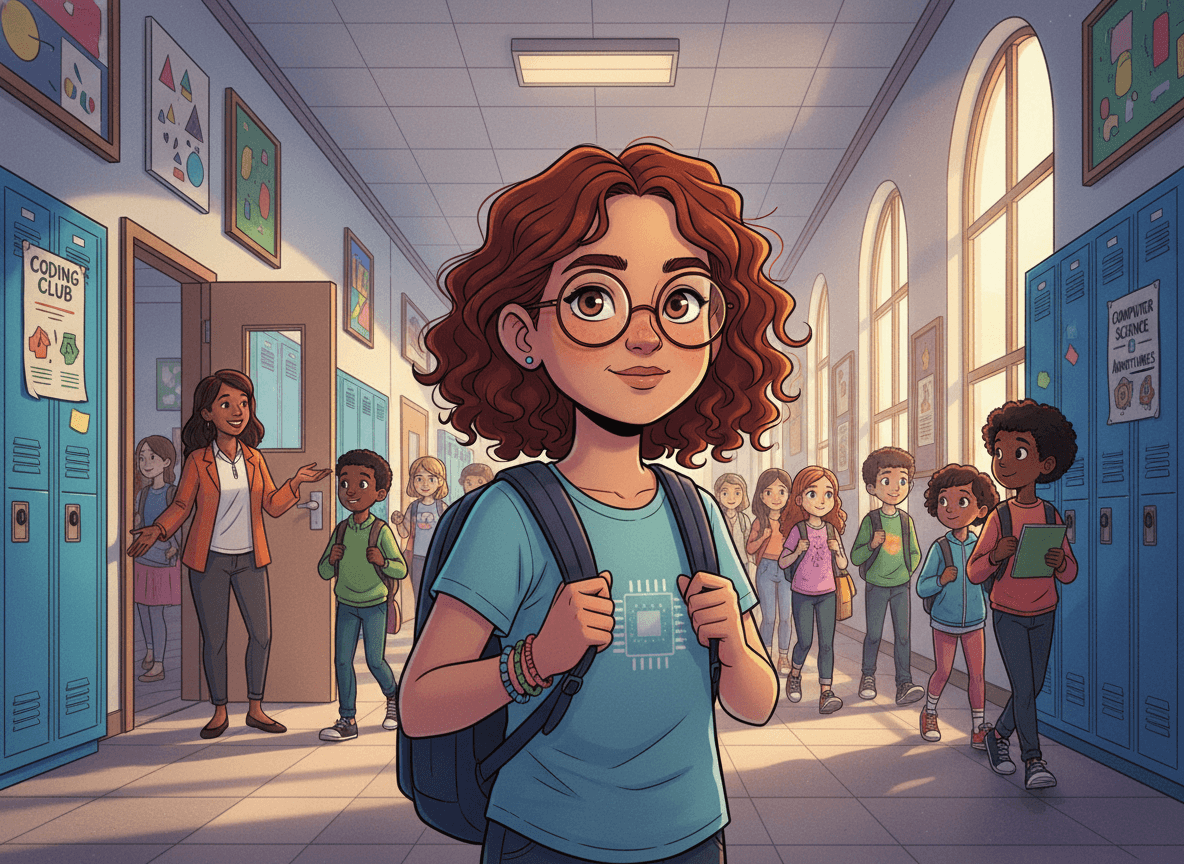
Starting a new school or classroom — The biggest transition. "My First Day at New School" addresses exactly this fear, walking your child through arrival, meeting the teacher, finding the classroom, and lunch.
-
Morning routines before school — Many children with ADHD struggle with time awareness and sequencing. "My Morning Routine Before School" breaks this into concrete steps: wake up, eat breakfast, get dressed, pack backpack, leave on time.
-
Lunch and unstructured time — The cafeteria is sensory chaos: noise, crowding, social demands. A story can prepare your child for where to sit, how to open packages, and what to do if they feel overwhelmed.
-
Recess and playground interaction — Unstructured social time is hardest for many children with autism. Stories can teach turn-taking, joining games, and handling disappointment.
-
Fire drills and emergency procedures — The unexpected loud alarm and rapid evacuation can trigger panic. A story normalizes the alarm sound and explains why everyone leaves the building.
-
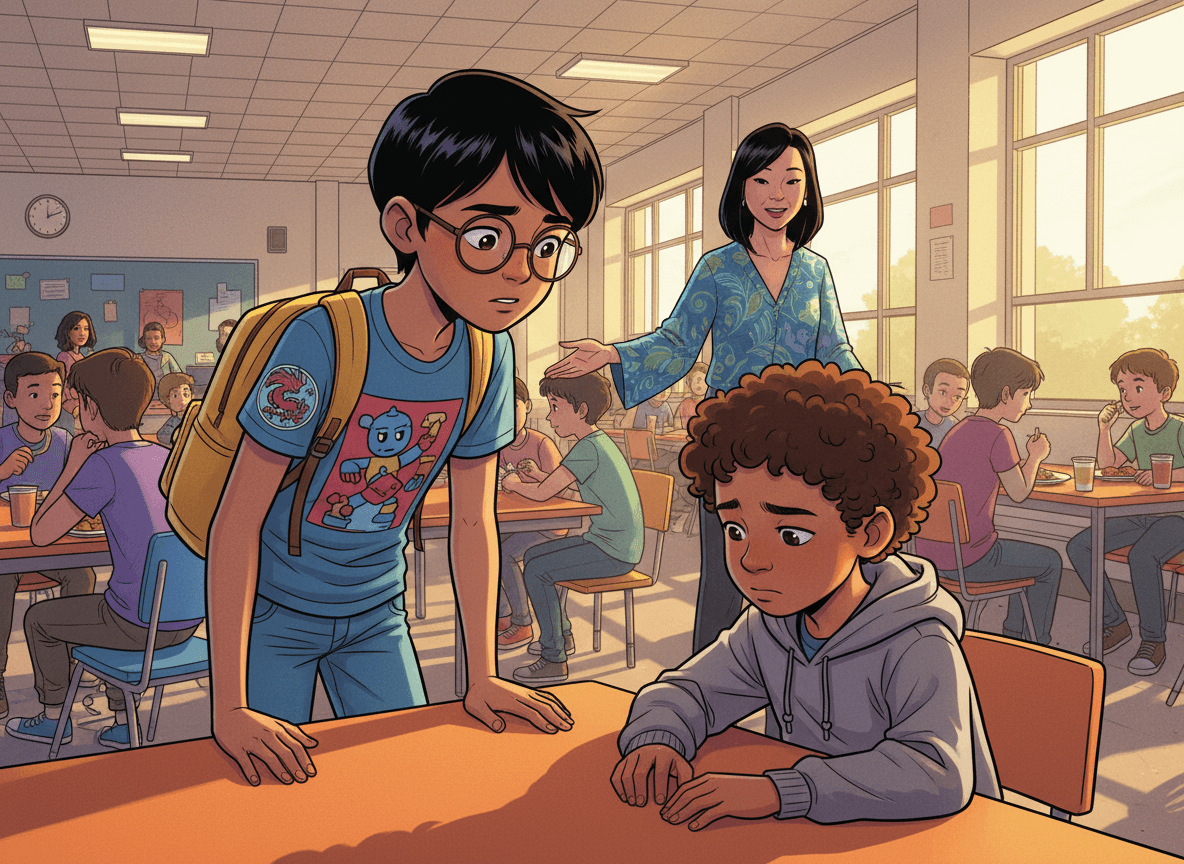
Asking for help — Many children with ADHD and autism struggle to self-advocate. "Asking for Help Shows Strength" reframes asking for help as smart and brave, not weak.
-
Riding the school bus — Crowded, loud, with an unfamiliar adult. A story can prepare your child for the route, bus stop behavior, and what to expect.
-
Classroom rules and expectations — Teachers often assume children understand implicit rules (raising your hand, staying seated, waiting your turn). A story makes these explicit.
How Should You Personalize a Social Story for Your Child?
Personalization—using your child's name, their specific school, their actual teacher's name, and details from their daily life—increases effectiveness by 40-60% compared to generic stories. A generic story about "a student" feels abstract. A story about your child, in their classroom, with their teacher feels real and relevant.
Steps to personalize a school social story:
-
Include your child's name and perspective — Start with "I am [child's name]" or "My name is [name]." This creates ownership and relevance.
-
Use your child's actual school and classroom details — Mention the real teacher's name, classroom number, lunch room layout, or bus number. Specificity matters enormously.
-
Add sensory details your child finds challenging — If your child is sensitive to noise, mention "the lunch room is loud, but I can sit near the quieter corner." If transitions are hard, describe the bell sound and what happens next.
-
Feature your child's interests — If your child loves dinosaurs, a story about "I am learning about dinosaurs in science class" will engage them more than a generic version.
-
Use photos or drawings of your child's actual school — Visual personalization is powerful. Photos of the real bus, classroom, or playground make the story concrete.
-
Adjust the language to match your child's understanding — A 5-year-old needs simpler sentences than a 10-year-old. Use words your child already knows.
Studies on personalized social stories show that children are 2-3 times more likely to remember and apply the lessons when the story features their own name and real-world details.
If you're creating a story from scratch, spend 10 minutes gathering these details: teacher's name, classroom number, what the bus looks like, the lunch room setup, your child's favorite things about school. These small details transform a generic story into a powerful tool.
What's the Most Effective Way to Use Social Stories at School?
Social stories work best when introduced 3-5 days before the situation, read multiple times, and reinforced by both parents and teachers working together. Introducing a story the night before a field trip won't give your child time to mentally rehearse. Introducing it a week before works better.
A research-backed framework for using social stories:
-
Read the story 2-3 times in the days before the situation — Repetition builds familiarity and reduces anxiety. Each reading reinforces the expected sequence.
-
Ask your child simple questions during reading — "What happens next?" or "How does the character feel?" This engages active learning, not passive listening.
-
Connect the story to real life — After reading, say: "This story is about you. On Monday, you'll do exactly this at school."
-
Share the story with your child's teacher — Ask the teacher to reinforce key points or use the story language. When both home and school use the same vocabulary, it reinforces learning.
-
Use the story as a reference after the situation — After the field trip or first day, read the story again and celebrate: "You did everything the story said!"
-
Keep it accessible — Some parents print the story or save it on a tablet so their child can review it independently.
For children with ADHD, visual reminders work particularly well. Consider creating a checklist based on the story ("Wake up → Eat breakfast → Get dressed → Pack backpack → Leave") and posting it in the bathroom or kitchen.
Learn more about best practices in our "How to Use Social Stories Effectively: Best Practices Guide".
How Can You Help Your Child Handle Unexpected Changes at School?
Children with autism and ADHD struggle most with unpredictability, so pairing social stories with flexibility strategies—like visual schedules, advance warnings, and calm-down plans—creates a complete system for handling change. Even with excellent preparation, unexpected things happen: a substitute teacher, a canceled recess, a fire drill scheduled differently.
A story like "When Plans Change" teaches your child that changes happen and provides coping strategies.
Practical strategies to pair with social stories:
-
Create a visual schedule at home that mirrors school — If your child knows the school day sequence (math, snack, recess, lunch, reading), they're less thrown by changes. A visual schedule makes this concrete.
-
Teach a simple calm-down routine — When plans change, your child needs a tool. This might be deep breathing, counting, or stepping away. Practice this at home first.
-
Use "first-then" language — "First we have math (even though it's different today), then we have snack." This acknowledges the change while maintaining structure.
-
Build transition warnings into your child's day — Ask the teacher to give a 5-minute warning before transitions. This reduces surprise and gives your child time to shift gears.
-
Celebrate flexibility — When your child handles a change well, acknowledge it: "You had a substitute teacher today and you kept trying. That shows real strength."
Children with ADHD often respond well to novelty and surprise when framed positively. A story that normalizes change and presents it as manageable helps shift their mindset from "This is scary" to "This is different, but I can handle it."
How Do You Build Your Child's Independence in Asking for Help?
Self-advocacy—knowing when to ask for help and how to do it—is one of the most valuable skills a child can learn, yet it doesn't come naturally to many children with autism and ADHD. Many children either never ask for help (and struggle silently) or ask for help too frequently (and become dependent). Social stories can teach the middle ground: asking for help when genuinely needed and trying independently first.
"Asking for Help Shows Strength" and "Asking Mr. Patel for Help" both model this skill with specific language your child can use.
Steps to teach help-seeking:
-
Use clear, specific language in the story — Instead of vague "ask for help," teach exact words: "I can say, 'I need help with this math problem. Can you show me?'"
-
Practice role-play at home — You be the teacher, your child practices asking. This builds confidence before real situations.
-
Celebrate small moments of asking — When your child asks for help, respond with enthusiasm: "You asked for help! That's exactly what strong learners do."
-
Distinguish between help-seeking and avoiding — A child with ADHD might ask for help to escape a task. Gently redirect: "Let's try the first problem together, then I'll help if you're stuck."
-
Teach your child to ask a peer first — Social skills improve when children ask classmates before adults. A story like "When My Friend Needs Help" models peer collaboration.
Children with anxiety often need explicit permission to ask for help. A story that normalizes help-seeking and frames it as strength, not weakness, can be transformative.
Frequently Asked Questions
How long should a school social story be?
Most effective school social stories are 150-300 words—short enough to read in 3-5 minutes, long enough to include important details. For younger children (ages 4-6), aim for 100-150 words with simple sentences and pictures. For older children (ages 7+), 200-300 words works better. The goal is engagement, not length. If your child stops listening, the story is too long.
Should I create my own social story or use a template?
Both work, but personalization matters most. A template you customize with your child's name, school, and details is often more effective than a generic story. If you're short on time, start with a template and add personal details. If you want maximum impact, create a story from scratch using your child's perspective and real-world details. Many parents find that the 10-15 minutes spent personalizing a story saves hours of school-related stress later.
What if my child refuses to read the social story?
Resistance is common, especially with older children or children with ADHD who struggle with focus. Try these approaches: (1) Read it as a quick bedtime story, not a lesson. (2) Use a different format—audio version, comic-style, animated if possible. (3) Let your child help create the story; ownership increases engagement. (4) Read it in short chunks over several days instead of all at once. (5) Pair it with a reward or preferred activity. If resistance continues, ask your child what format would work better and adapt.
How do I know if a social story is actually working?
Look for these signs of effectiveness: (1) Your child mentions details from the story unprompted ("Remember in the story, the bell rings?"). (2) Anxiety decreases in the target situation. (3) Your child's behavior aligns more closely with the story's expectations. (4) Your child asks to read the story again. (5) Teachers report improved behavior or confidence. If you don't see changes after 2-3 weeks of consistent use, adjust the story—it might need more personalization, simpler language, or focus on different details. Not every story works for every child, and that's okay.
School is a complex, sensory-rich, socially demanding environment. For children with autism, ADHD, and anxiety, social stories offer a powerful tool: a way to rehearse, predict, and feel confident in situations that might otherwise feel overwhelming.
The beauty of social stories is that they meet your child where they are. They don't demand compliance or mask struggles. Instead, they say: "Here's what will happen, here's how you might feel, and here's what you can do." That message—of predictability and competence—can transform a child's school experience.
If you'd like a personalized version of any of these school situations for your child, you can create one free at GrowTale. Our app lets you customize stories with your child's name, school, and specific challenges in just a few minutes. Your child deserves to feel confident and capable at school—and the right story can help make that happen.