
My First Day at New School
Amara prepares for her first day at a new school, exploring what to expect and building confidence in her ability to navigate the new environment and meet new people.
Free to read and print — no account required
Want this story in your inbox?
We’ll email you the link so you can read and print it whenever you need it. Free, and no account required.
One email with your story. We won’t pass your address on, and you can unsubscribe any time.







Read the Story
10 pages · 8 min read read
Show text
Read the Story
10 pages · 8 min read read
Today is my first day at Westbrook Middle School, and I can feel butterflies in my stomach. A new school means new hallways, new classrooms, and new people to meet. Even though I'm feeling uncertain about what to expect, I know that new beginnings can be interesting experiences. I've done hard things before, and I can do this too.
Last week, Mom helped me find Westbrook's website so I could see pictures of the building. We looked at the layout together—the main office near the entrance, the hallways with lockers, the cafeteria, and the computer lab where the coding club meets. Understanding the physical layout of the school helps my brain feel more prepared, because I know where things are located and what to expect.
I've prepared a few things to help me on my first day. I wrote down my class schedule and the location of each classroom so I don't feel lost between periods. I also packed my backpack with extra pencils, a notebook, and a water bottle. When I prepare ahead of time, I feel more confident walking into new situations.
When I arrive at school, I notice there are other students who are also new. Some students look uncertain, others look excited, and some look calm. Realizing that many kids share the feeling of being new helps me understand that I'm not the only person experiencing this transition. Many students go through their first days at new schools, and they find their way.
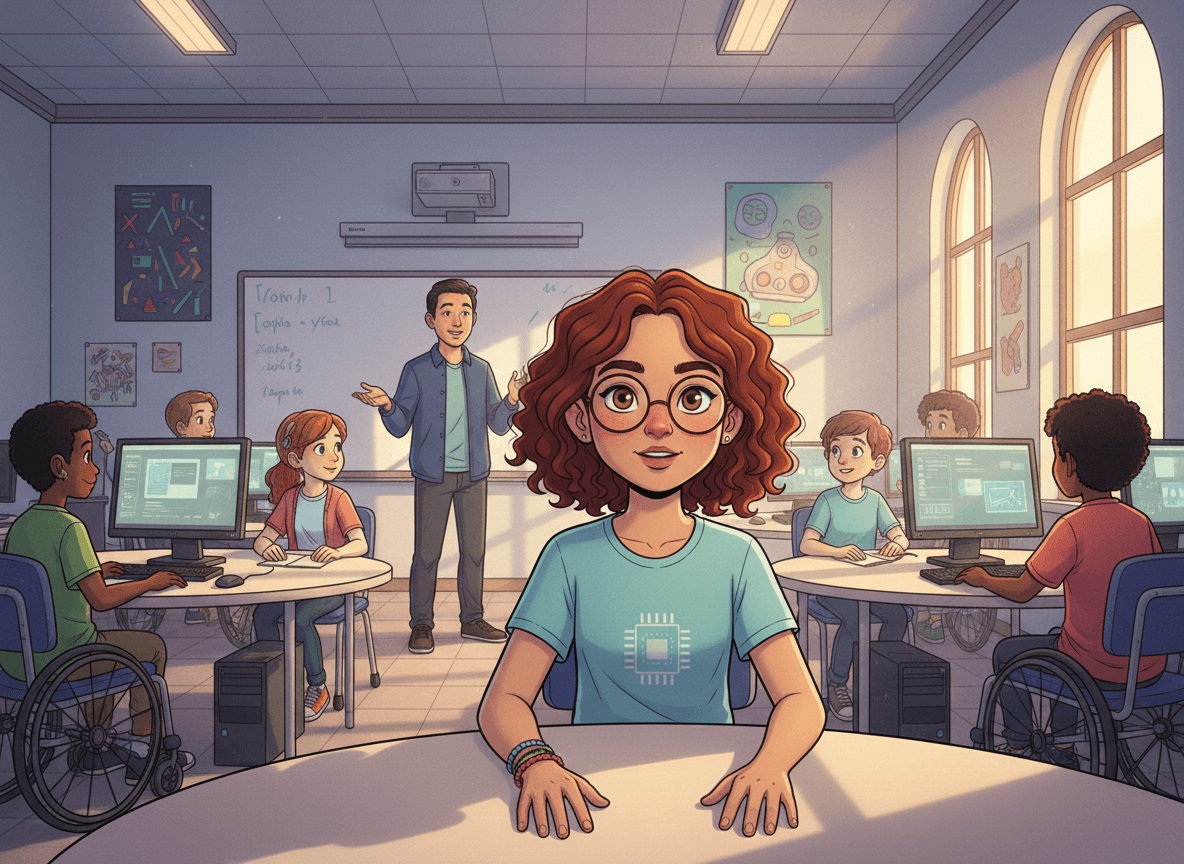
My first class is Computer Science, and I recognize this as a strength of mine. The teacher, Mr. Chen, greets the class warmly and explains that everyone is new to this particular class, regardless of whether they're new to the school. This means that all of us are learning together. When a whole group of people is beginning something new at the same time, it creates an equal starting point for everyone.
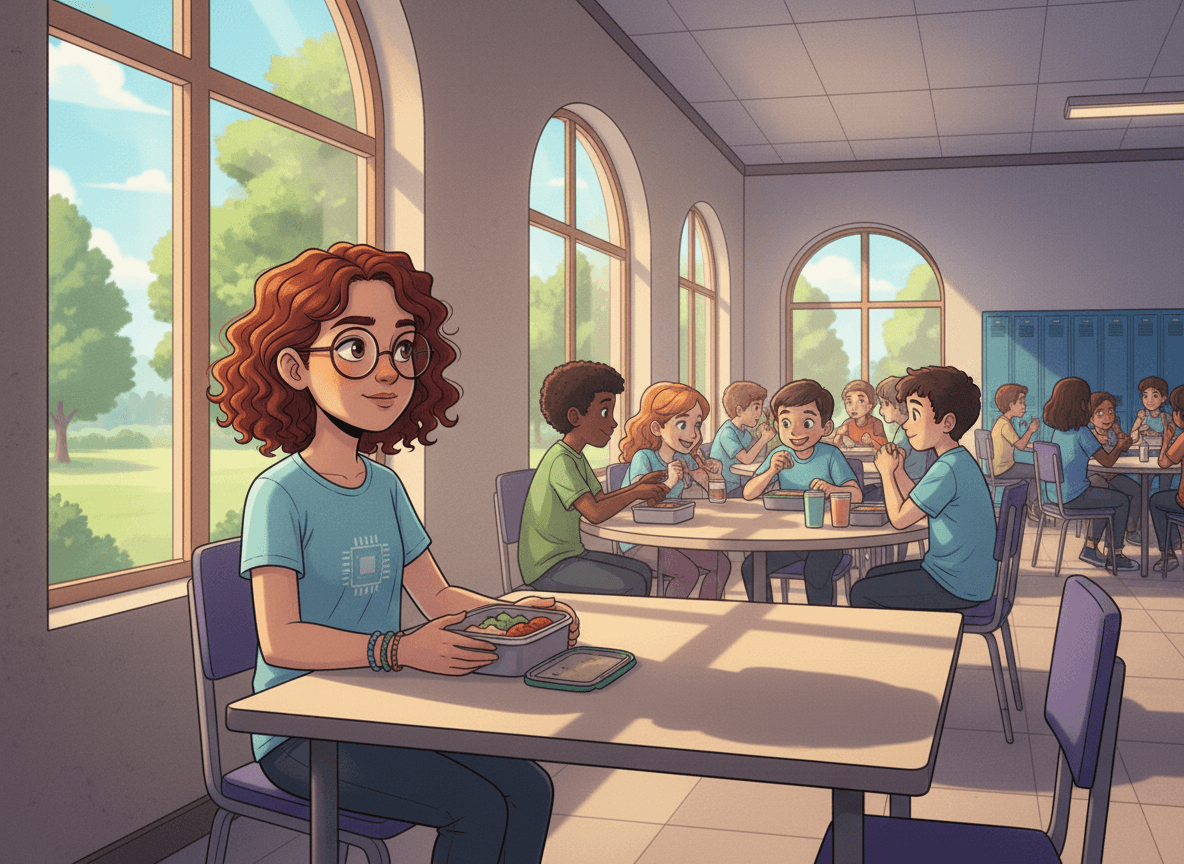
During lunch, I notice the cafeteria is loud and crowded. This sensory experience—so many sounds and people in one space—feels overwhelming for a moment. I remember that I can choose where to sit and how to manage this feeling. I find a quieter corner near the windows where fewer people are sitting, and the noise feels more manageable from there.
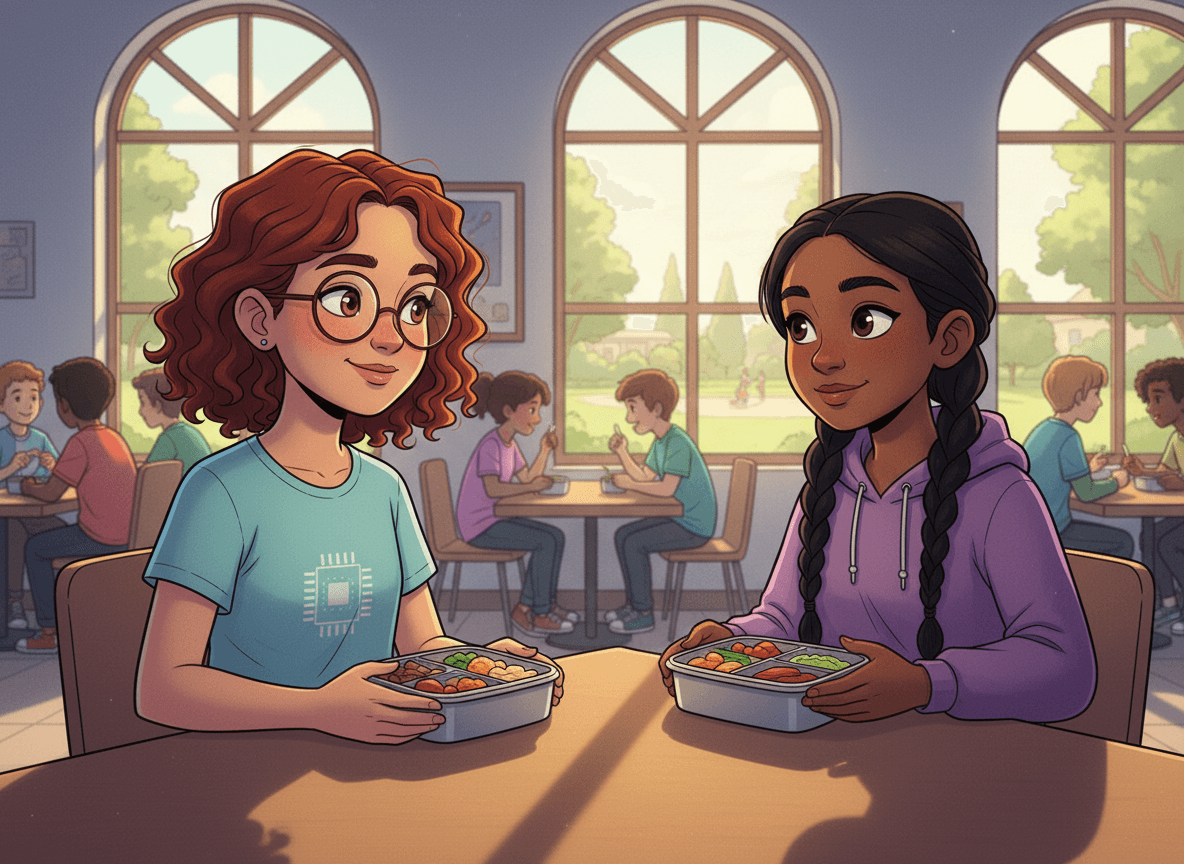
A girl named Sofia sits down at my table and asks if she can join me. Sofia is also new to Westbrook and transferred from another school across town. We talk about our morning classes, and she mentions she's interested in graphic design. I realize that having something in common with another person makes conversation easier. We discover we both have lunch during the same period, which means we might see each other again tomorrow.
By the end of the day, I've navigated the hallways, found my classrooms, met a new person, and learned something in each class. I'm tired, because new experiences require mental energy, but I also feel a sense of accomplishment. My first day at Westbrook Middle School is complete, and I managed it well. Tomorrow might feel easier because I'll understand the routine better.
When I arrive home, I take a few moments to sit quietly before doing anything else. Processing a full day of new information and new people requires time for my brain to settle. I notice what went well: I found all my classrooms, I participated in one discussion, and I made a connection with Sofia. I also notice what felt challenging: the crowded cafeteria and not knowing where the art hallway was located. Both what went well and what was difficult are normal parts of starting a new school.
I realize that starting a new school is a transition that many people experience. It's normal to feel uncertain at first, and it's also normal for those feelings to change as I become more familiar with the environment and the people. Each day will bring new information, and my comfort level will likely increase over time. I can handle this challenge, and I'm proud of myself for completing my first day.
Social Story Methodology
Why This Story Works
This story walks through a real first day at a specific school, teaching children that transitions are manageable when broken into concrete steps. By naming the sensory challenge (the loud cafeteria), showing how to problem-solve it (moving to a quieter corner), and celebrating small wins (finding classrooms, making a friend), the story follows Carol Gray's approach of making the invisible visible—showing not just what happens, but what it *feels* like and what to do about it.
Story Structure
How It's Written
Sentence Types
Voice & Perspective
Story Structure
Practical Guidance
Ways to Use This Story
Visit Westbrook's Website Together
Create a Checklist Like Page 3
Scout the Cafeteria Beforehand
Debrief Using Page 9's Reflection
Acknowledge the Mental Energy Required
Want this story made just for your child?
Create a version with your child's name, appearance, and the specific details only they face — in minutes.
from $2.99 · no subscription · pay per story
More Transitions Stories
Free to read and print

My New Grade and Teacher
Ethan moves to a new grade and meets his new teacher, Ms. Davis. This story helps him understand the changes ahead, learn a specific coping strategy for transition anxiety, and discover that new beginnings can be exciting.
Amir's First Day at Preschool
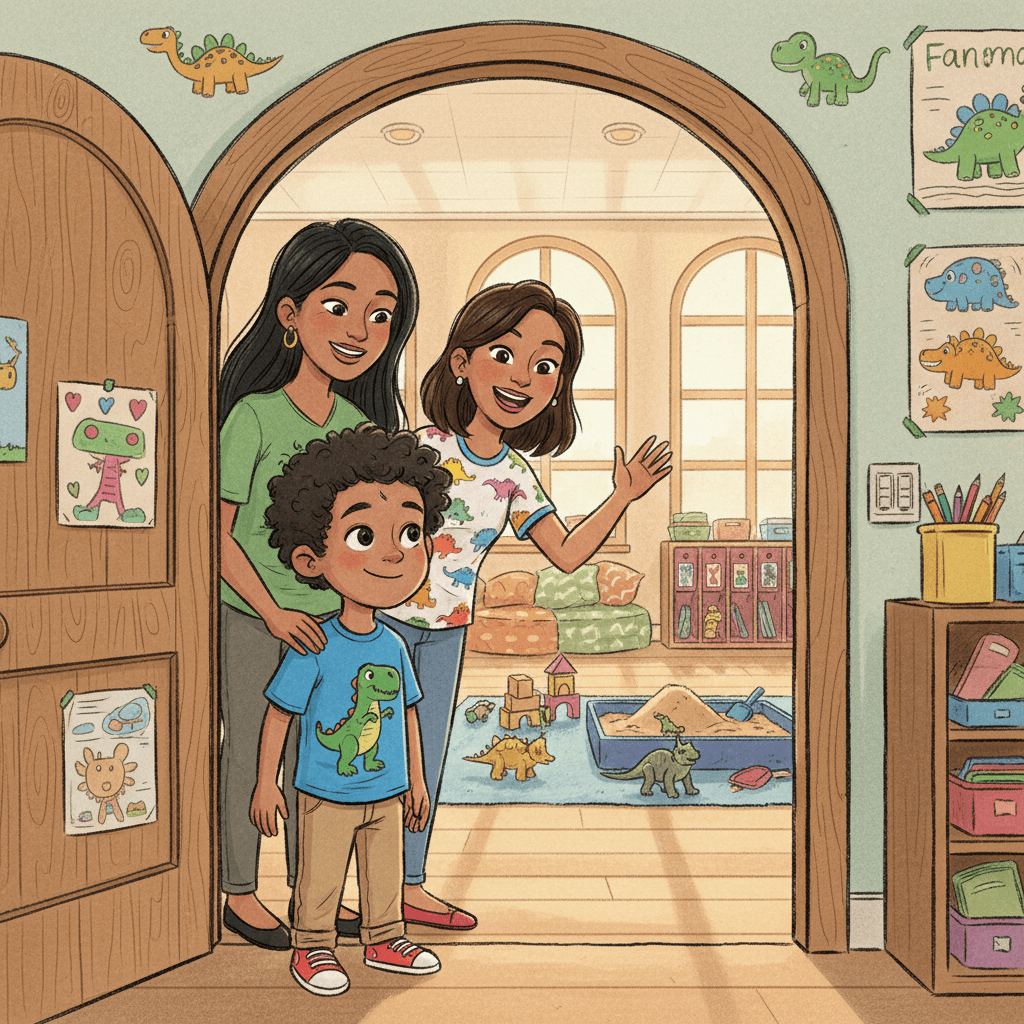
Amir starts preschool and discovers all the exciting things he can do in his new classroom. This story helps him feel ready and confident about his first day, and teaches him a coping strategy to use when he feels worried.

My New Daily Schedule
Kai learns to adapt to schedule changes and discovers that routines can be flexible while still helping them stay organized and on track with what matters most.