Waiting My Turn in Line
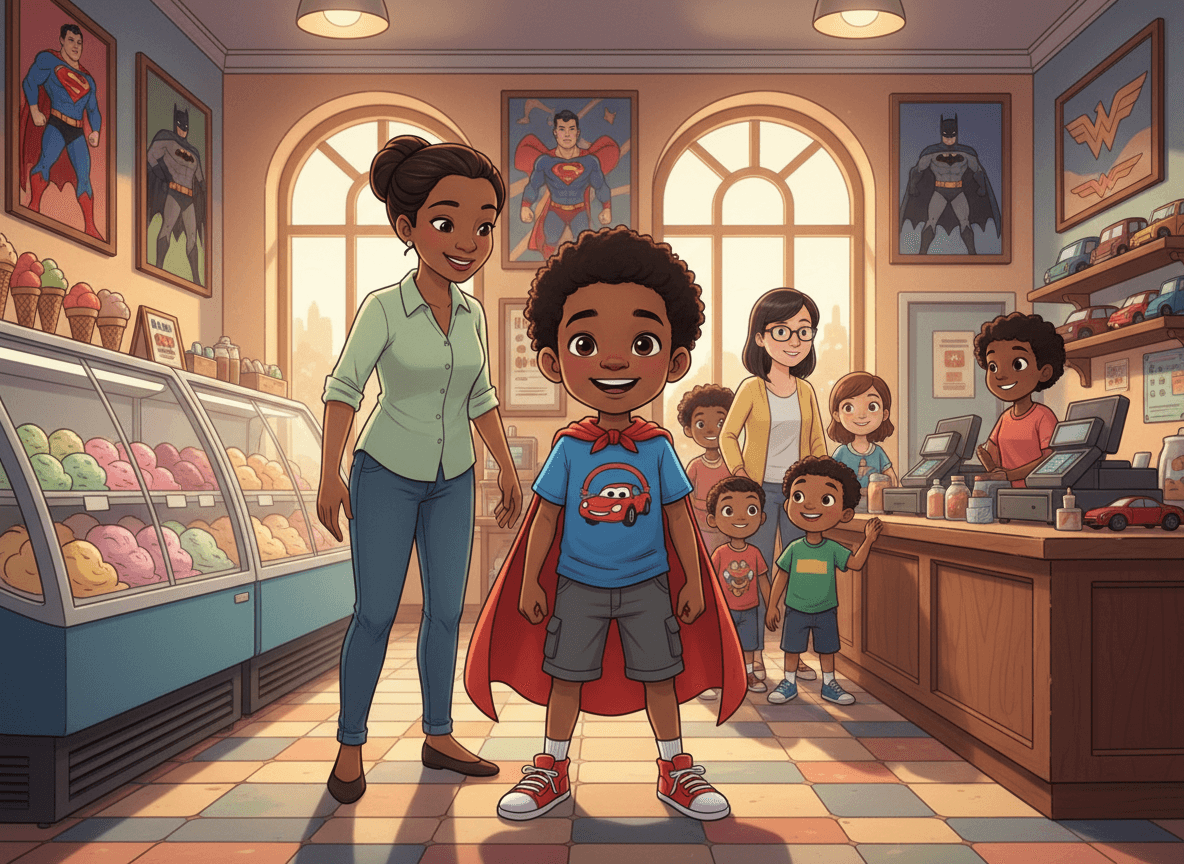
Marcus learns that waiting in line helps everyone get a turn, and discovers strategies to stay calm while waiting. Set at a superhero-themed ice cream shop, this story shows Marcus practicing patience and seeing why lines work.
Free to read and print — no account required

Read the Story
6 pages · 5 min read read
Show text
Read the Story
6 pages · 5 min read read
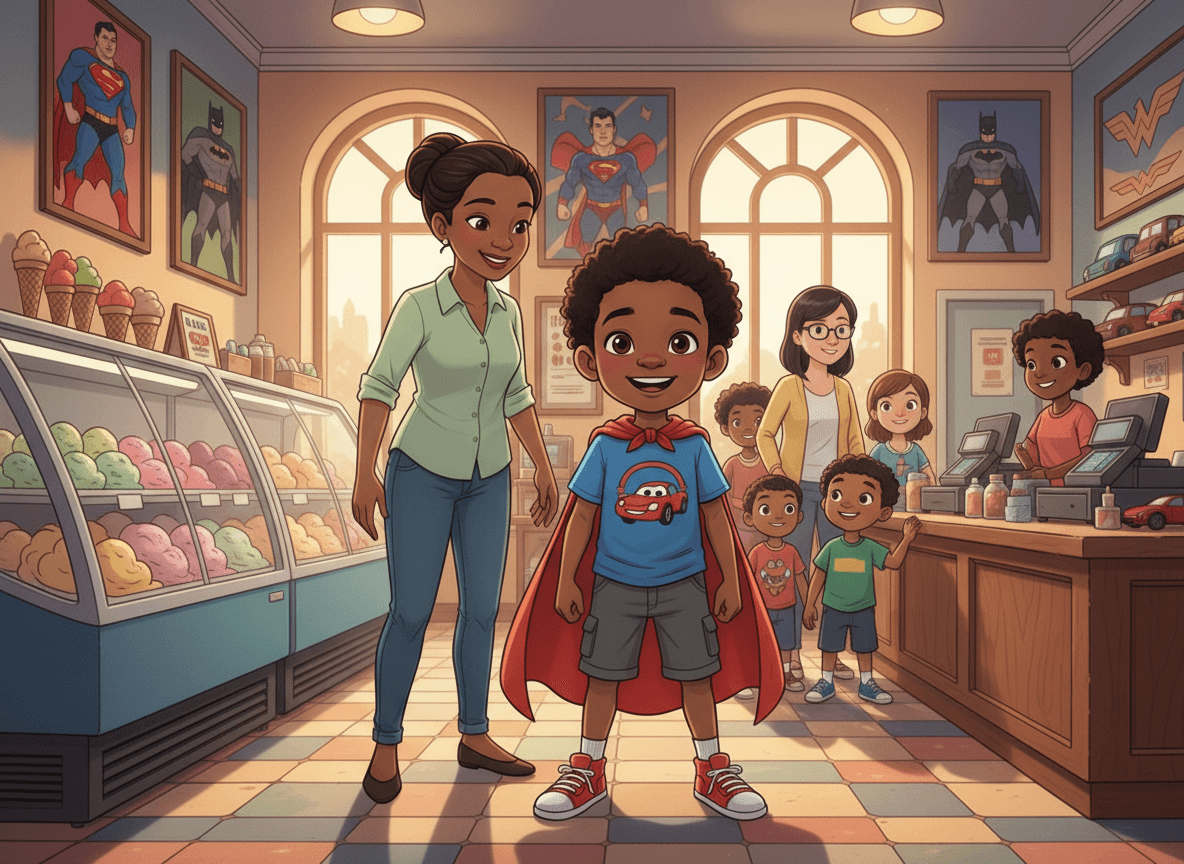
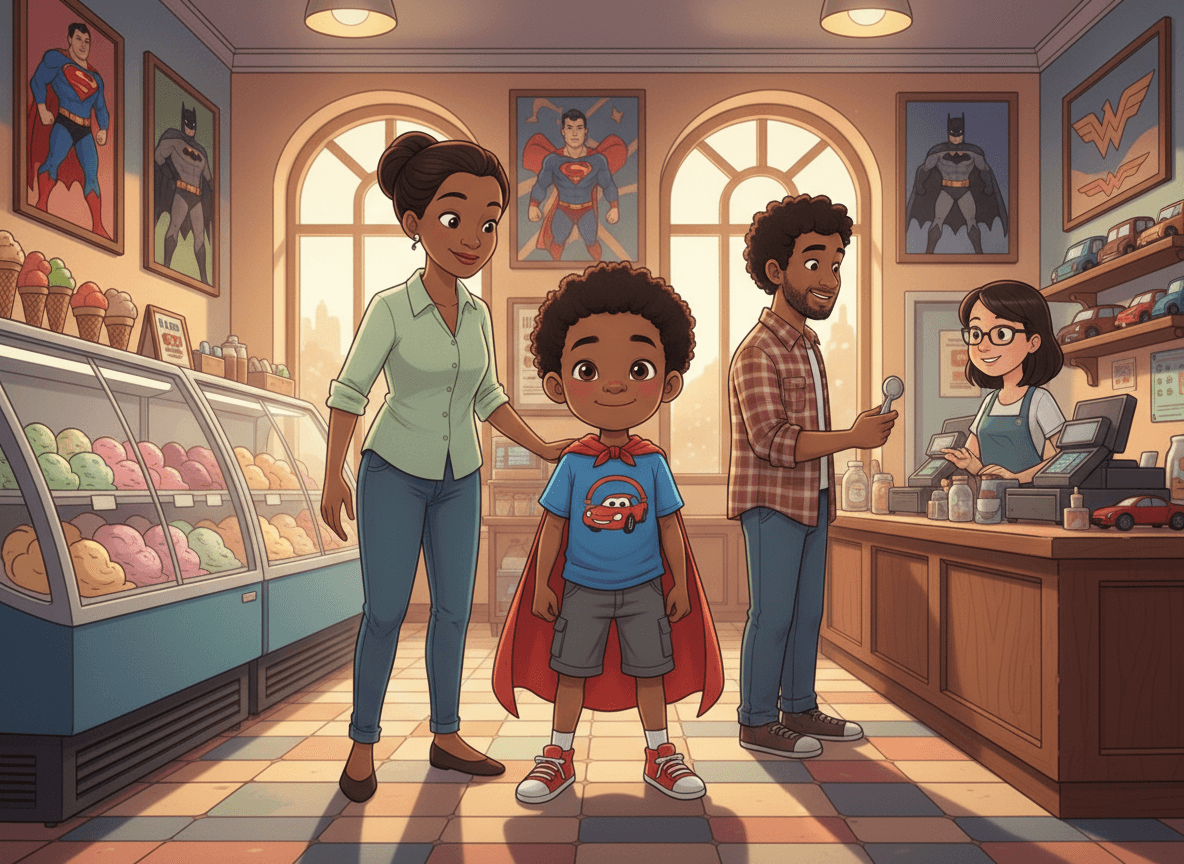
Today Mom and I are going to the Superhero Ice Cream Shop. I can see the colorful ice cream flavors through the window, and I really want to get a scoop. But when we walk inside, I see there are lots of people waiting in line before us.
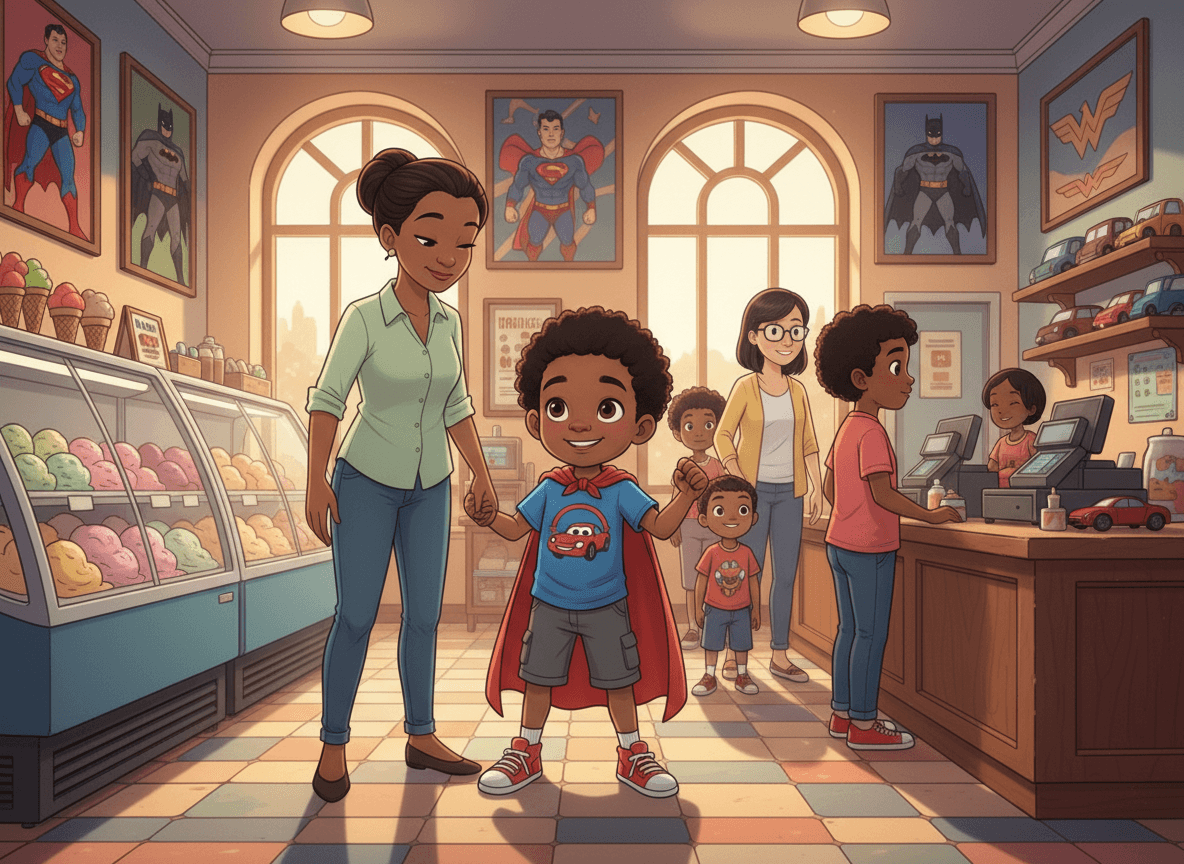
I want to run straight to the counter and order my ice cream right now. My feet feel wiggly and my hands want to move fast. Mom takes my hand and explains that we need to wait in line because everyone gets a turn, and my turn is coming soon.
Mom shows me a trick to help me wait. She says, 'Let's count the superheroes on the wall while we stand here.' I look around and start counting the Superman poster, the Batman poster, and the Wonder Woman poster. Counting helps my brain stay busy while we wait.
We move forward in the line. Now there is only one person ahead of us. I can see the ice cream flavors more clearly—there is strawberry, chocolate, and vanilla. I start thinking about which flavor I want because my brain is thinking about the choice instead of rushing.
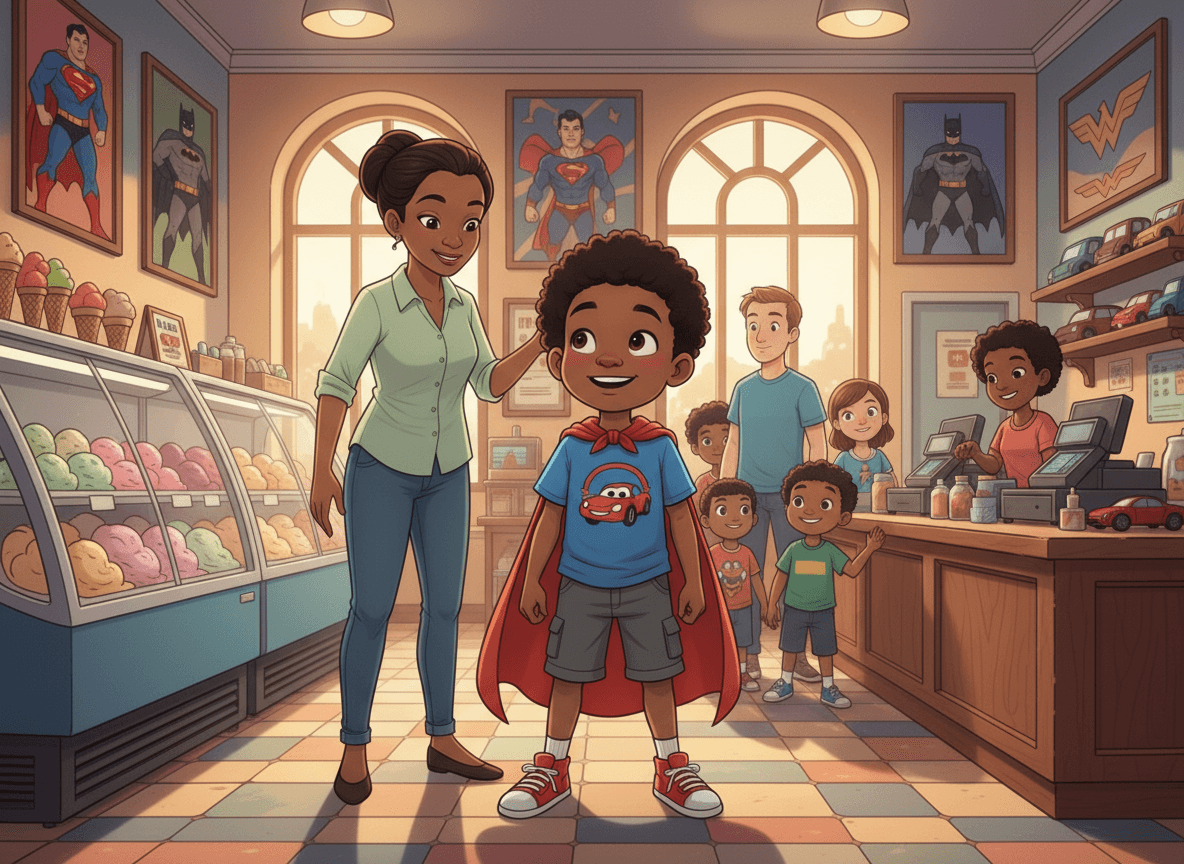
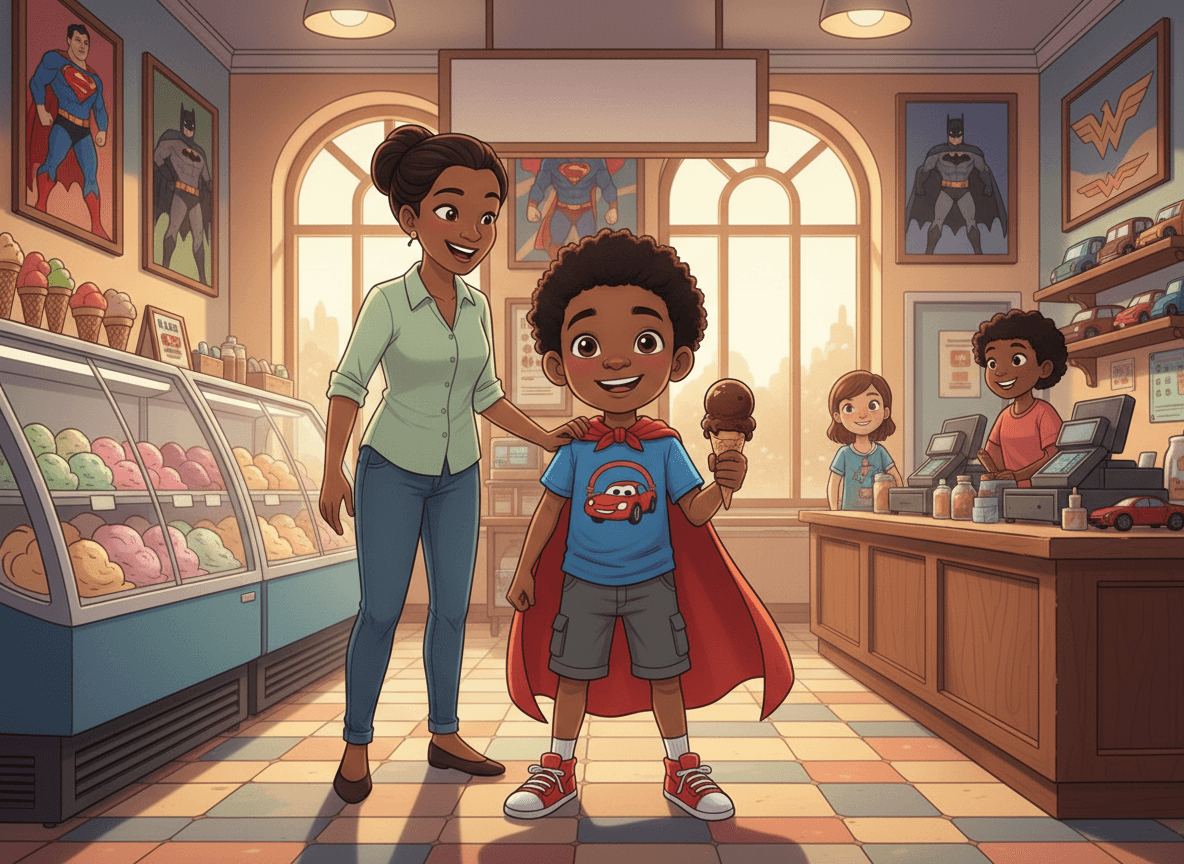
The person ahead of us gets their ice cream and steps away. Now it is my turn! I walk up to the counter with Mom. The worker smiles and asks me what flavor I want. I point to the chocolate ice cream because I waited patiently and now my turn came.
I hold my cold chocolate ice cream cone in my hand. It feels smooth and cold. Mom says, 'You waited so nicely in line, Marcus. You are a patient superhero.' I smile because waiting my turn helped everyone in the shop get their ice cream, and now I have mine too.
Social Story Methodology
Why This Story Works
The ice cream shop scenario in 'Waiting My Turn in Line' directly addresses the sensory and impulse challenges children with ADHD and autism face in real-world waiting situations. By pairing the concrete, motivating reward (chocolate ice cream) with Carol Gray's descriptive approach to internal states ('My feet feel wiggly and my hands want to move fast'), the story validates the child's actual experience while teaching a regulated coping strategy. The progression from overwhelming impulse to successful self-management through a specific, teachable distraction technique (counting superheroes) gives children a replicable tool they can use in similar high-stakes situations.
Story Structure
How It's Written
Sentence Types
Voice & Perspective
Story Structure
Practical Guidance
Ways to Use This Story
Practice Waiting at Home First
Create Your Child's Distraction Menu
Read Before Visiting Real Locations
Take Photos of Your Waiting Spots
Use the 'Patient Superhero' Language
Want this story made just for your child?
Create a version with your child's name, appearance, and the specific details only they face — in minutes.
from $2.99 · no subscription · pay per story
More Social Skills Stories
Free to read and print

When Friends Play Without Me
Kai feels left out when friends start playing a game without including them, and learns how to join in and make new connections.

Taking Turns With Friends
Priya learns that taking turns and sharing toys with classmates helps everyone have fun together and makes friendships stronger.
Respect and Manners in Action
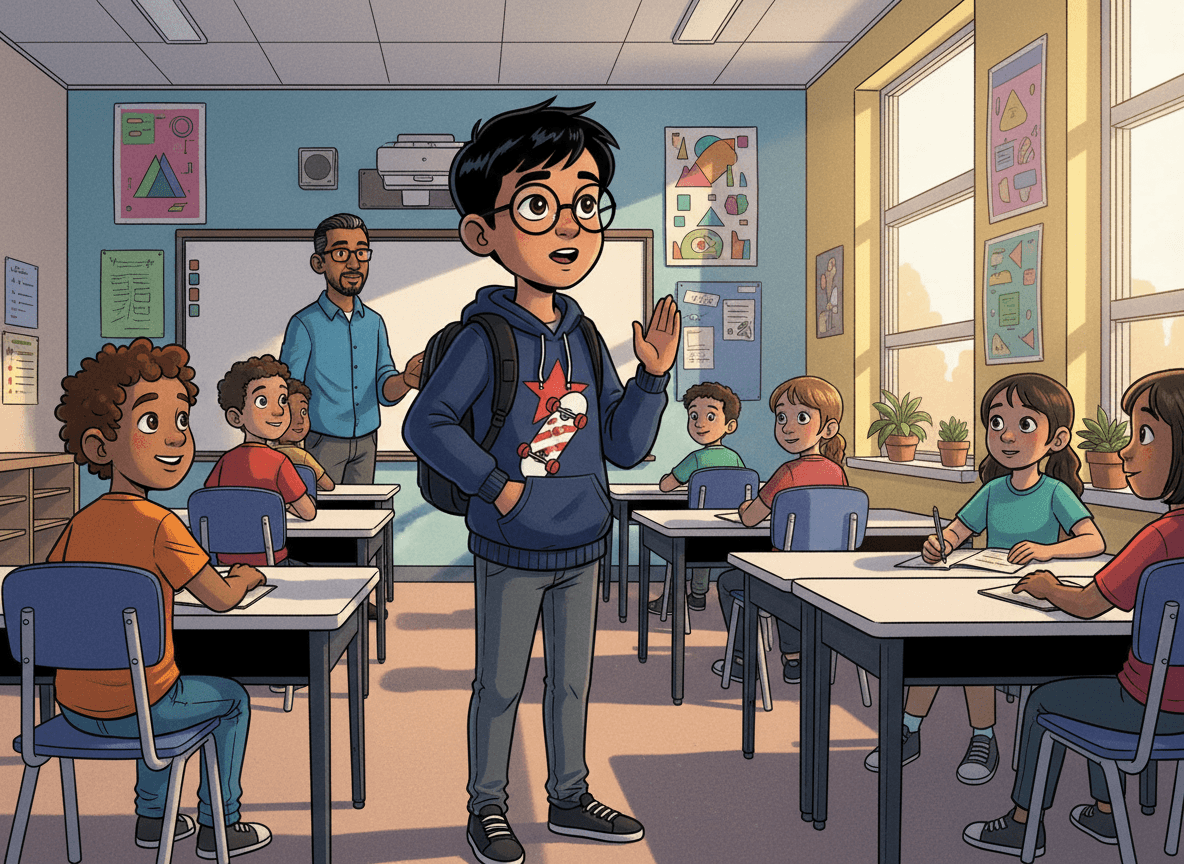
Kai learns how good manners and respectful communication help build stronger friendships and positive relationships with peers and adults. This story explores the 'why' behind courtesy and shows how these skills connect to Kai's interests.