Taking Turns With Friends
Priya learns that taking turns and sharing toys with classmates helps everyone have fun together and makes friendships stronger.
Free to read and print — no account required
Read the Story
8 pages · 6 min read read
Show text
Read the Story
8 pages · 6 min read read
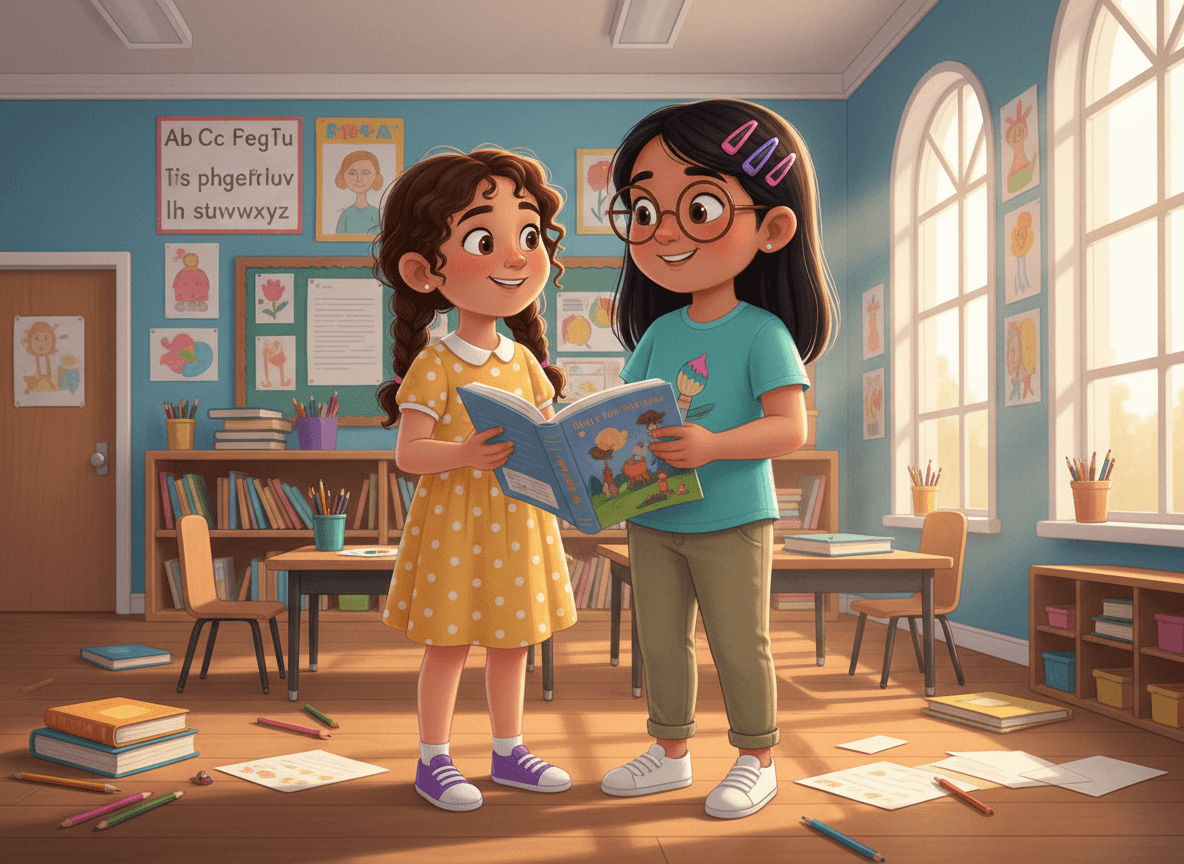
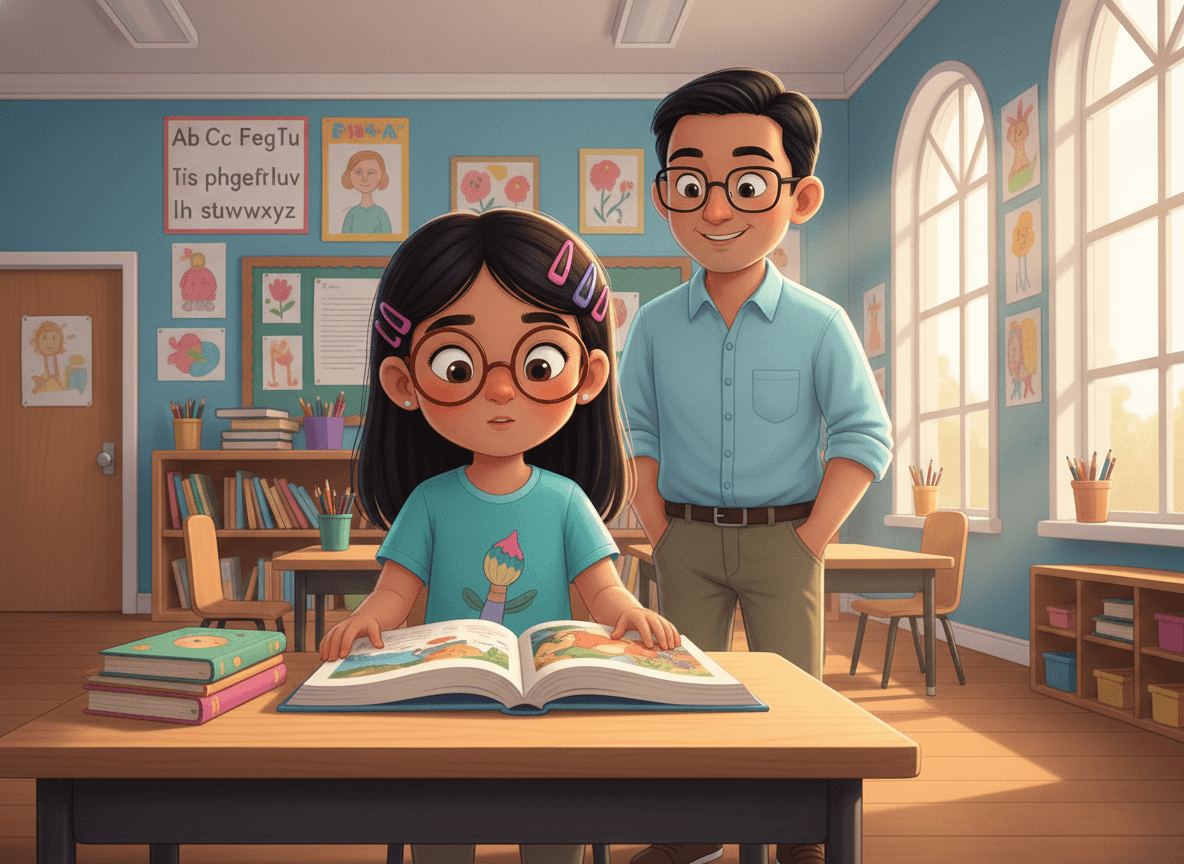
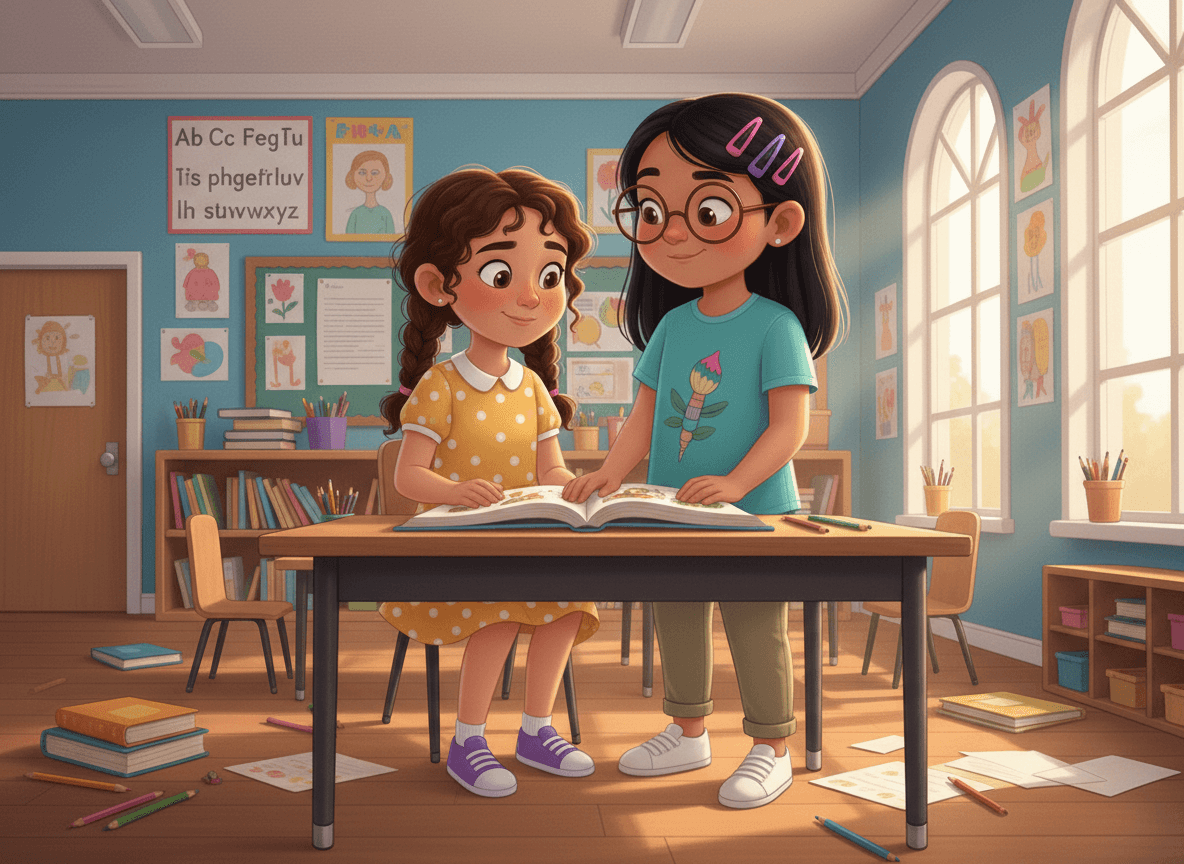
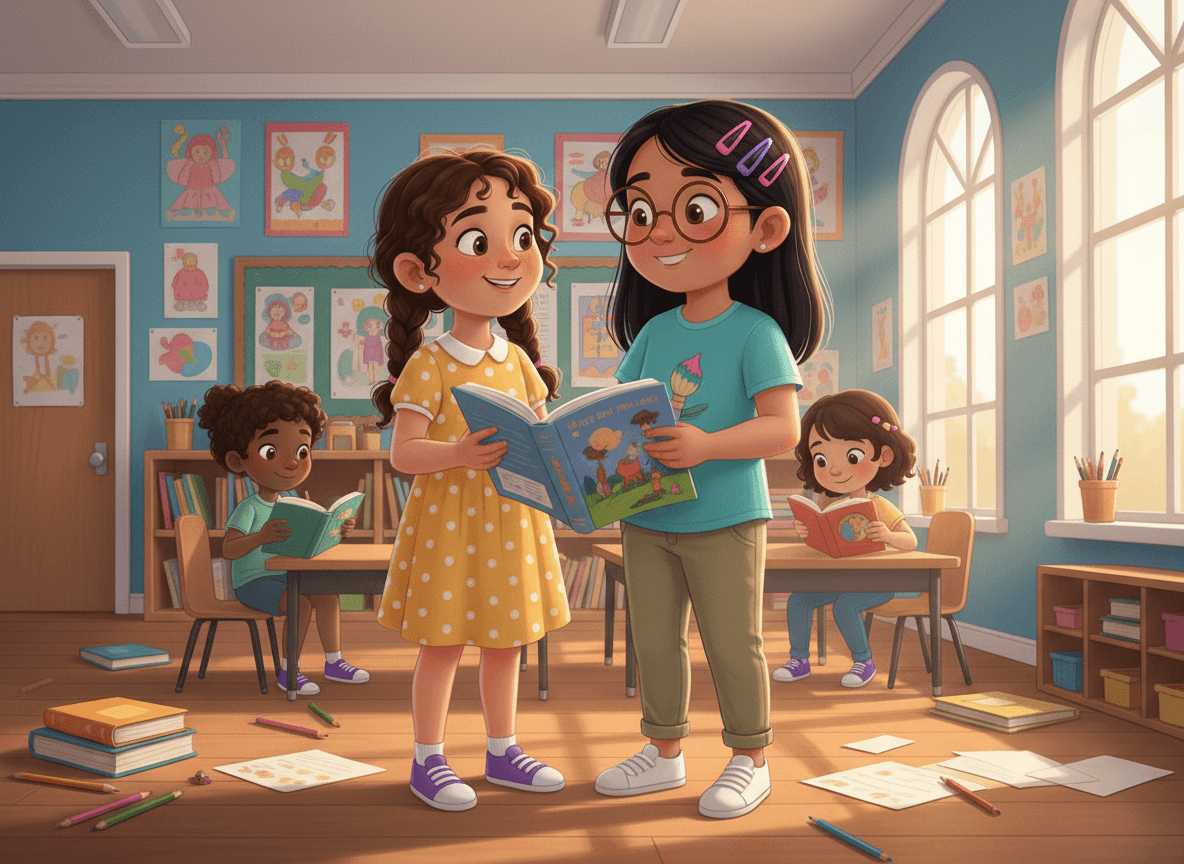
My name is Priya, and I love reading chapter books. At school, I get excited when it's time to share books with my classmates. Today, my teacher Mr. Chen brought a new book with adventure stories for our class to read together.
My classmate Maya comes over and points to the book. 'Can I read that with you, Priya?' she asks. I want to keep reading by myself because I like to read the whole story without stopping. I'm not sure how to share the book.
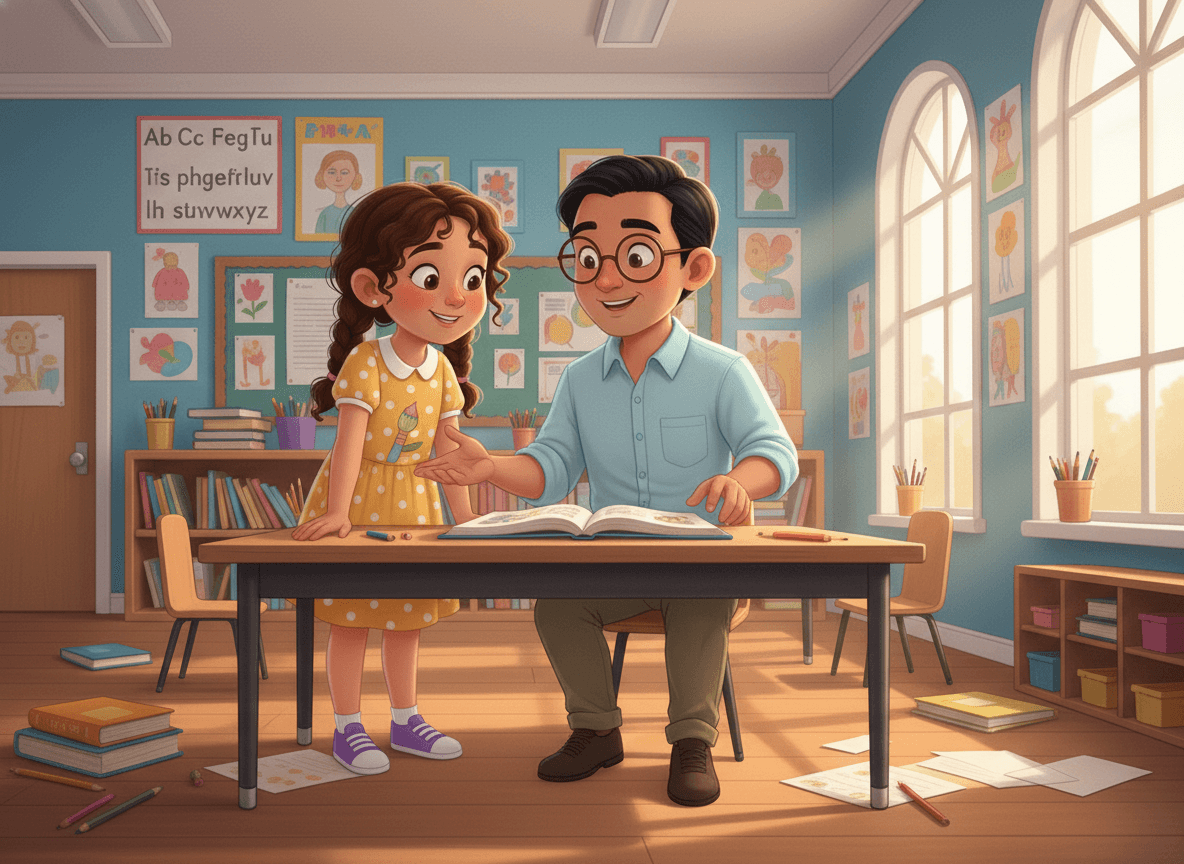
Mr. Chen comes over and sits with us. 'When friends share, everyone gets to enjoy something special,' he explains. 'When you take turns, Maya gets to read pages with you, and you both get to share the exciting story together.'
I understand now. Sharing means that Maya and I both get to experience the adventure in the story. The book isn't less fun when someone reads it with me—it's actually more fun because I have someone to share it with.
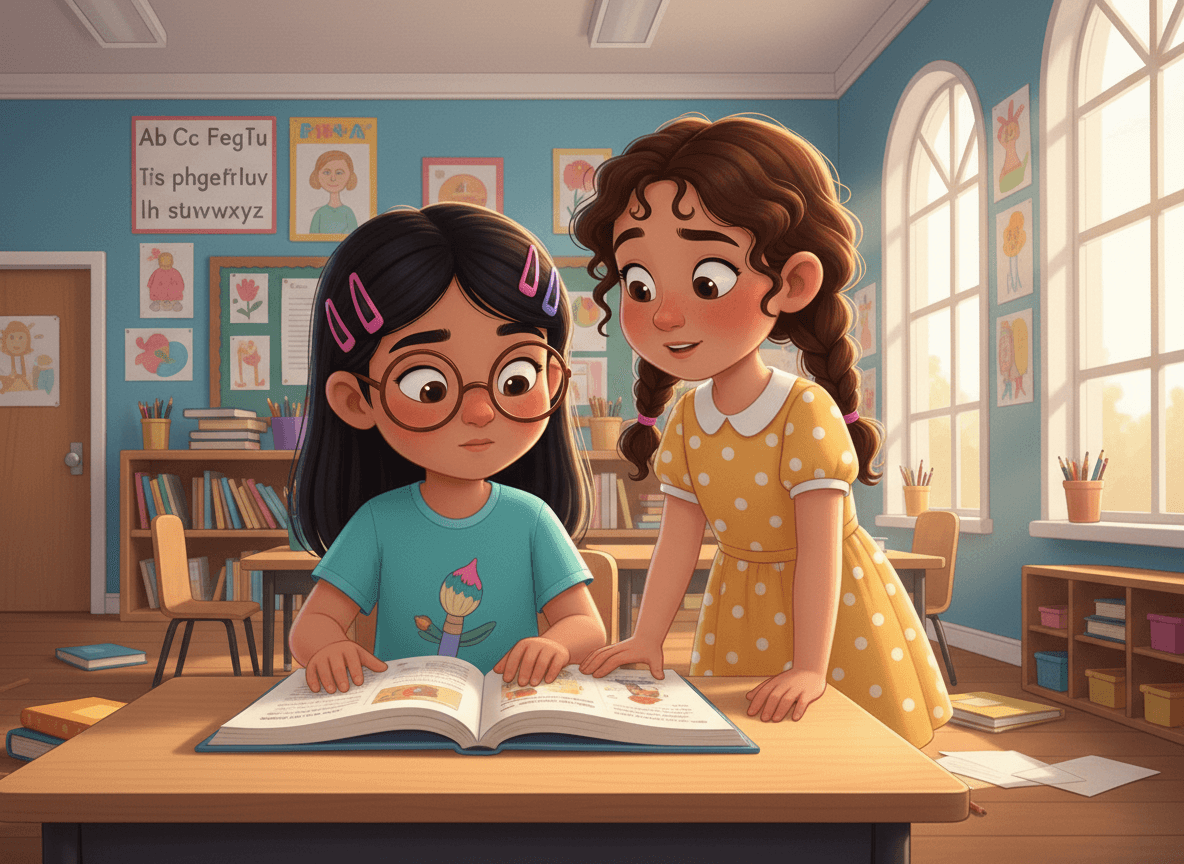
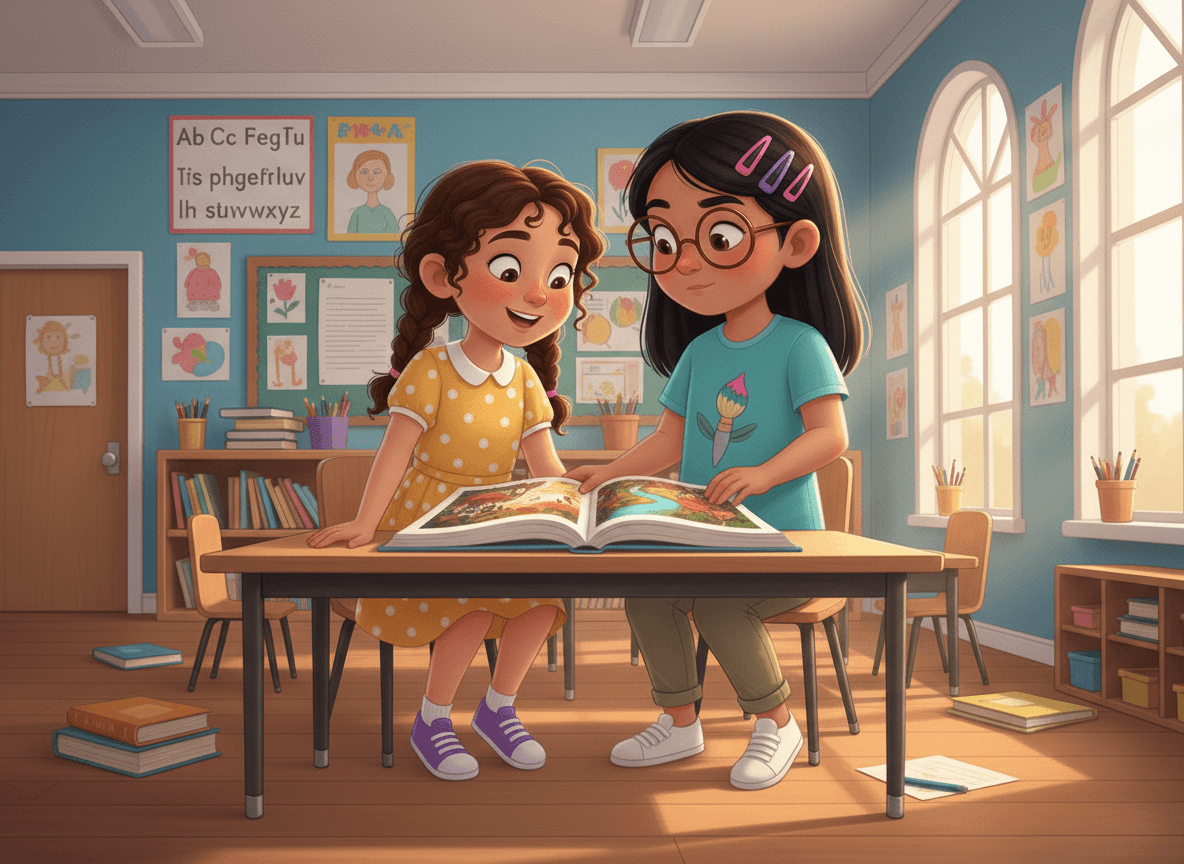
We decide to take turns reading pages out loud to each other. Maya reads the first page, and I listen carefully. When she finishes, I read the next page. We both want to hear what happens next in the story.
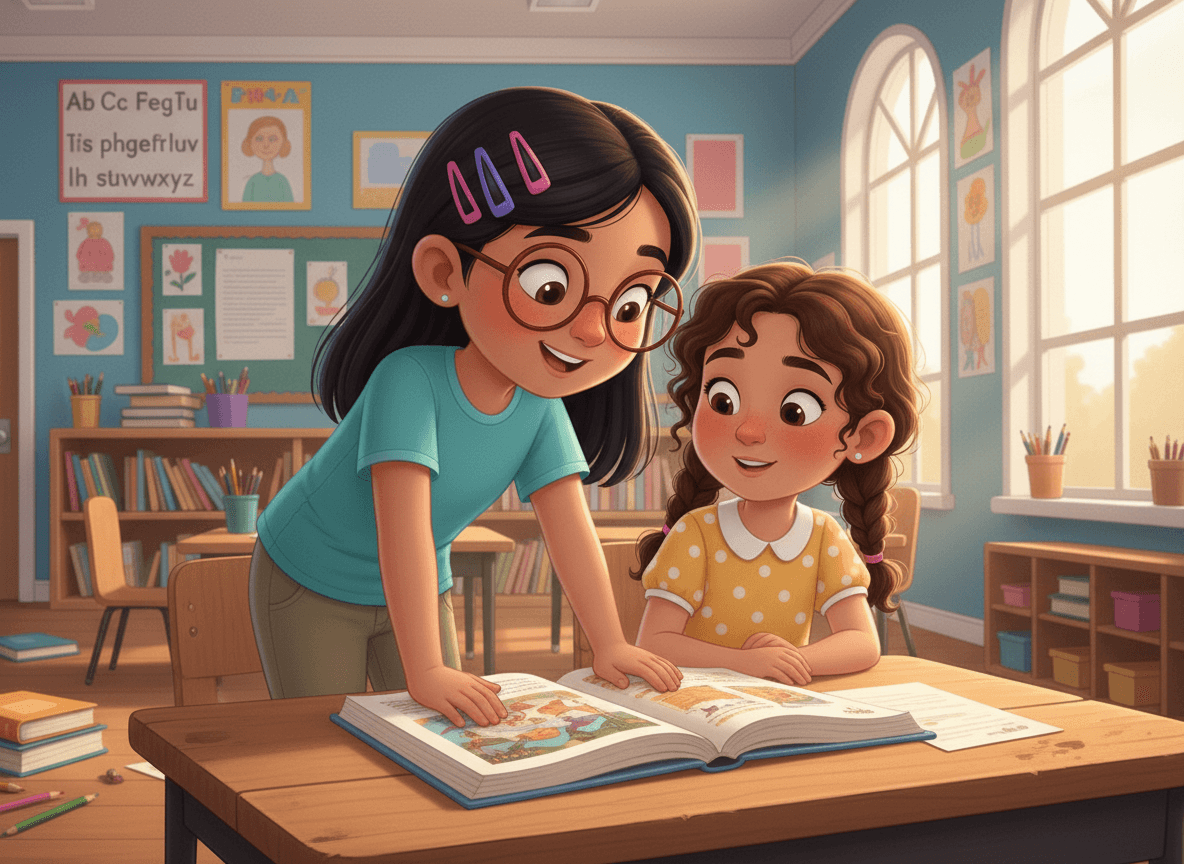
When it's my turn to read, Maya listens and watches the pictures with me. Taking turns means we both get to be the reader and the listener. This helps us both enjoy the story together.
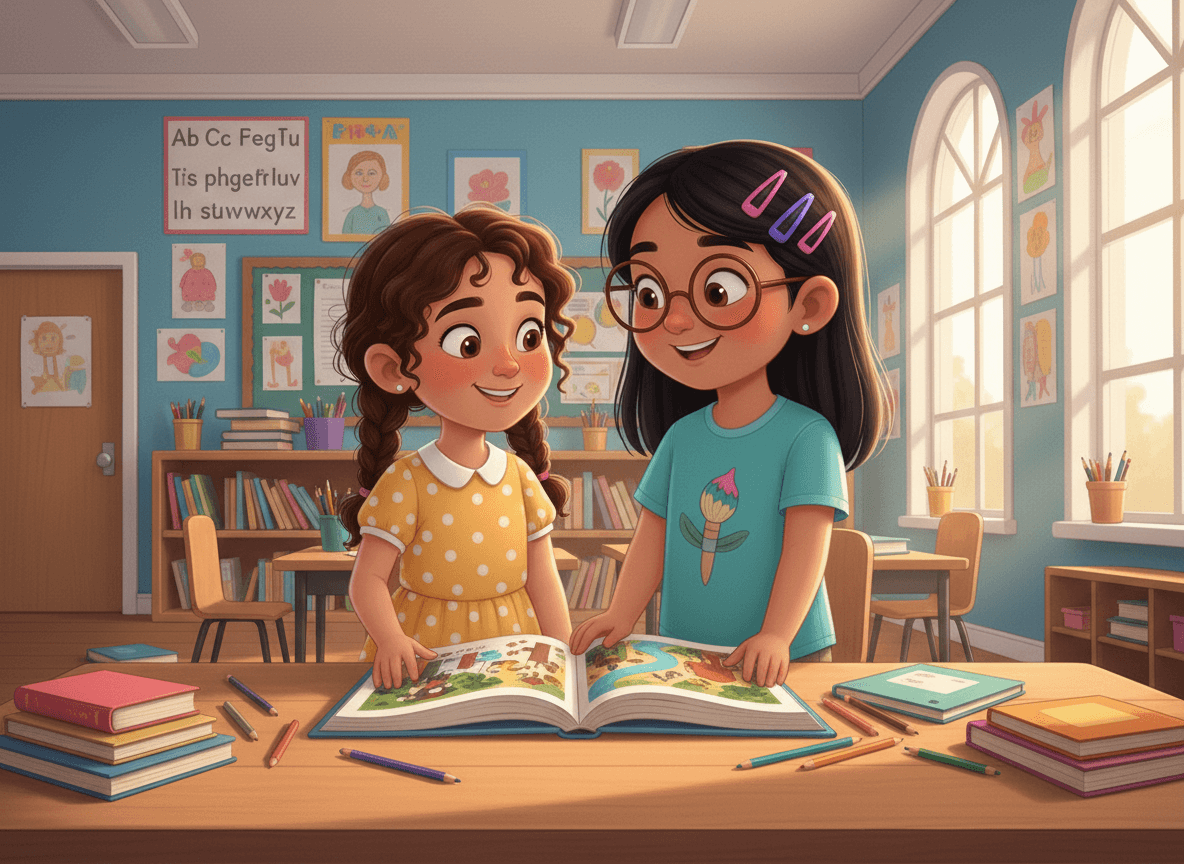
As we read together, something wonderful happens. Maya and I start to become better friends. We laugh at the funny parts and wonder together about what will happen next. Sharing the book made our friendship stronger.
Now I know that taking turns and sharing with my classmates is a wonderful thing. When I share, my friends feel happy, and I feel happy too. Sharing brings us closer together and makes school more fun for everyone.
Social Story Methodology
Why This Story Works
Shared reading activities like the one Priya experiences help children see that collaboration enhances rather than diminishes enjoyment—a key insight for children who prefer solitary activities or struggle with flexibility. Carol Gray's methodology uses a relatable peer model (Maya) to normalize turn-taking while the adult (Mr. Chen) provides the reassuring explanation that makes the shift feel safe and logical. This story addresses the common anxiety that sharing favorite activities means losing control or enjoyment, replacing it with concrete evidence that both children benefit.
Story Structure
How It's Written
Sentence Types
Voice & Perspective
Story Structure
Practical Guidance
Ways to Use This Story
Start With Your Child's Favorite Activity
Read It Together With a Specific Friend in Mind
Practice the Exact Turn-Taking Pattern
Acknowledge Feelings About Giving Up Control
Celebrate the Moment Your Child Shares Willingly
Want this story made just for your child?
Create a version with your child's name, appearance, and the specific details only they face — in minutes.
from $2.99 · no subscription · pay per story
More Social Skills Stories
Free to read and print
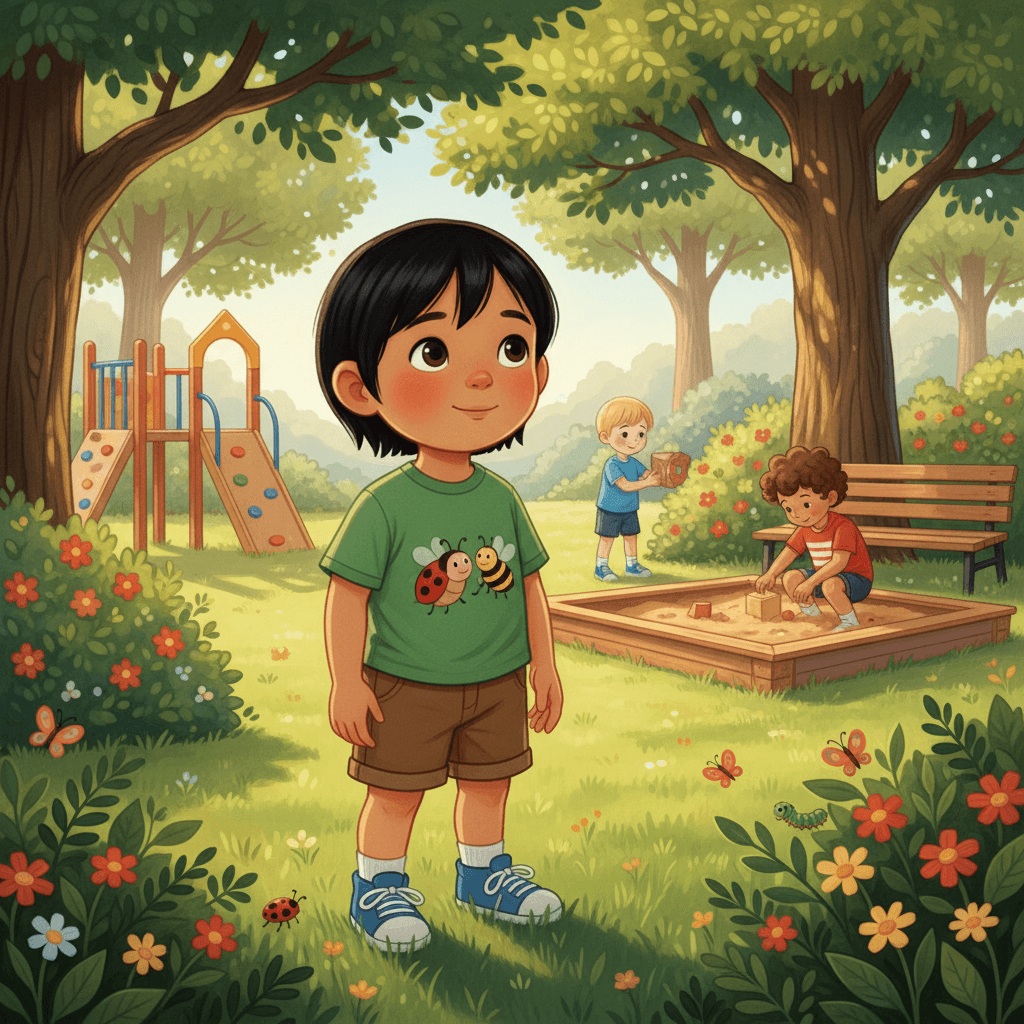
When Friends Play Without Me
Kai feels left out when friends start playing a game without including them, and learns how to join in and make new connections.
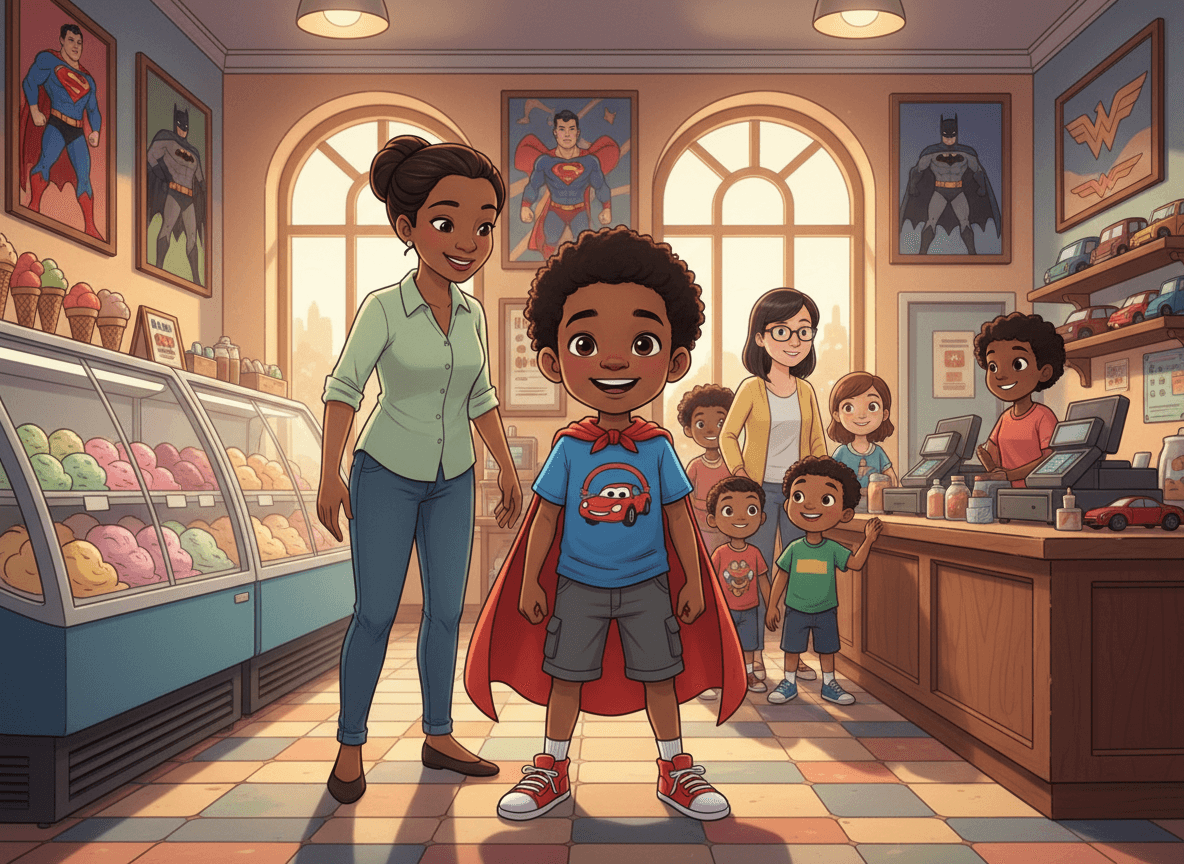
Waiting My Turn in Line
Marcus learns that waiting in line helps everyone get a turn, and discovers strategies to stay calm while waiting. Set at a superhero-themed ice cream shop, this story shows Marcus practicing patience and seeing why lines work.
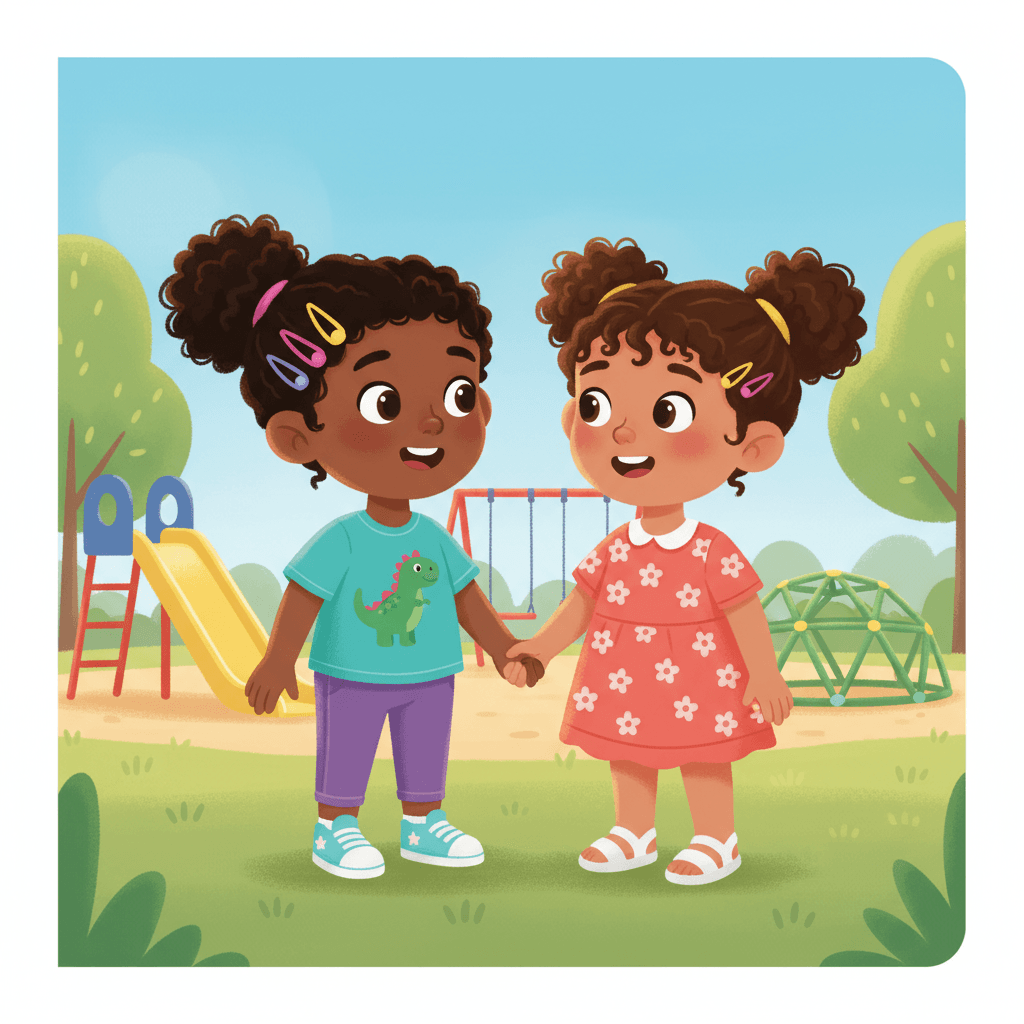
Making a New Friend
Maya meets a new friend on the playground and learns that making friends can happen through shared activities and kindness. This story helps Maya understand how friendships start and grow.