
Eating Lunch in the Cafeteria
Amara navigates lunchtime in the school cafeteria, learning about the routine, managing sensory experiences, and discovering she can enjoy her meal with friends and classmates.
Free to read and print — no account required
Want this story in your inbox?
We’ll email you the link so you can read and print it whenever you need it. Free, and no account required.
One email with your story. We won’t pass your address on, and you can unsubscribe any time.
Read the Story
7 pages · 6 min read read
Show text
Read the Story
7 pages · 6 min read read
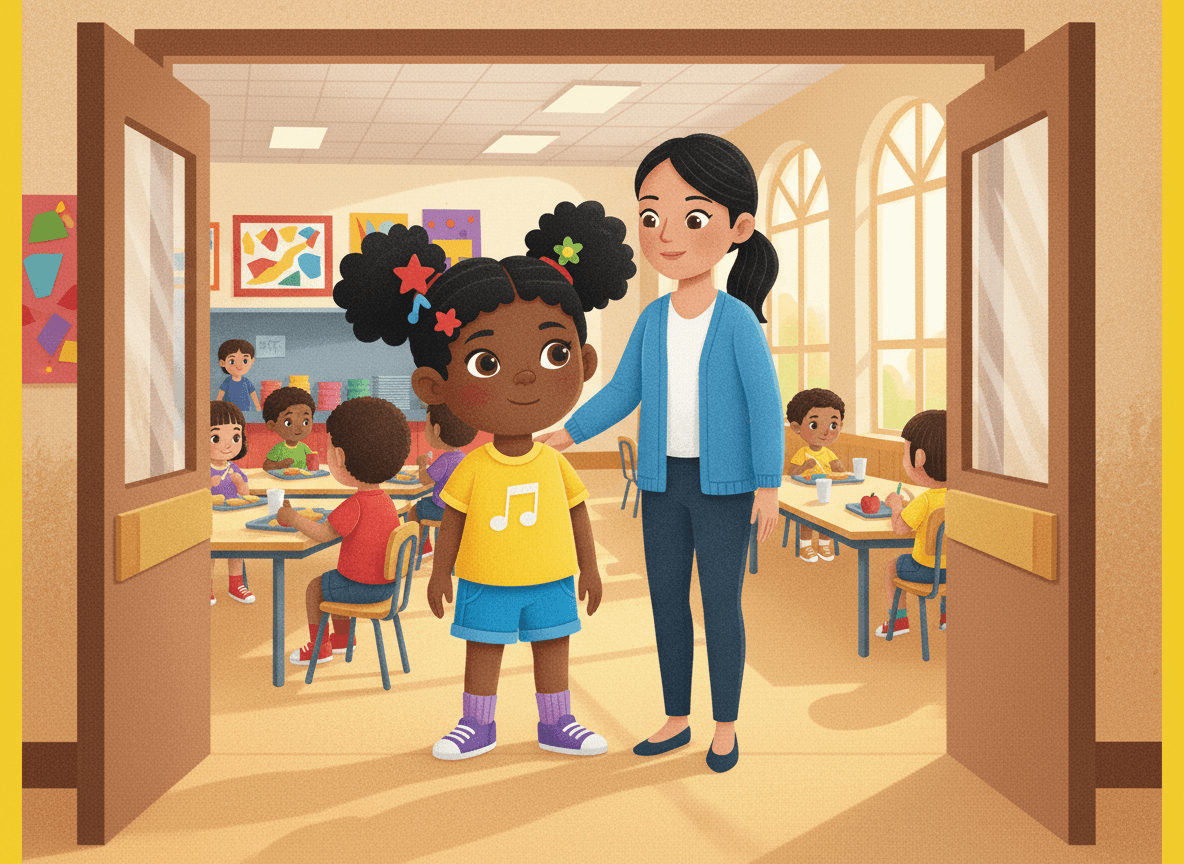
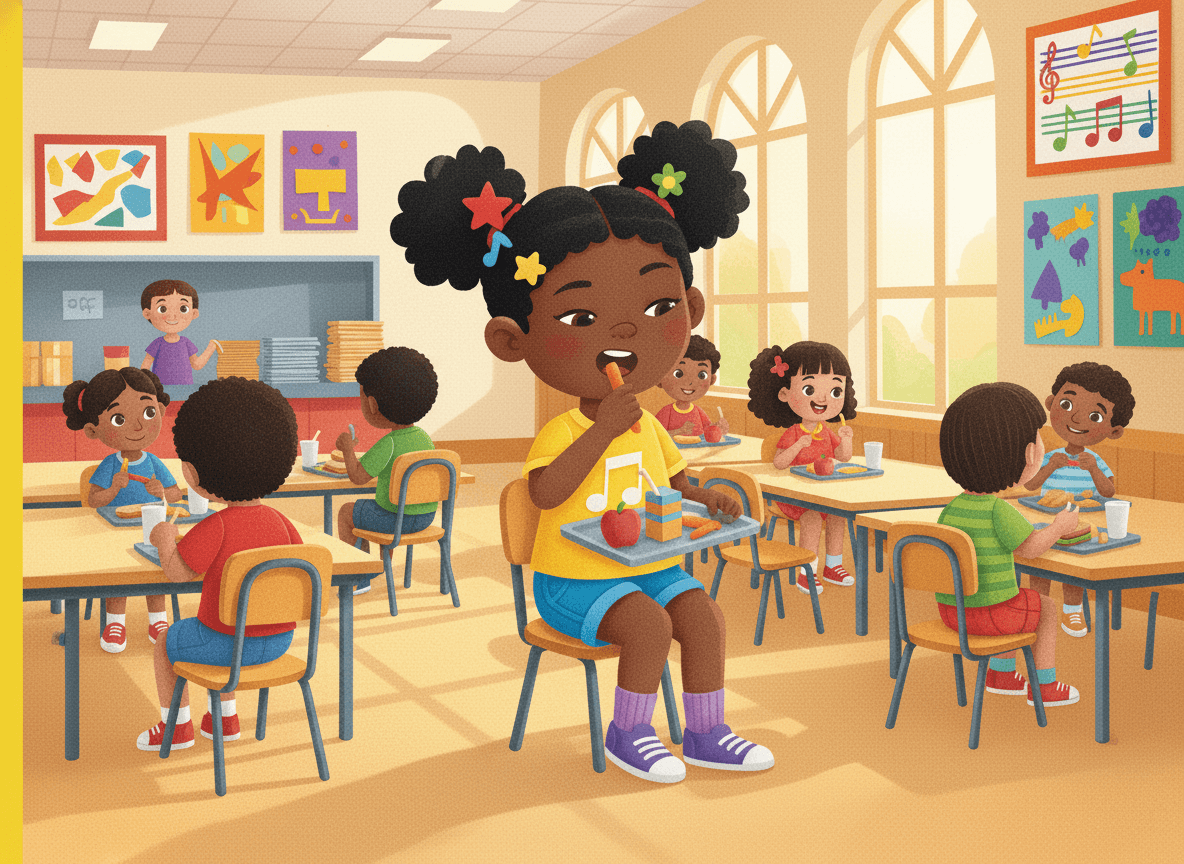
Today is Tuesday, and it is time for lunch in the cafeteria. I walk into the big room with my class. The cafeteria is bright and full of sounds—children talking, trays clinking, and chairs scraping. I can see long tables where kids are sitting and eating together. Ms. Nguyen told me that the cafeteria is supposed to be a little noisy because many children are eating at the same time, so I know the loud sounds are normal.
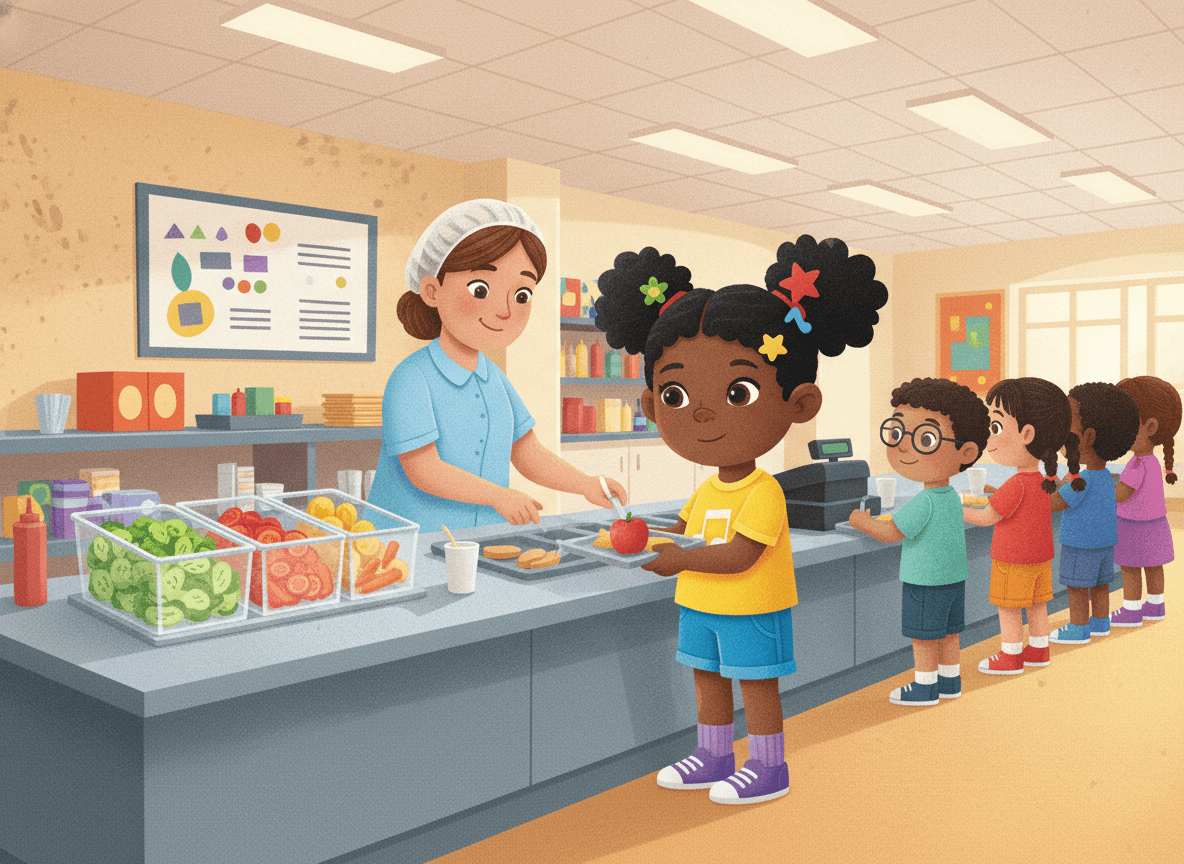
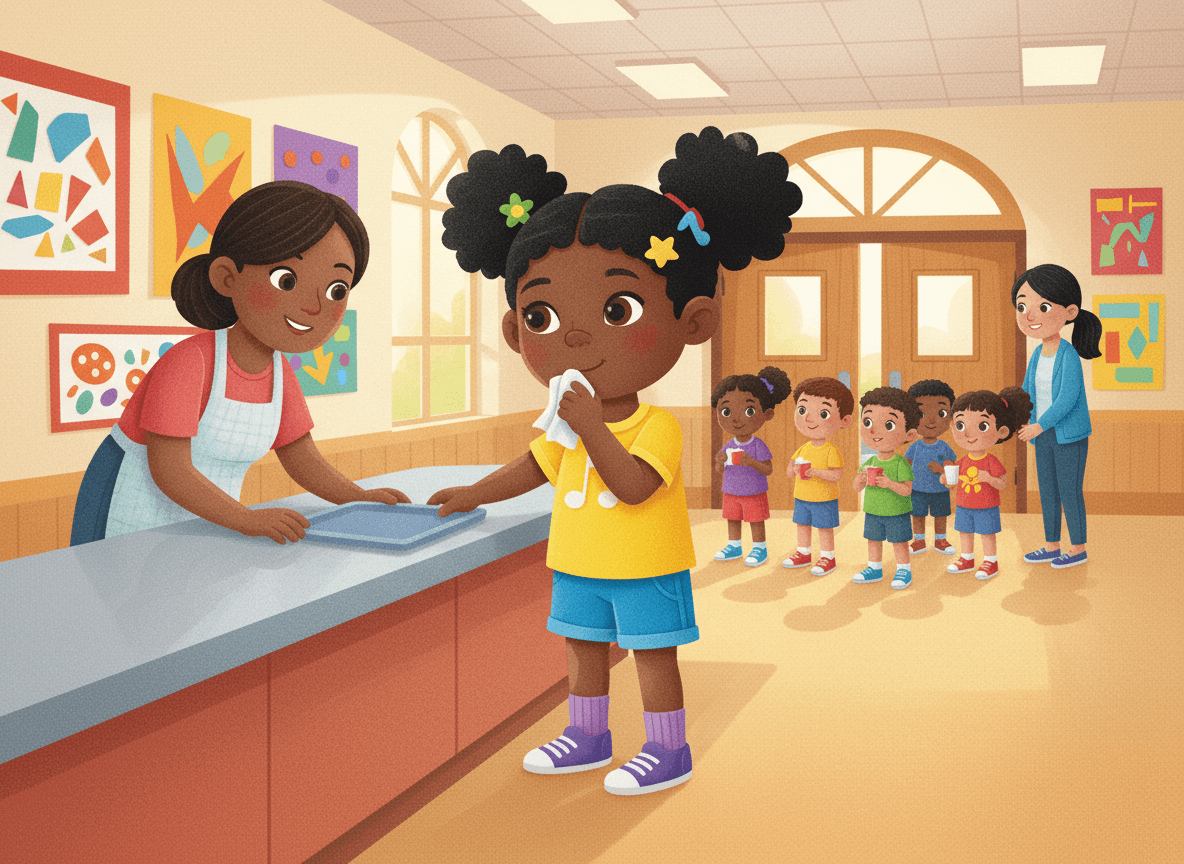
Ms. Nguyen shows me where to go. First, I get in line at the lunch counter because I need to pick up my lunch tray. The lunch helpers put food on my tray—a sandwich, some carrots, an apple, and a juice box. Getting my food first helps me know what I will eat today, so I feel ready and less worried about what comes next.
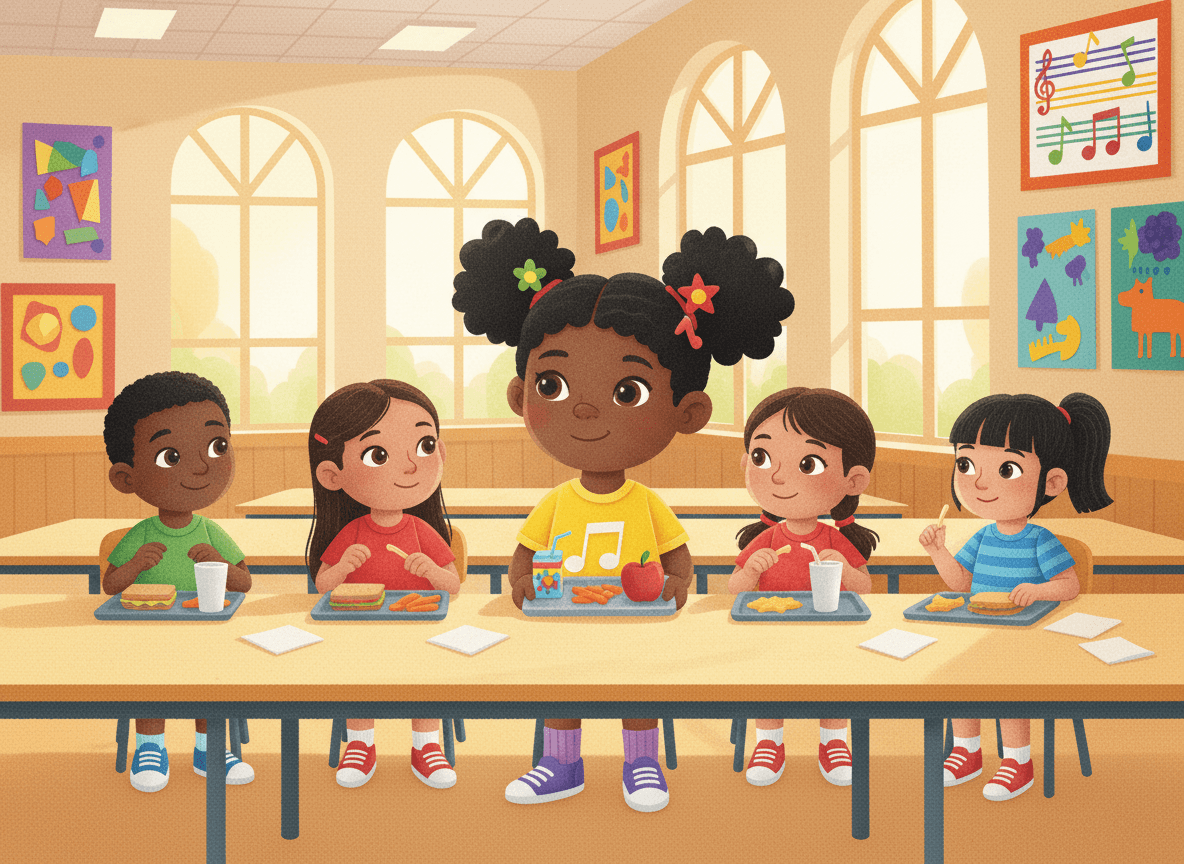
After I get my tray, I find a place to sit at one of the tables. I see my friend Kai sitting with two other children. I ask if I can sit with them, and they say yes. Sitting with friends helps me feel safe because I know they will talk to me and I am not eating alone.
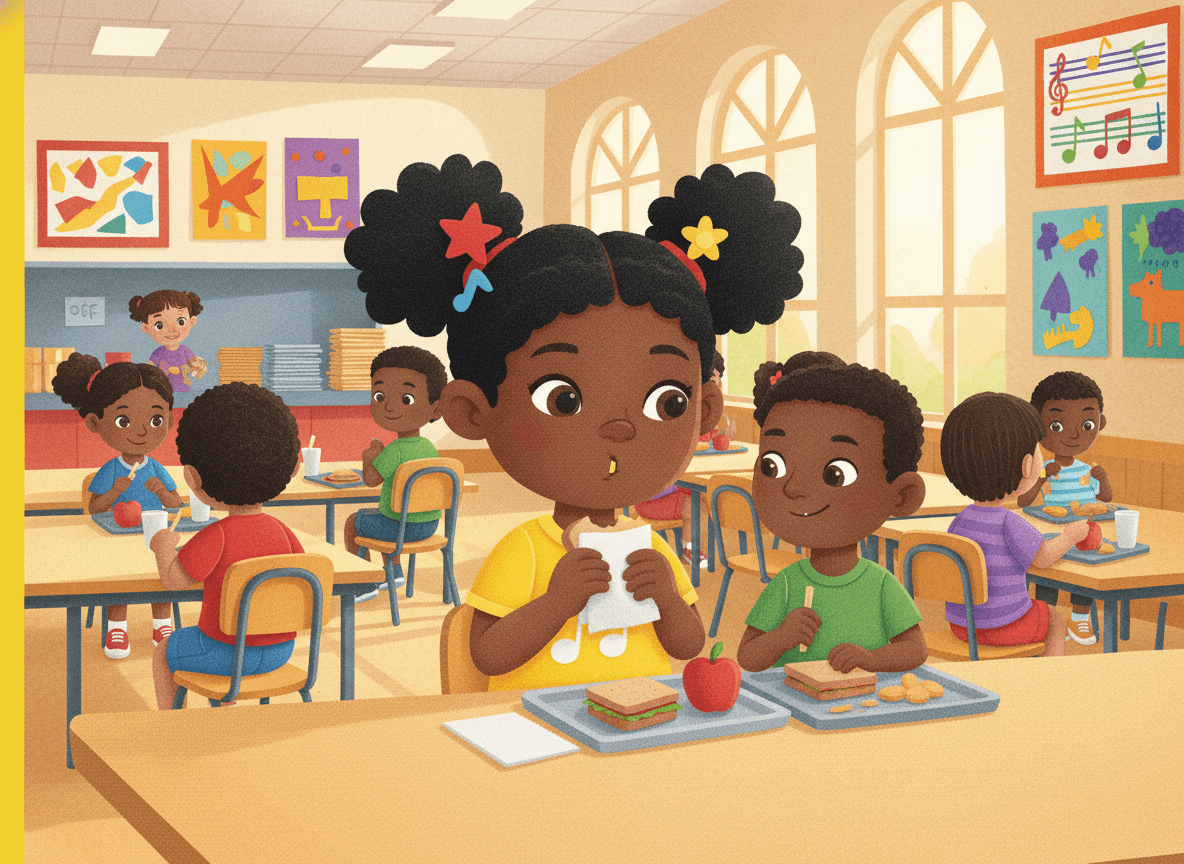
While I eat, I listen to the sounds around me. I hear children talking and laughing. Sometimes the sounds are loud, but I have a way to help myself feel calm. When the noise feels too much, I squeeze my napkin tightly for 3 seconds, then let it go slowly. I do this 2 times, and it helps my body relax. The cafeteria is supposed to be a little noisy because lots of people are here, and that is okay.
I eat my sandwich, carrots, and apple slowly because taking time to eat helps my body digest the food so I can get energy from it. I drink my juice box too. Eating a good lunch gives me energy to play and learn for the rest of the school day, so I feel strong and ready.
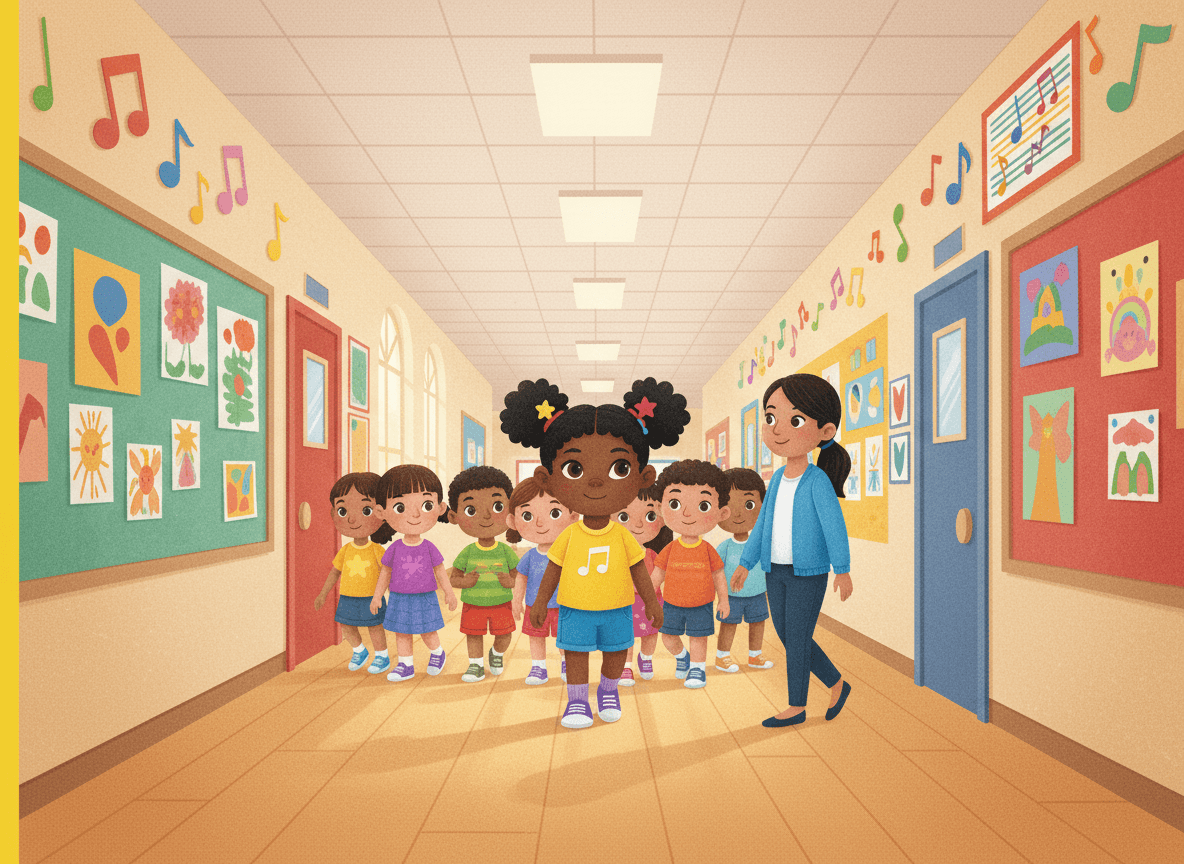
When I finish eating, I put my tray on the return counter because the lunch helpers need to clean up the trays. I wipe my hands and mouth with a napkin. Then I line up with my class to go back to the classroom. Lunchtime is over, but I did a good job eating in the cafeteria today.
As I walk back to the classroom with my class, I think about lunch. I sat with friends, ate good food, and listened to all the sounds around me. I used my napkin squeezing trick when the noise felt loud, and it helped me stay calm. Tomorrow I will eat lunch in the cafeteria again, and I know what to do. I am ready for the afternoon.
Social Story Methodology
Why This Story Works
Cafeteria lunchtime combines sensory overload (noise, crowds), social navigation (finding a seat, peer interaction), and self-regulation—all major anxiety and overwhelm triggers for neurodivergent children. This Social Story uses Carol Gray's methodology to normalize the cafeteria experience, break it into manageable steps, and help your child understand what others are thinking and feeling, reducing unpredictability and building confidence.
Story Structure
How It's Written
Sentence Types
Voice & Perspective
Story Structure
Practical Guidance
Ways to Use This Story
Read Before Lunch
Practice Regularly
Highlight Their Strategy
Debrief After School
Validate the Hard
Want this story made just for your child?
Create a version with your child's name, appearance, and the specific details only they face — in minutes.
from $2.99 · no subscription · pay per story
More School Stories
Free to read and print
Playing at Recess
Aisha joins her classmates on the playground during recess, learning how to play together, take turns, and have fun with friends.

Fire Drill at School
Rohan learns what happens during a fire drill at school, understanding the steps and why they're important for keeping everyone safe.
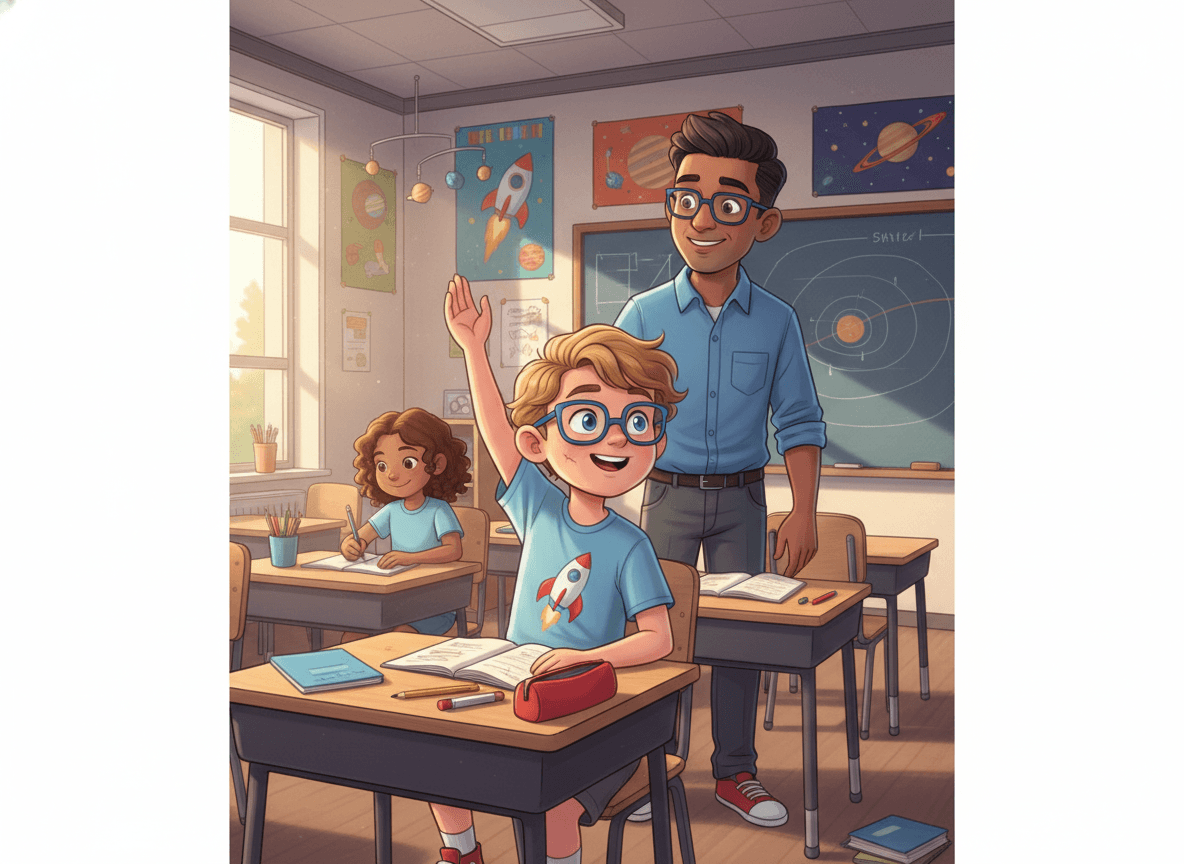
Asking Mr. Patel for Help
Liam learns that asking for help when he doesn't understand his classwork is a smart strategy that helps him learn better. This story shows how to recognize confusion, use a coping strategy to manage frustration, raise his hand, and talk to his teacher.