My Bigger, Blended Family
Aisha learns to navigate her new blended family as her mom remarries and she gains step-siblings. This story explores the feelings, changes, and opportunities that come with this transition, helping Aisha understand her step-family members' perspectives and find ways to build new connections.
Free to read and print — no account required
Want this story in your inbox?
We’ll email you the link so you can read and print it whenever you need it. Free, and no account required.
One email with your story. We won’t pass your address on, and you can unsubscribe any time.
Read the Story
10 pages · 8 min read read
Show text
Read the Story
10 pages · 8 min read read
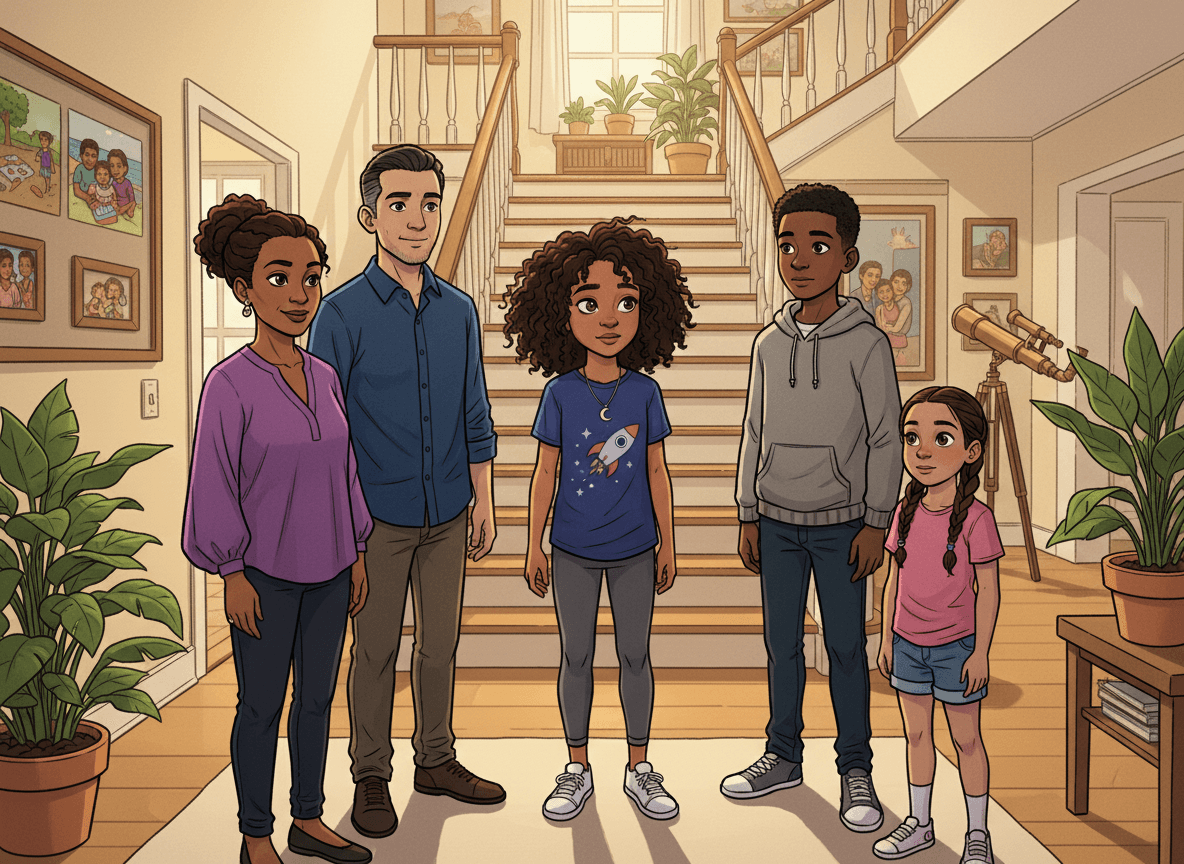
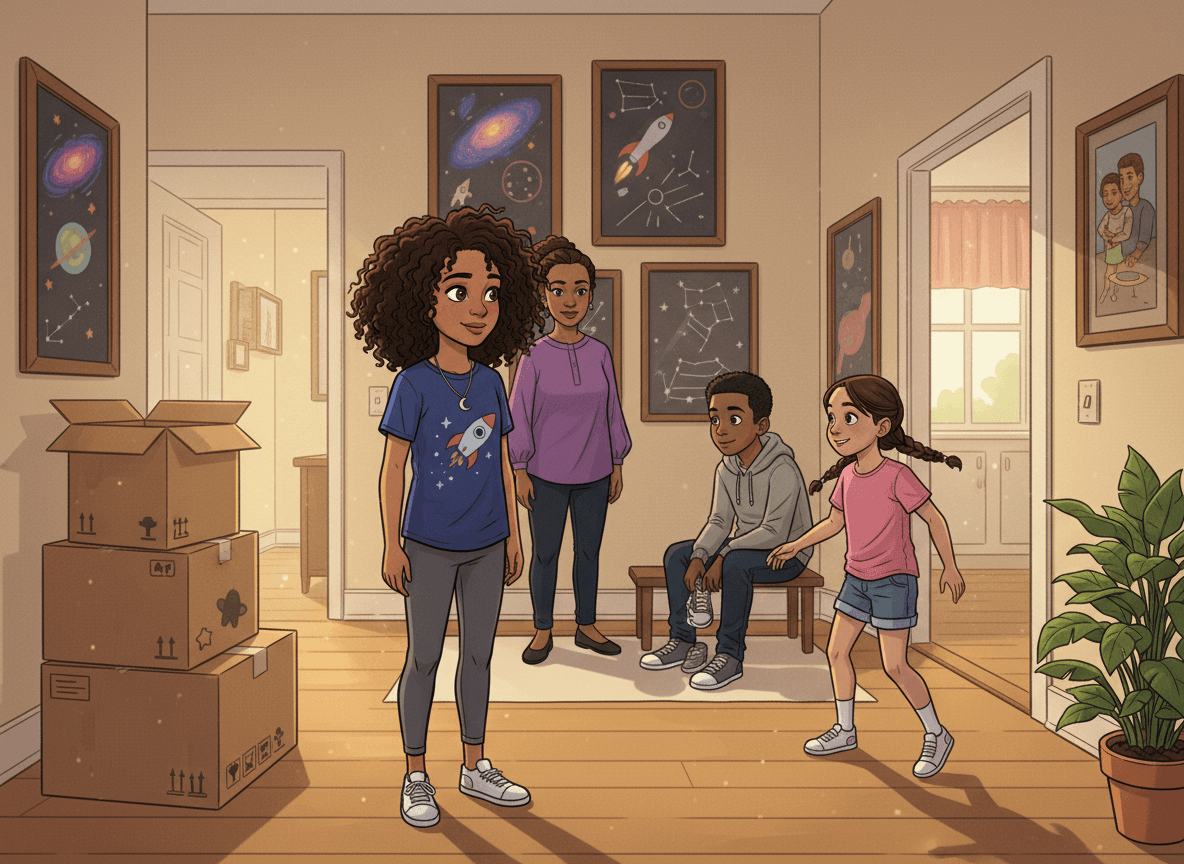
My name is Aisha, and my family is about to change. Mom has been dating David for two years, and they just got married. This means I now have a stepdad, and I'm going to meet my new step-siblings, Marcus and Sophie, who will sometimes live with us. I'm not sure how I feel about all of this yet.
When families blend together, it means we're creating something entirely new. My mom and David chose to get married because they love each other, and they want to build a life together. This doesn't change how much my mom loves me—it only adds more people to our family. David wants to get to know me better and be part of my life, not replace anyone.
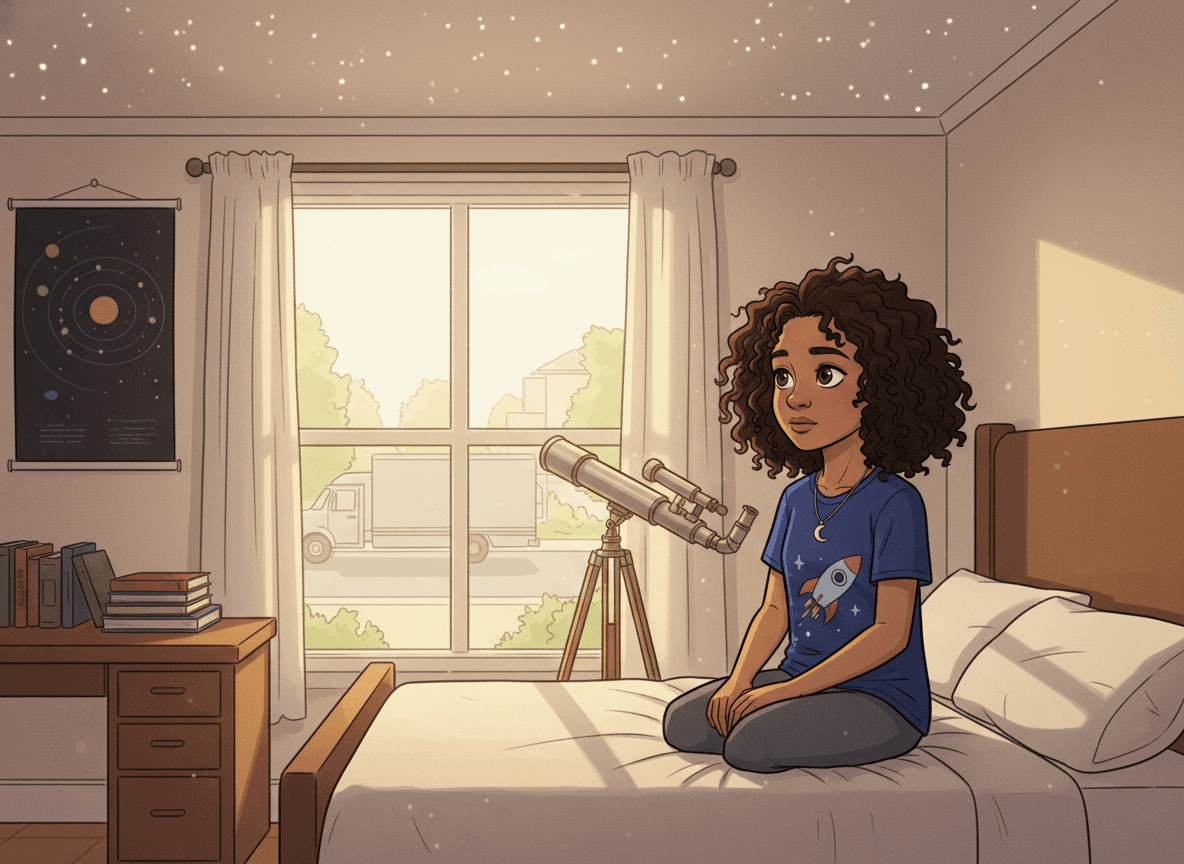
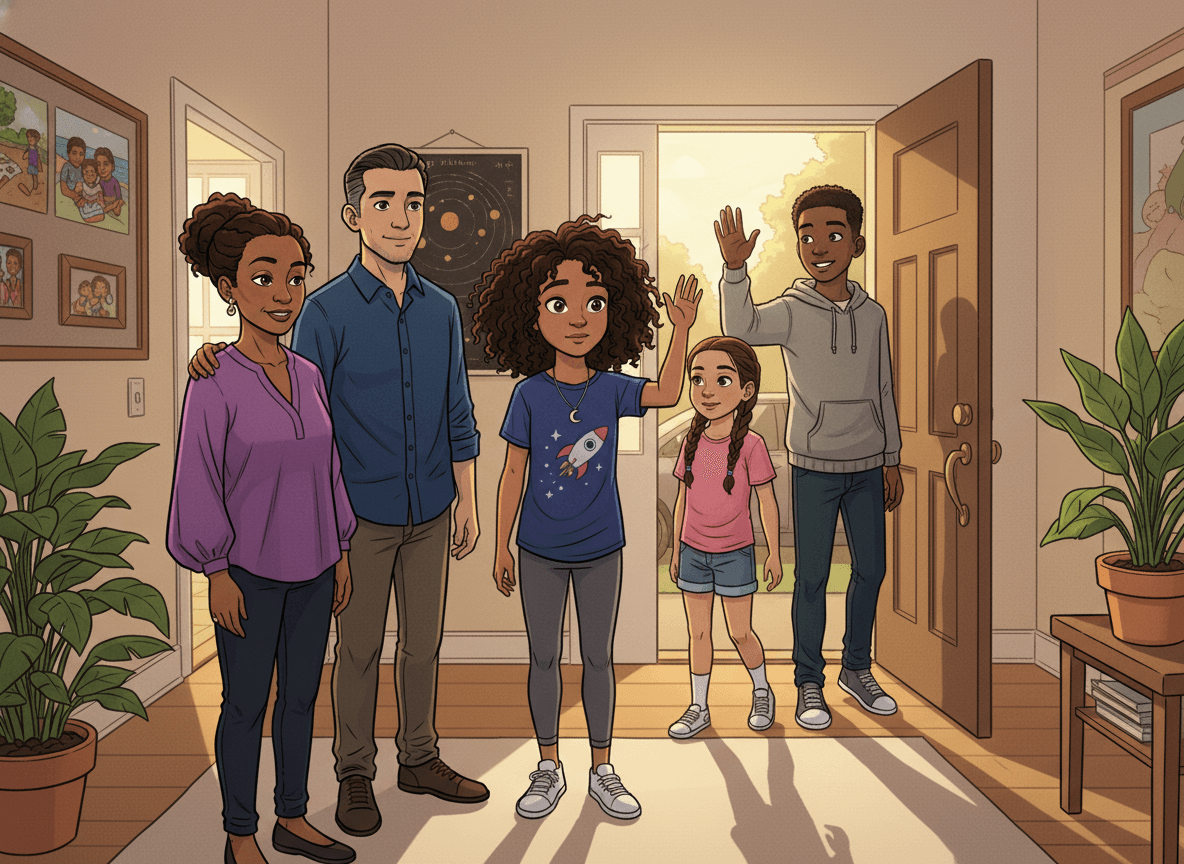
Today is the day Marcus and Sophie arrive. They will be staying with us for the next two weeks, and eventually, they'll be here every other weekend. I feel a little nervous. I wonder what they're like and if we'll get along. It's normal to feel uncertain when meeting new people who will become part of your daily life.
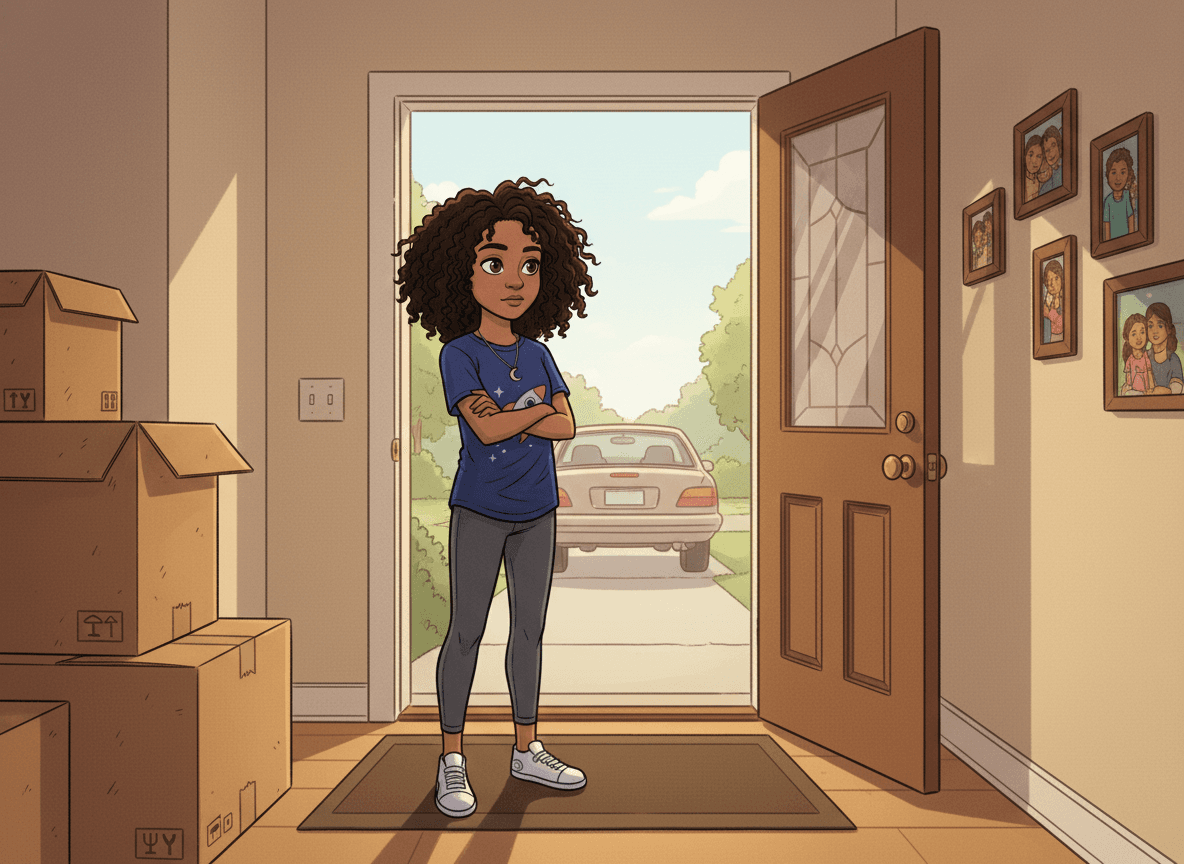
The car pulls up, and Marcus and Sophie run inside. Marcus is thirteen and kind of quiet. Sophie is nine and very talkative. I learn that Marcus loves video games and coding, just like I do. This makes me feel excited—maybe we'll have things to talk about. Sophie immediately asks if I want to play, even though she doesn't know me yet.
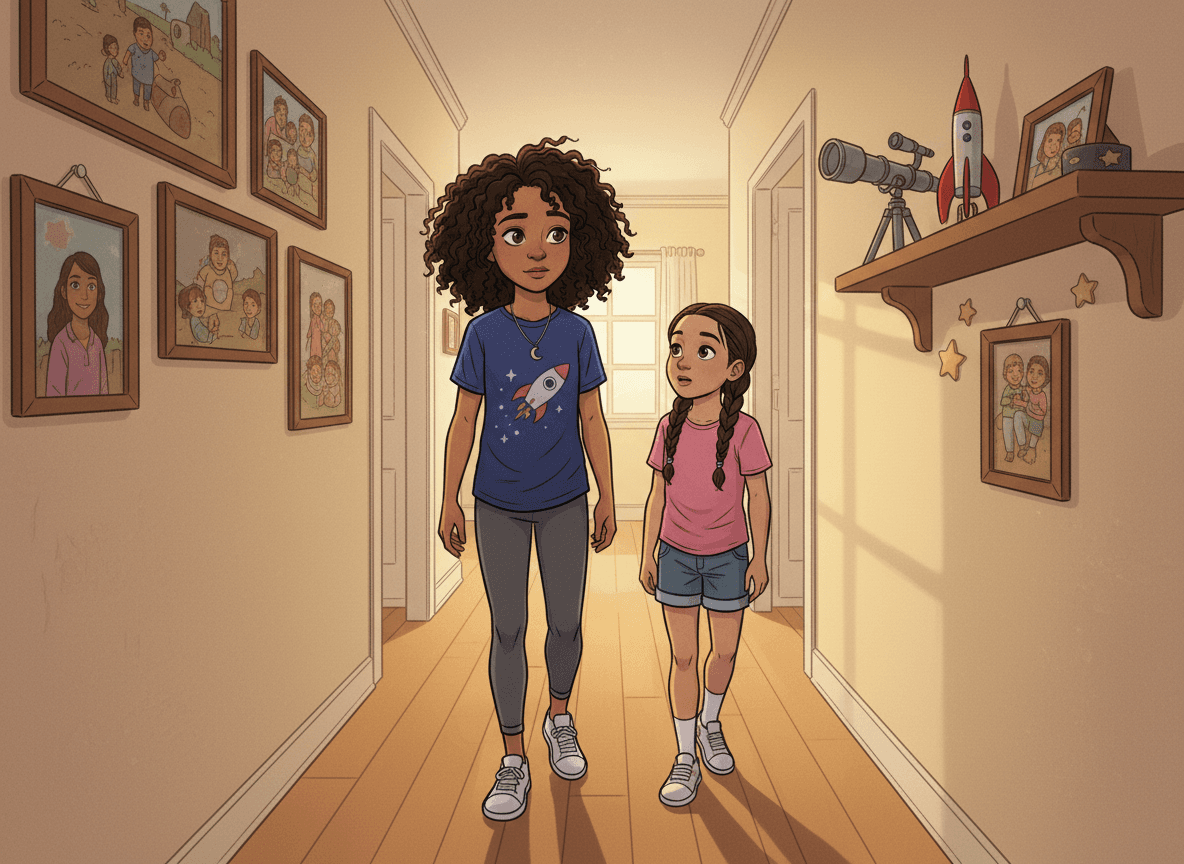
Sophie wants to know everything about me right away. She asks questions rapidly and follows me around the house. At first, this feels like a lot. But then I realize she acts this way because she's nervous too. She's trying to get to know me and find ways to fit in. Knowing that Sophie feels the same uncertainty helps me feel less alone in this change.
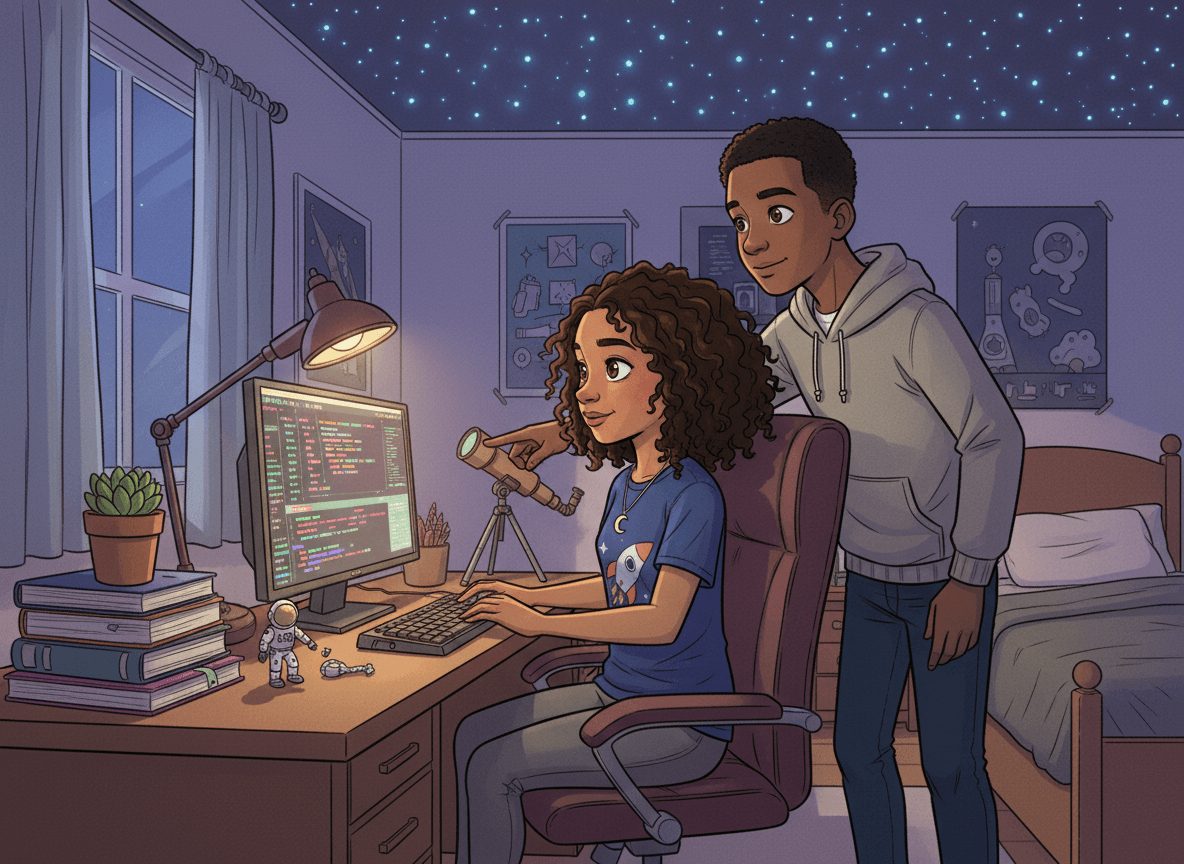
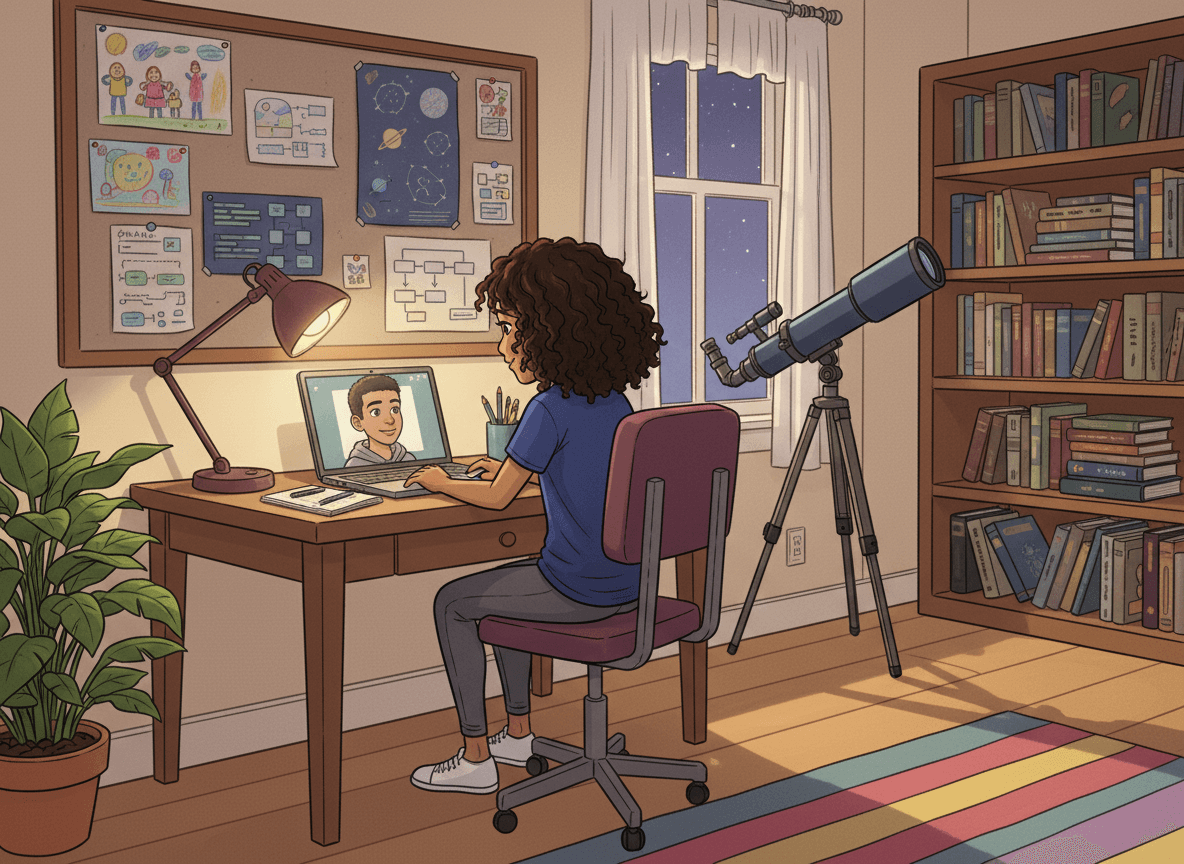
Later, I show Marcus my coding projects on my computer. His eyes light up because he's been learning to code too. We talk about the games we both play and the programs we've tried to create. For the first time since he arrived, the conversation feels natural. Marcus explains why his family thinks blended families can be good—we each bring something different to the group.
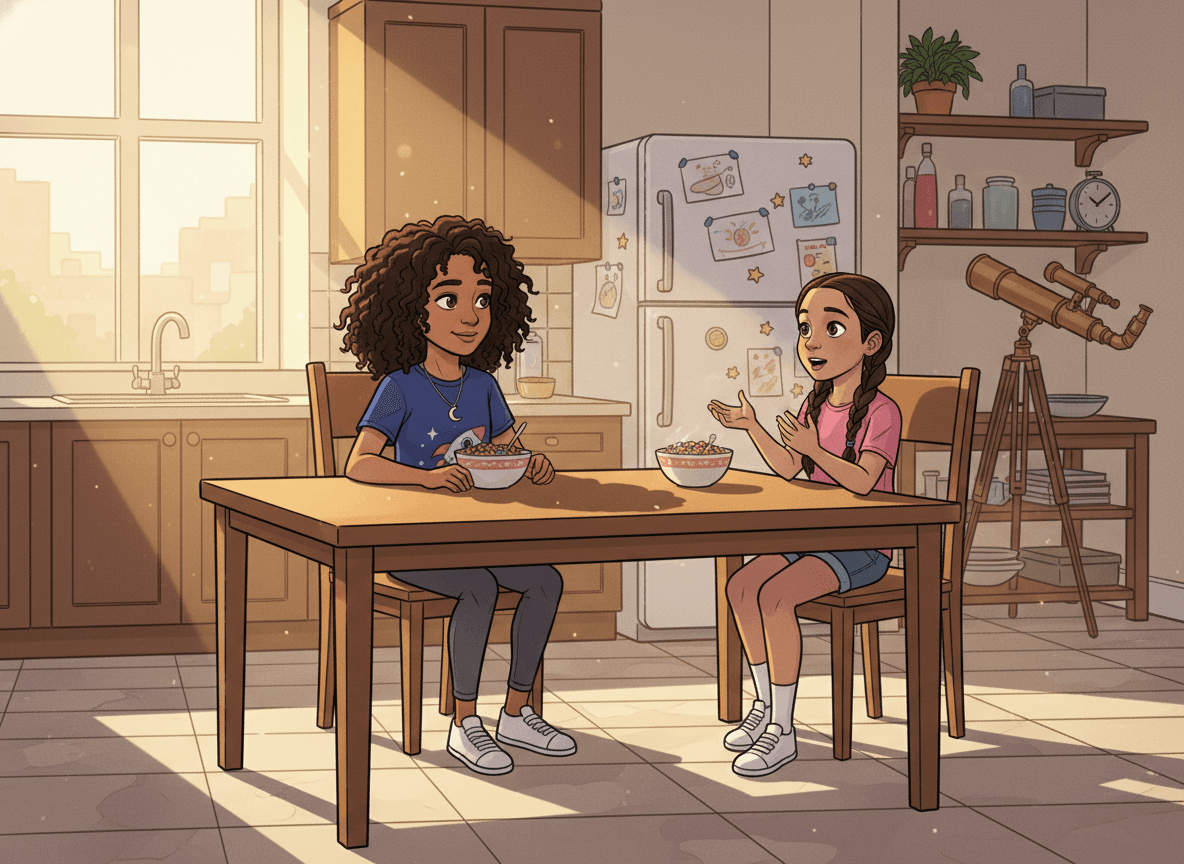
By the end of the week, Sophie and I have a routine. Every morning, we eat breakfast together and talk about what we want to do. Sophie's playfulness is actually kind of fun. She gets excited about things easily, and her excitement is contagious. I realize I don't have to be best friends with my step-siblings right away. Our relationship can grow slowly, and that's perfectly okay.
When the time comes for Marcus and Sophie to leave, I feel something surprising—I actually miss them a little. David says goodbye to me with a friendly wave, and I find myself waving back naturally. Mom hugs me and tells me I did a wonderful job welcoming everyone. I realize that blended families are like solar systems; each person orbits together, creating balance and gravity that holds everyone close.
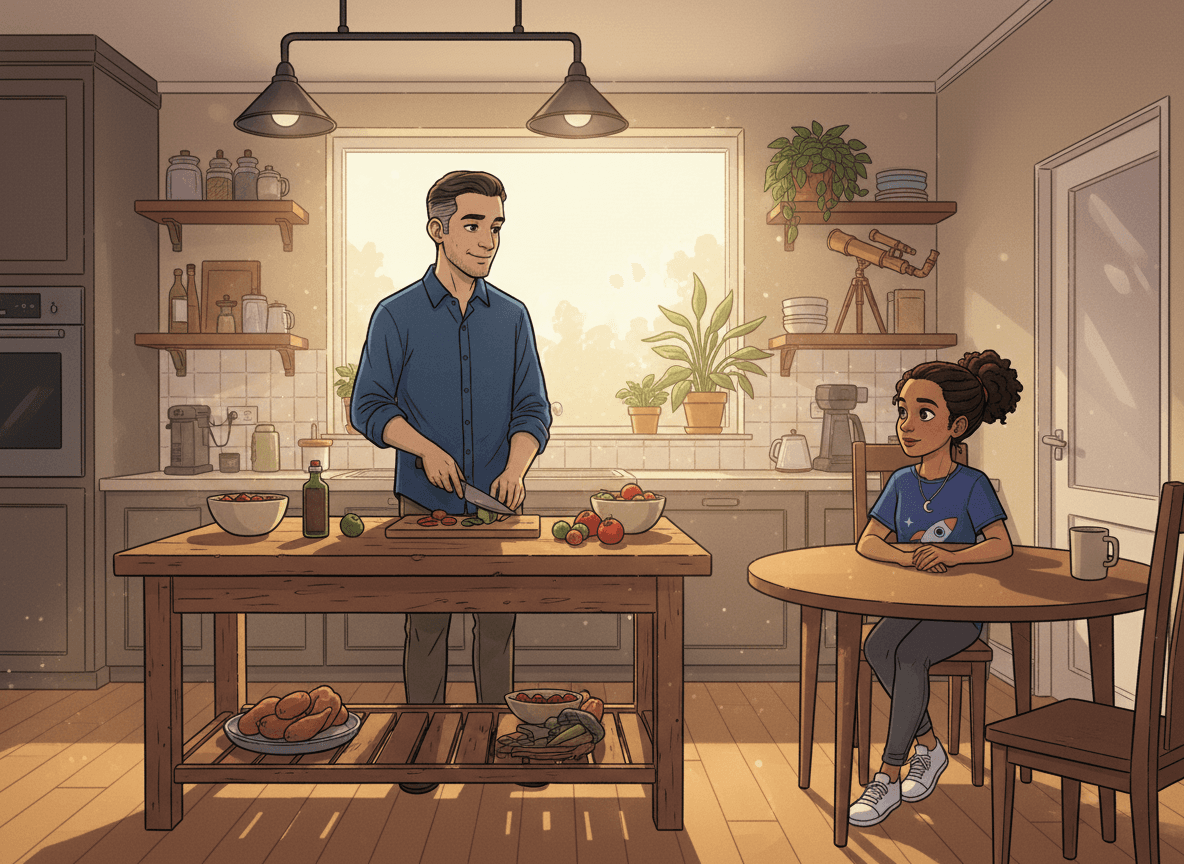
Over the following weeks and months, I learn that blended families take time to feel normal. Some days are easier than others. Sometimes Marcus and I code together online when he's at his other house. Sophie sends me drawings she creates, and I send her space facts she can share with her friends. David asks me about my coding projects and listens carefully when I explain them.
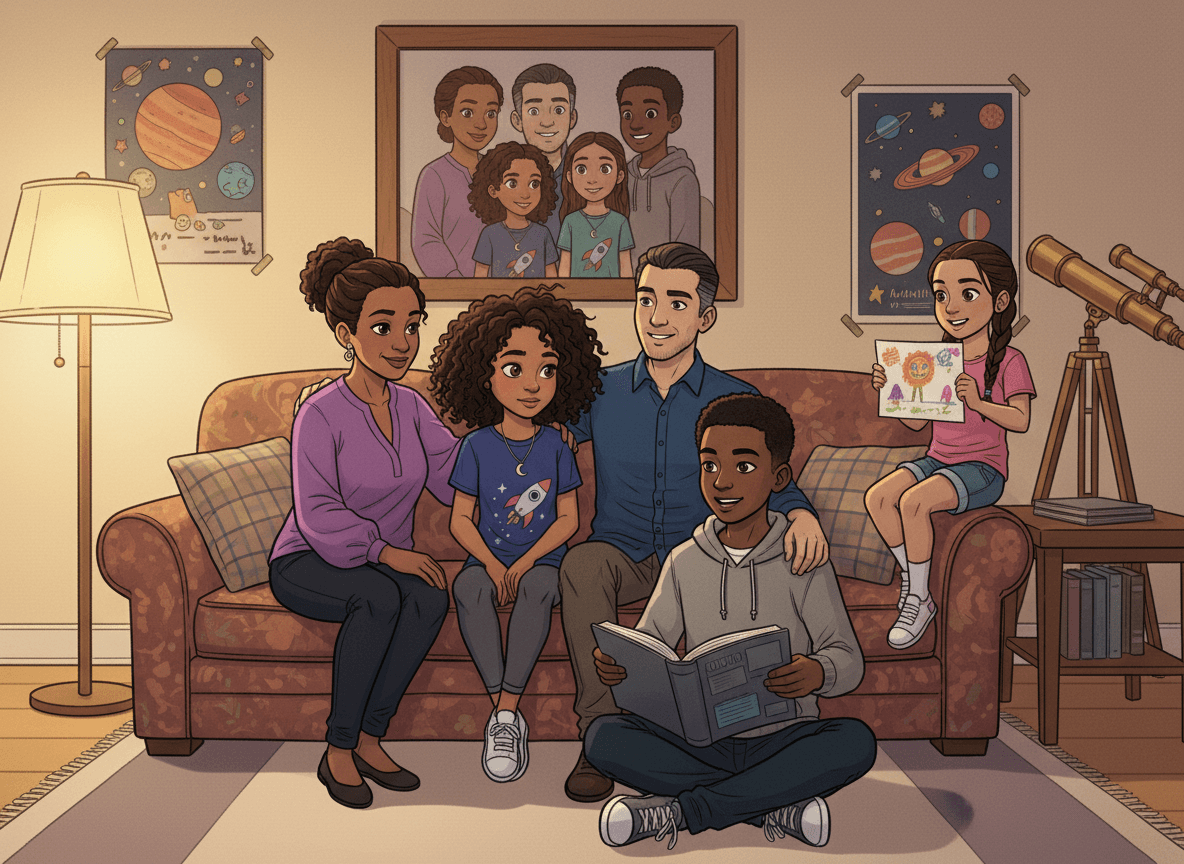
I understand now that having a blended family means my world is bigger. It means I have more people who care about me, more perspectives to learn from, and more chances to grow. Blended families are not about replacing love or loyalty—they're about expanding it. Every person in my family, whether we share DNA or not, is important to me.
Social Story Methodology
Why This Story Works
My Bigger, Blended Family uses Carol Gray's social story structure to normalize a major life transition by pairing concrete, sensory details (the car pulling up, Sophie following Aisha around, breakfast routines) with explicit perspective-taking—showing how Sophie's nervousness mirrors Aisha's own uncertainty. This dual approach helps neurodivergent children recognize that confusing emotions are shared experiences, not personal failures, while the gradual relationship-building across ten pages models that complex family changes don't require instant comfort or forced closeness.
Story Structure
How It's Written
Sentence Types
Voice & Perspective
Story Structure
Practical Guidance
Ways to Use This Story
Schedule First Visits Strategically
Prepare for Sensory & Social Overload
Validate Ambivalence, Not Just Positivity
Identify Shared Interests With Step-Siblings
Establish Small, Repeating Rituals
Want this story made just for your child?
Create a version with your child's name, appearance, and the specific details only they face — in minutes.
from $2.99 · no subscription · pay per story
More Family Stories
Free to read and print
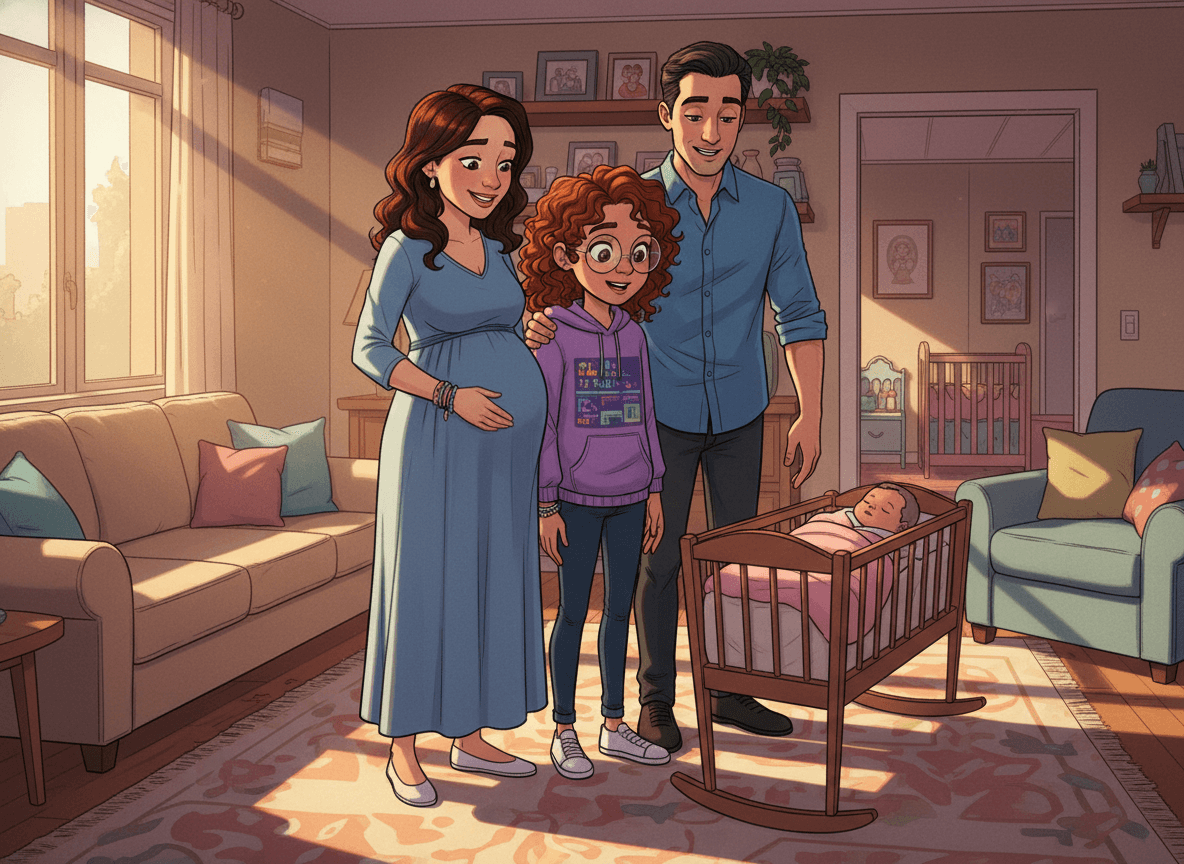
My New Baby Sister
Amara learns what to expect when her family welcomes a new baby sibling, understanding both the exciting changes and the reasons behind them.
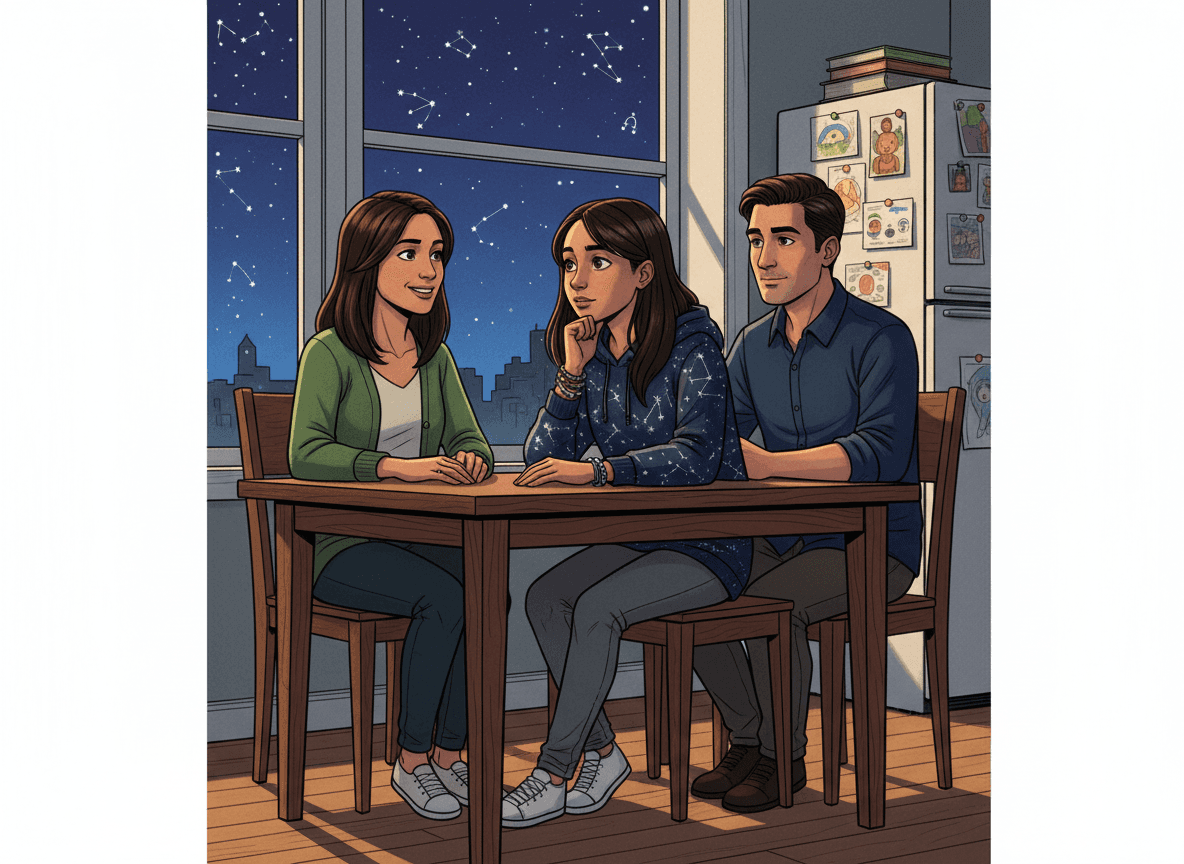
When Parents Live Apart
A story helping Zara understand that when parents decide to live separately, it's about their relationship with each other—not about their love for her. This story normalizes divorce, explains the reasons behind parental separation, and reassures her that she can have meaningful relationships with both parents.