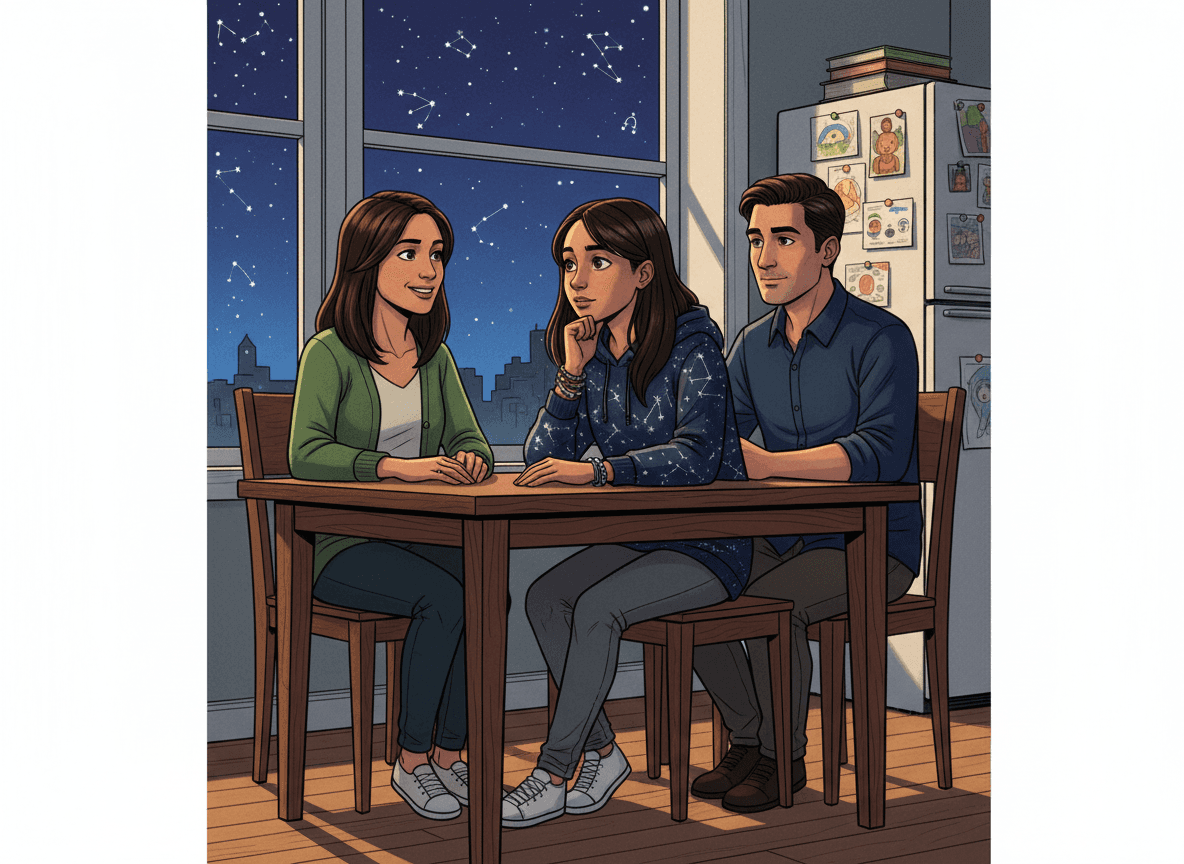
When Parents Live Apart
A story helping Zara understand that when parents decide to live separately, it's about their relationship with each other—not about their love for her. This story normalizes divorce, explains the reasons behind parental separation, and reassures her that she can have meaningful relationships with both parents.
Free to read and print — no account required
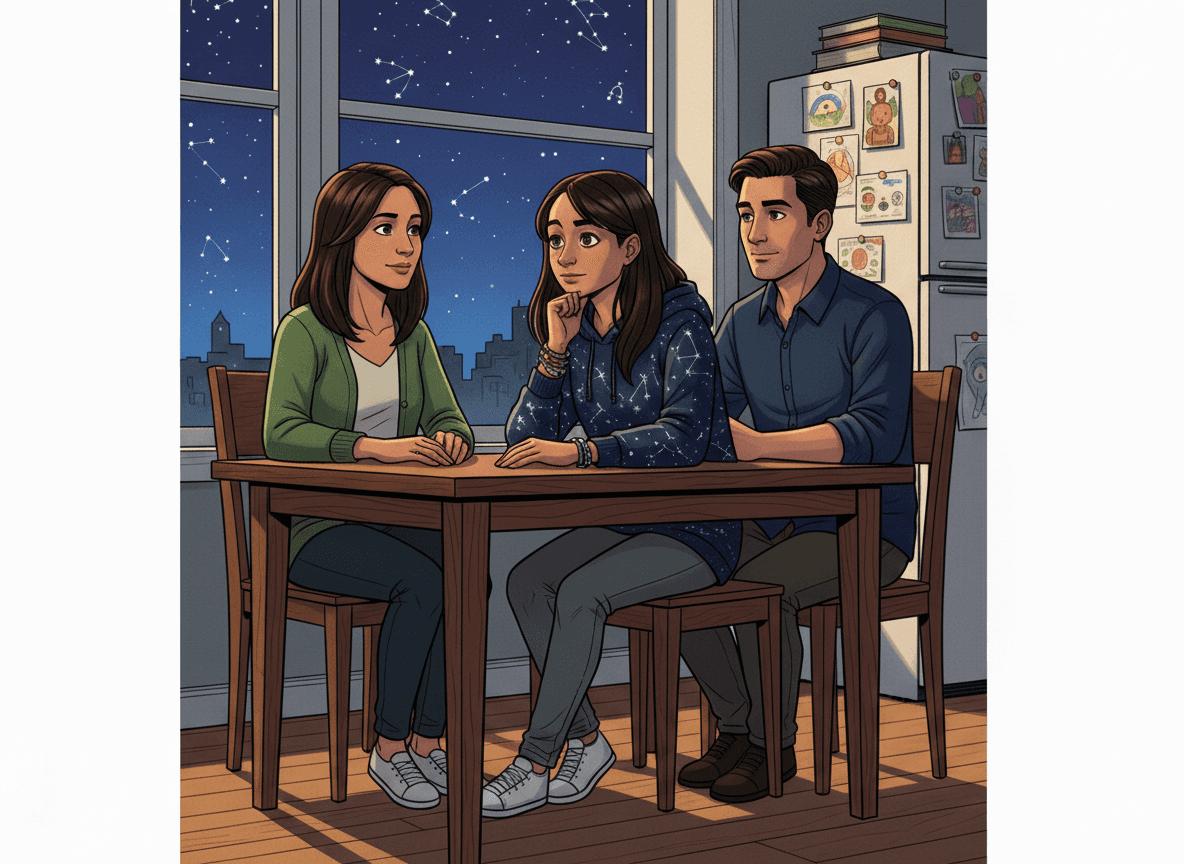
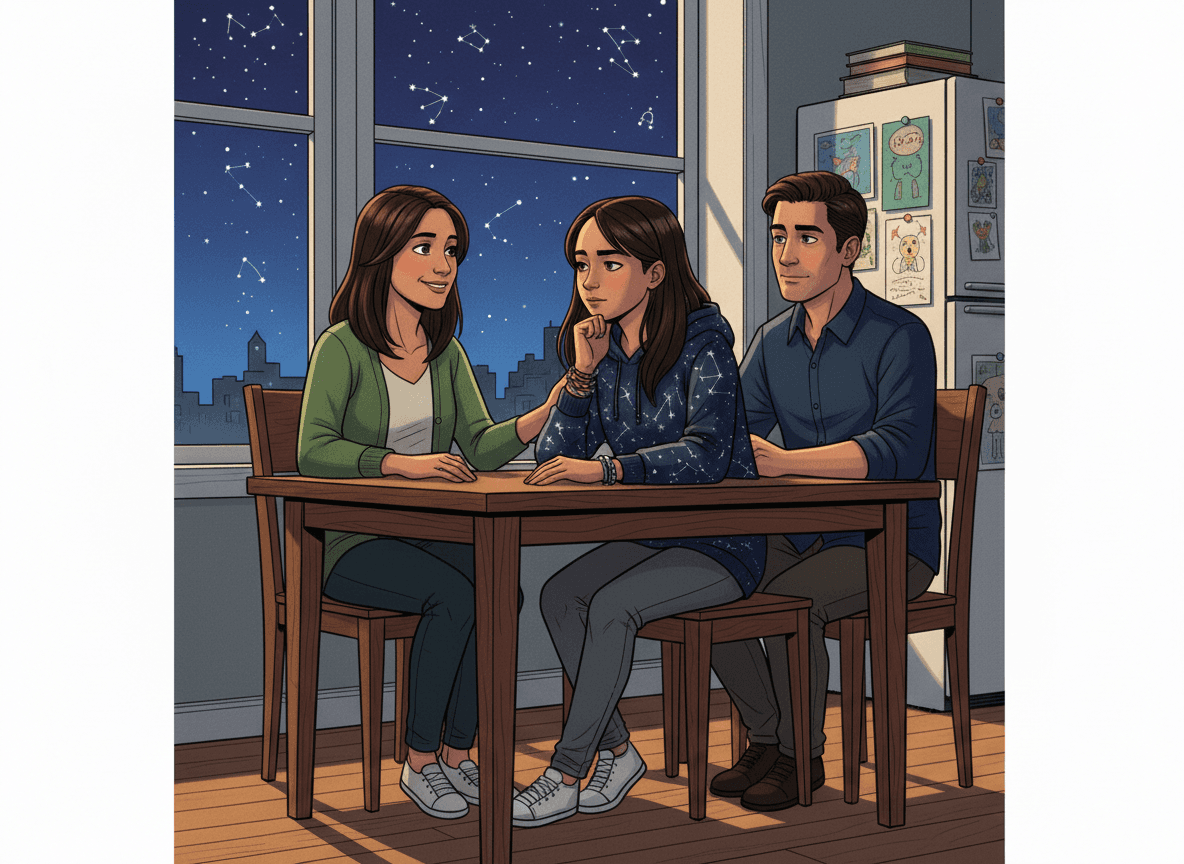
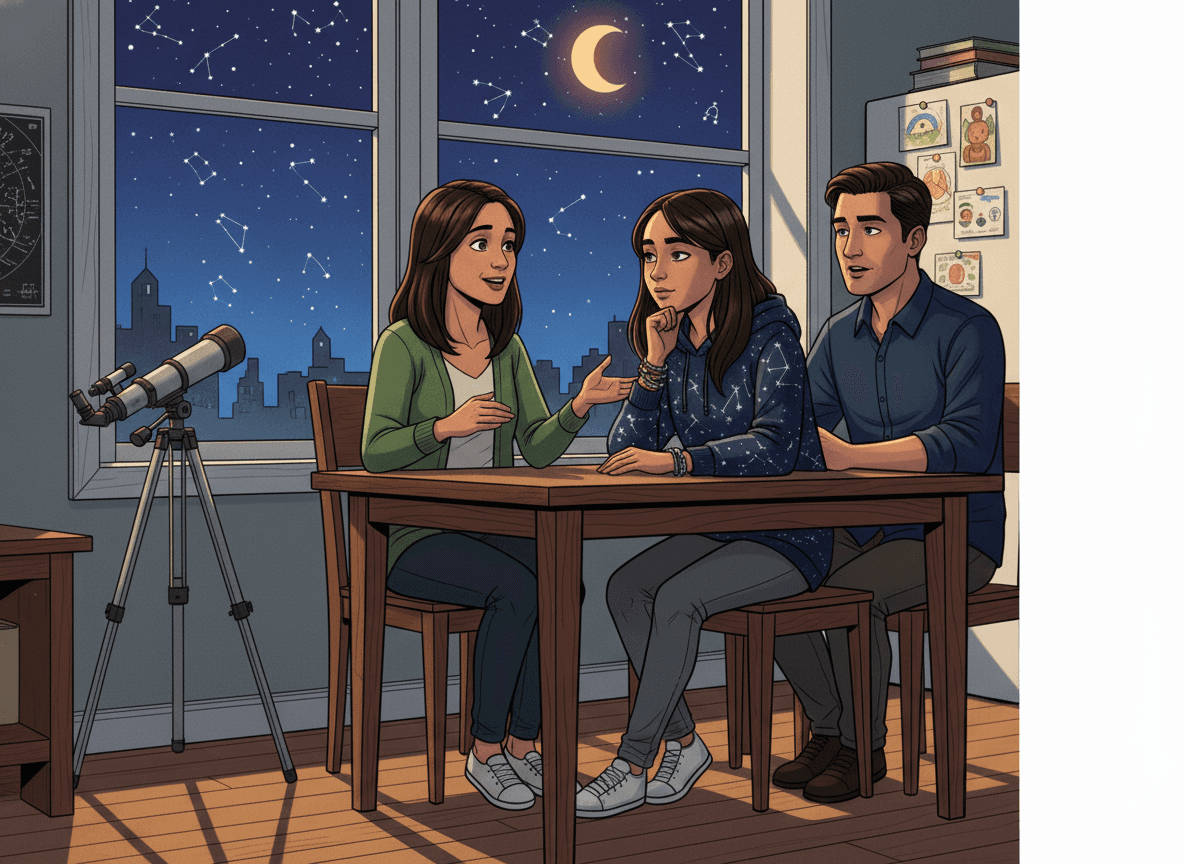
Read the Story
11 pages · 9 min read read
Show text
Read the Story
11 pages · 9 min read read
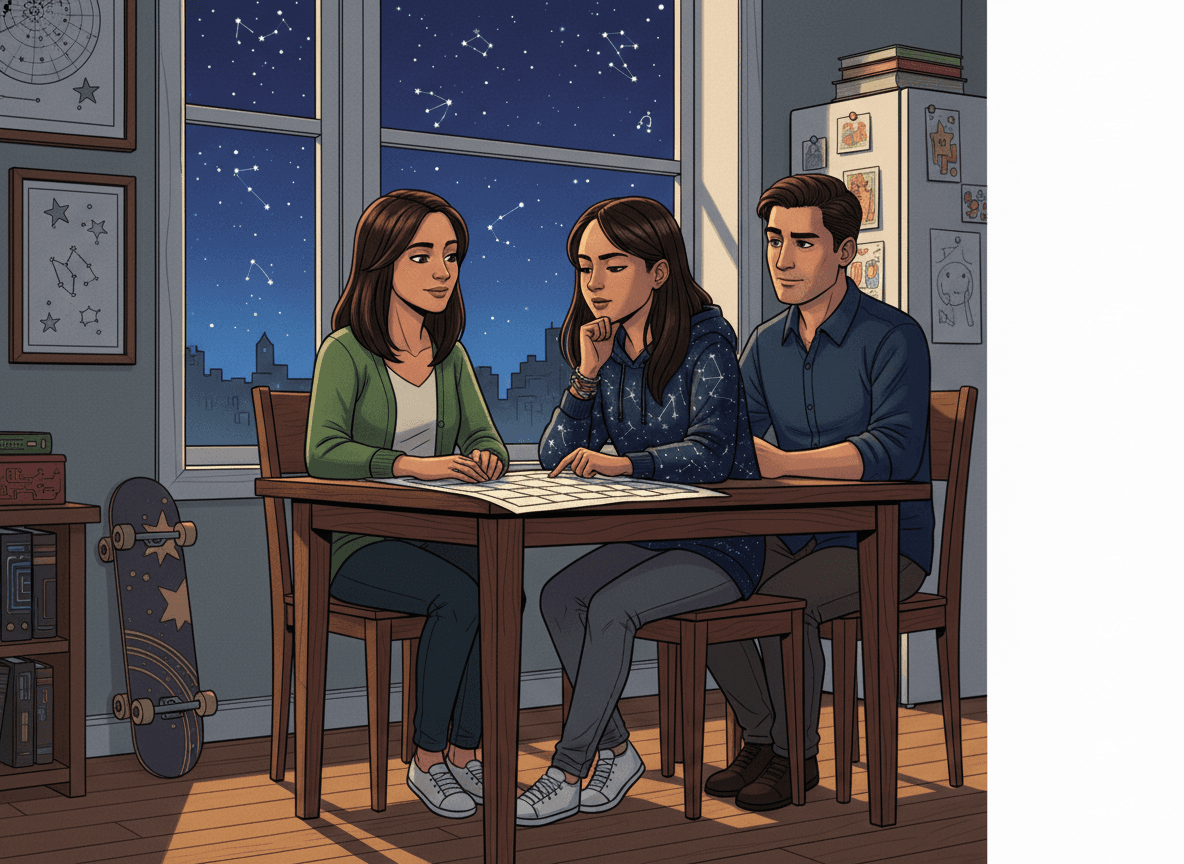
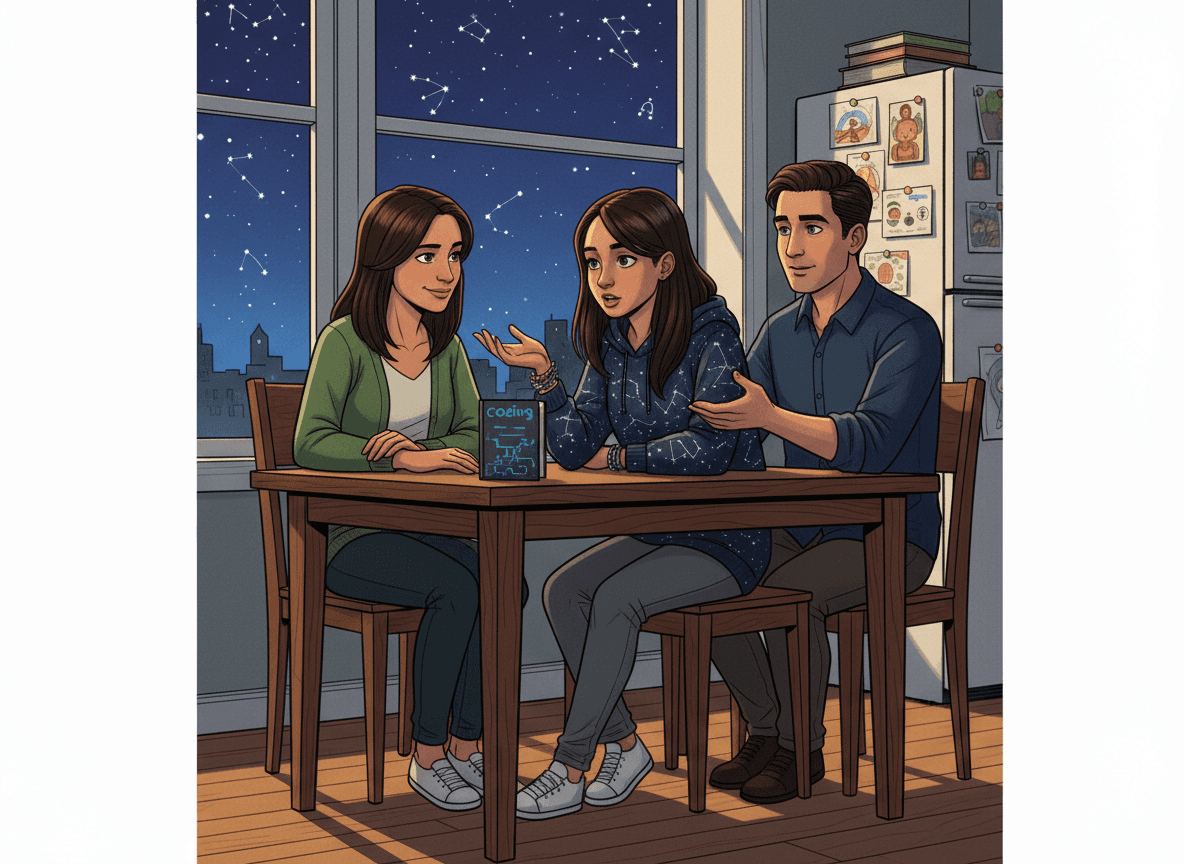
My name is Zara, and I'm eleven years old. I love space, drawing, skateboarding, and coding. My life felt normal until my parents sat me down to tell me something important. They said they had made a decision about how they would live.
Mom and Dad explained that they love me very much. But they told me that sometimes grown-ups realize they aren't happy living together as a married couple. This doesn't mean they stopped being my parents—it means they're making a change about their relationship with each other.
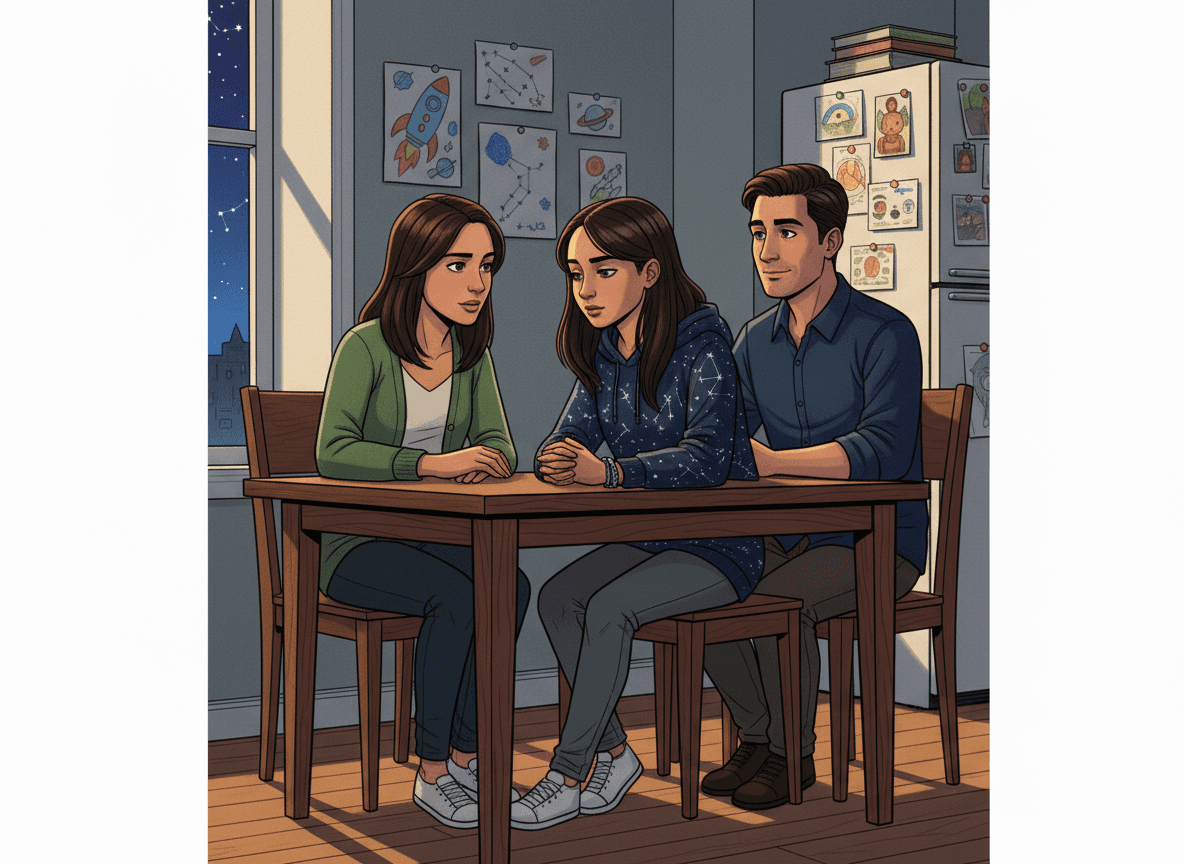
I asked them to explain more. Dad said, "Our love for you is separate from our relationship with each other. Just like the sun and moon are both in the sky, we can both love you even though we'll be in different places." Mom nodded and added, "Sometimes people change. We've grown into different versions of ourselves, and that's okay."
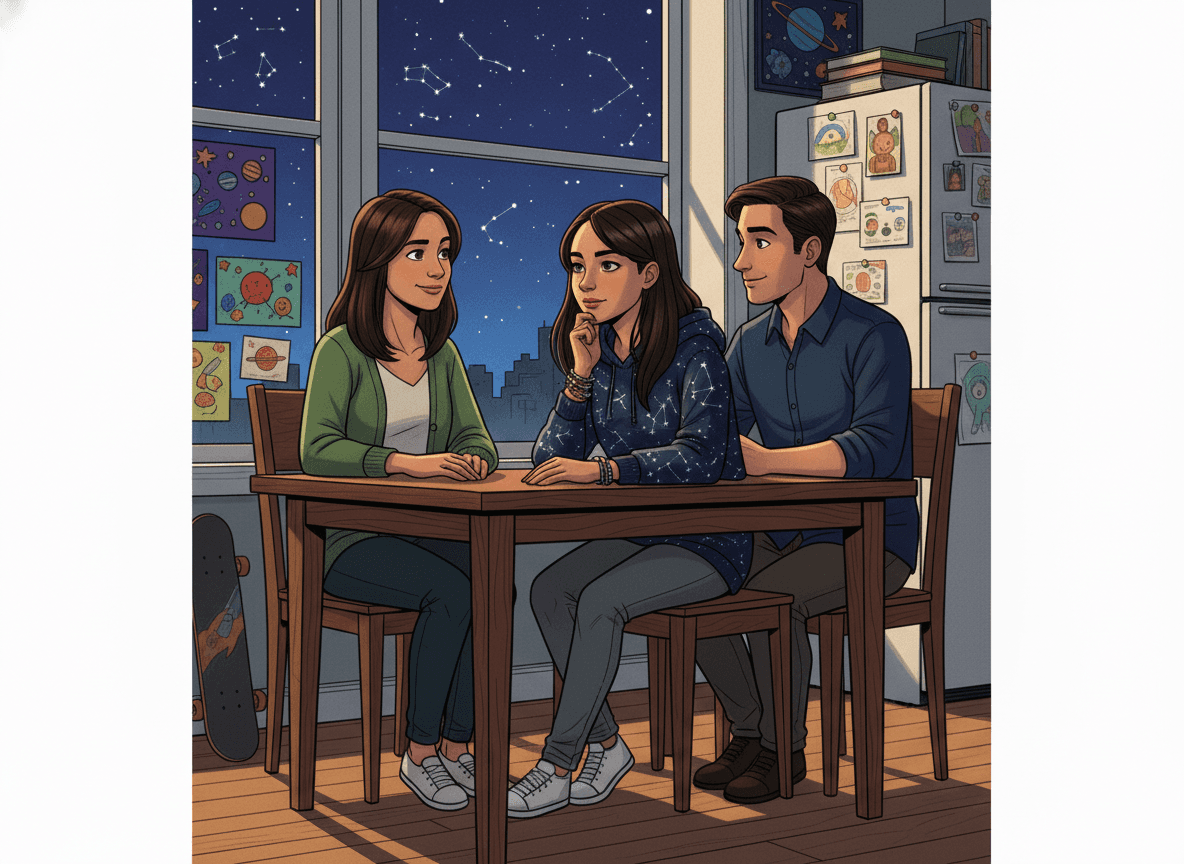
They told me that they had made a plan. They would both stay very involved in my life—just from different homes. Some days I'd be with Mom, and some days I'd be with Dad. Both would come to my events. Both would help me with homework. Both would still be my parents, just living separately.
I felt confused at first. I asked if this was my fault. Mom shook her head firmly. She said, "This is about our adult relationship. You didn't cause this, you can't fix this, and you're not responsible for this. Our decision has nothing to do with how much we love you." Dad agreed completely.
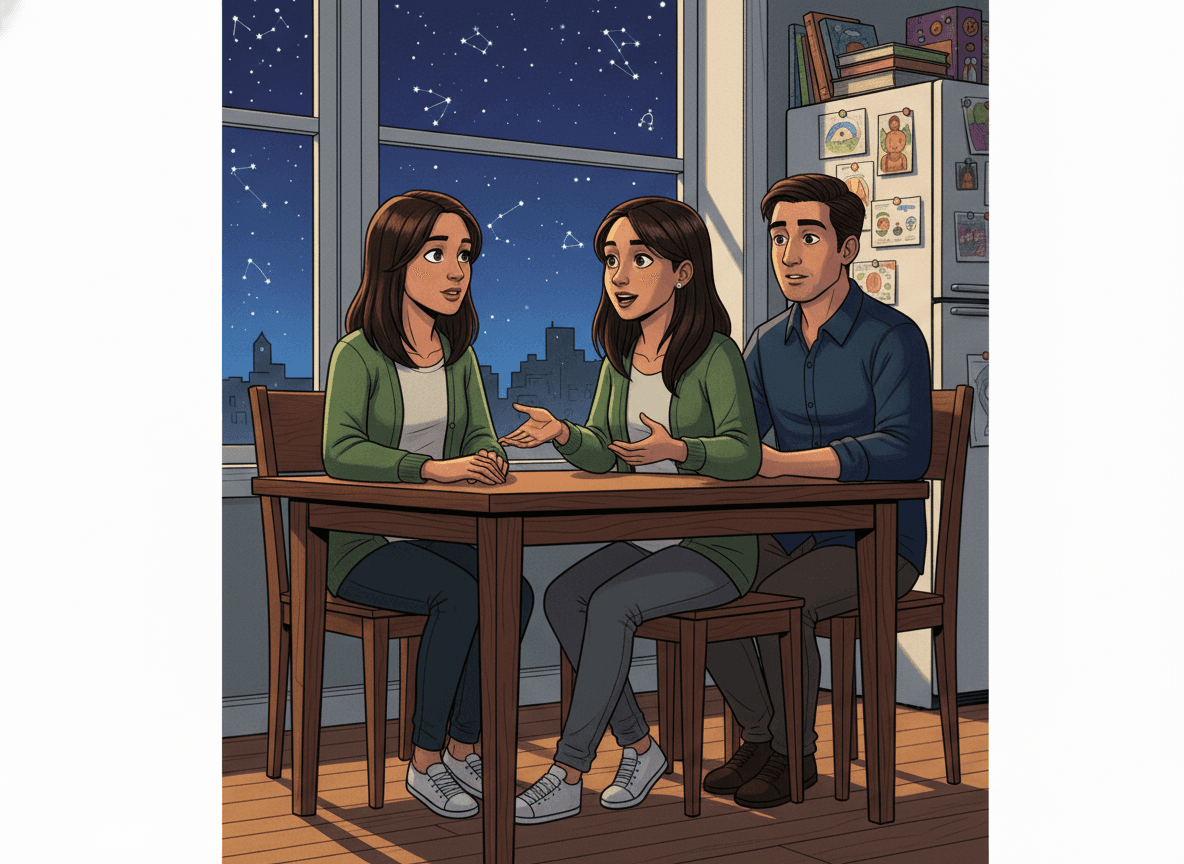
I asked them why they decided to live apart. Mom explained, "Sometimes people's needs change. We realized we're happier when we're not trying to stay in a relationship that isn't working. Living separately means we can both be healthier and happier versions of ourselves." Dad added, "And when we're happier, we're better parents to you."
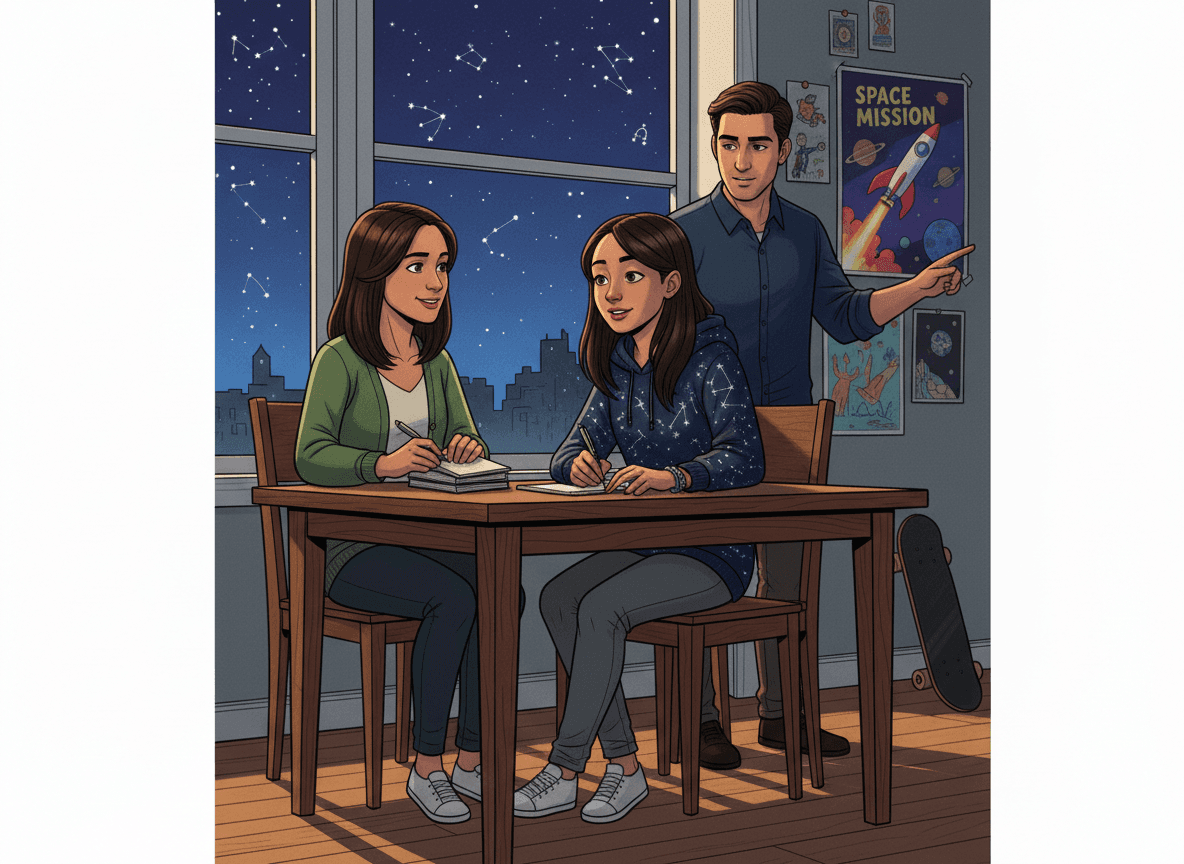
I told them I was worried about forgetting things between houses. Mom said we would keep a checklist together—a kind of mission control for my supplies, just like NASA plans for space missions. Dad suggested I could have important things at both homes, so I wouldn't have to carry everything back and forth. They wanted to make this as easy as possible for me.
I realized I could ask them questions whenever I needed to. I asked what would happen with my friends, my school, and my activities. Both Mom and Dad promised that these parts of my life would stay the same. I would still go to the same school, see my friends, and do everything I love. The divorce was their decision, not mine, and it wouldn't change who I am.
Over time, I learned that many people experience their parents living separately. It's not uncommon, and it doesn't mean anything is broken about me. My parents still care deeply about each other—just not as a married couple. They respect each other and want what's best for everyone.
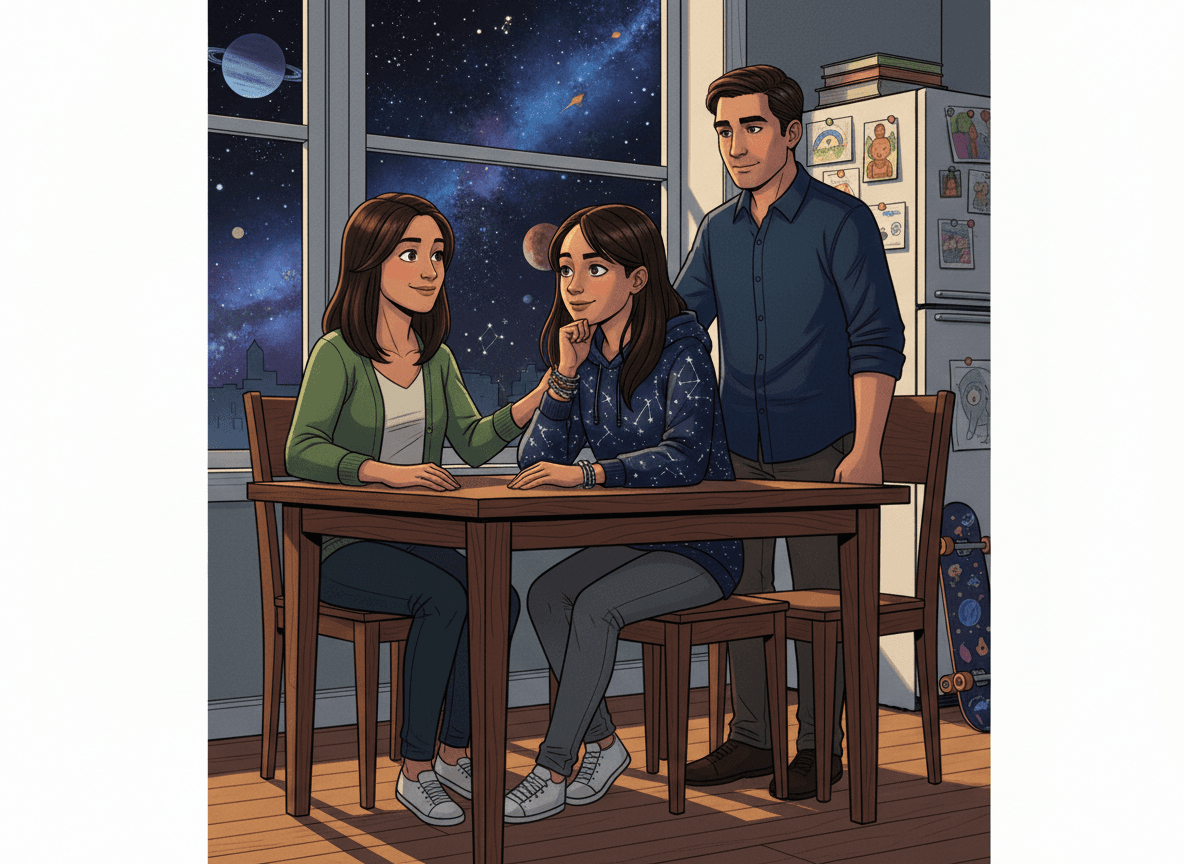
I learned that having two homes doesn't mean I have two separate lives—it means I have two places where I'm loved and supported. My parents' decision to live apart is about their relationship with each other, and my relationship with both of them remains strong. I am safe, loved, and cared for, no matter what changes in their lives.
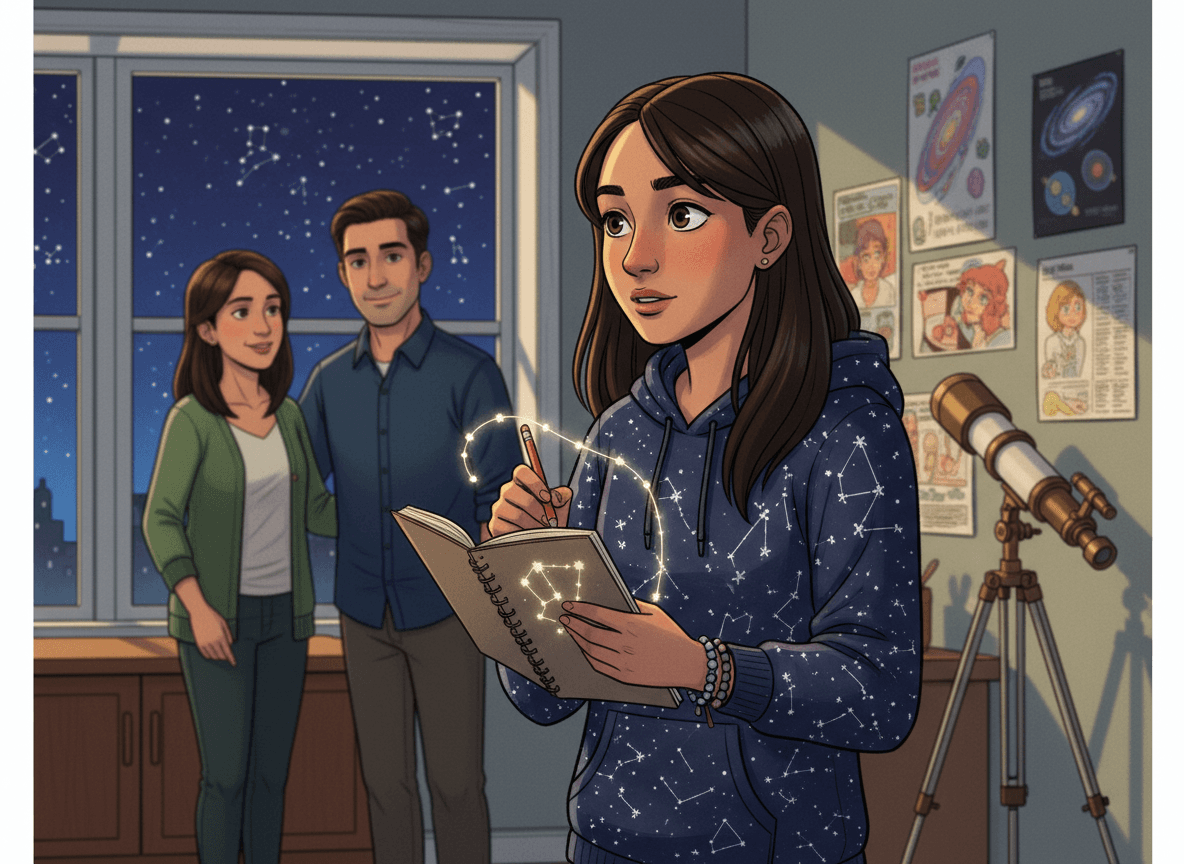
I still have worries sometimes. But now I know I can talk to my parents about them. Both Mom and Dad told me they want to hear my feelings—the hard ones and the happy ones. I'm learning that my family is changing shape, but the love between us isn't going anywhere. I can be myself, pursue my interests, and feel secure knowing both my parents are here for me.
Social Story Methodology
Why This Story Works
When Parents Live Apart directly addresses one of the most anxiety-triggering family changes a child can face, using Carol Gray's technique of concrete explanation paired with reassurance about what stays the same. Children with autism and anxiety often struggle with unpredictability and fear responsibility for adult problems—this story explicitly separates the parents' relationship decision from the child's identity and safety, while Zara's character models asking questions and expressing worry as healthy rather than problematic. By anchoring the narrative in Zara's specific interests (space, coding, skateboarding) and using concrete metaphors (the sun and moon, NASA mission control), the story makes an abstract emotional concept tangible and manageable.
Story Structure
How It's Written
Sentence Types
Voice & Perspective
Story Structure
Practical Guidance
Ways to Use This Story
Separate the Relationship Change
Create a Two-Home Inventory Together
Revisit the "Two Places, One Love" Idea
Confirm What Actually Stays the Same
Plan Regular Check-Ins About Feelings
Want this story made just for your child?
Create a version with your child's name, appearance, and the specific details only they face — in minutes.
from $2.99 · no subscription · pay per story
More Family Stories
Free to read and print
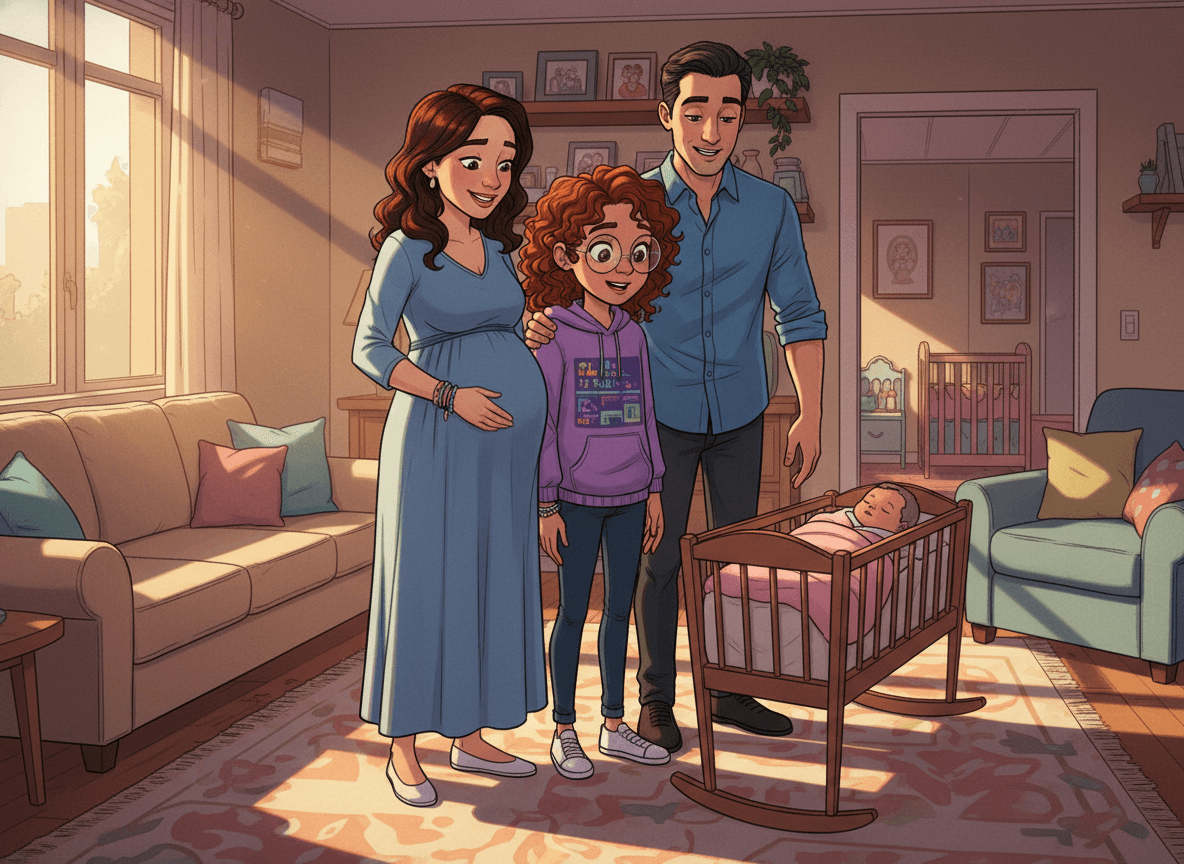
My New Baby Sister
Amara learns what to expect when her family welcomes a new baby sibling, understanding both the exciting changes and the reasons behind them.
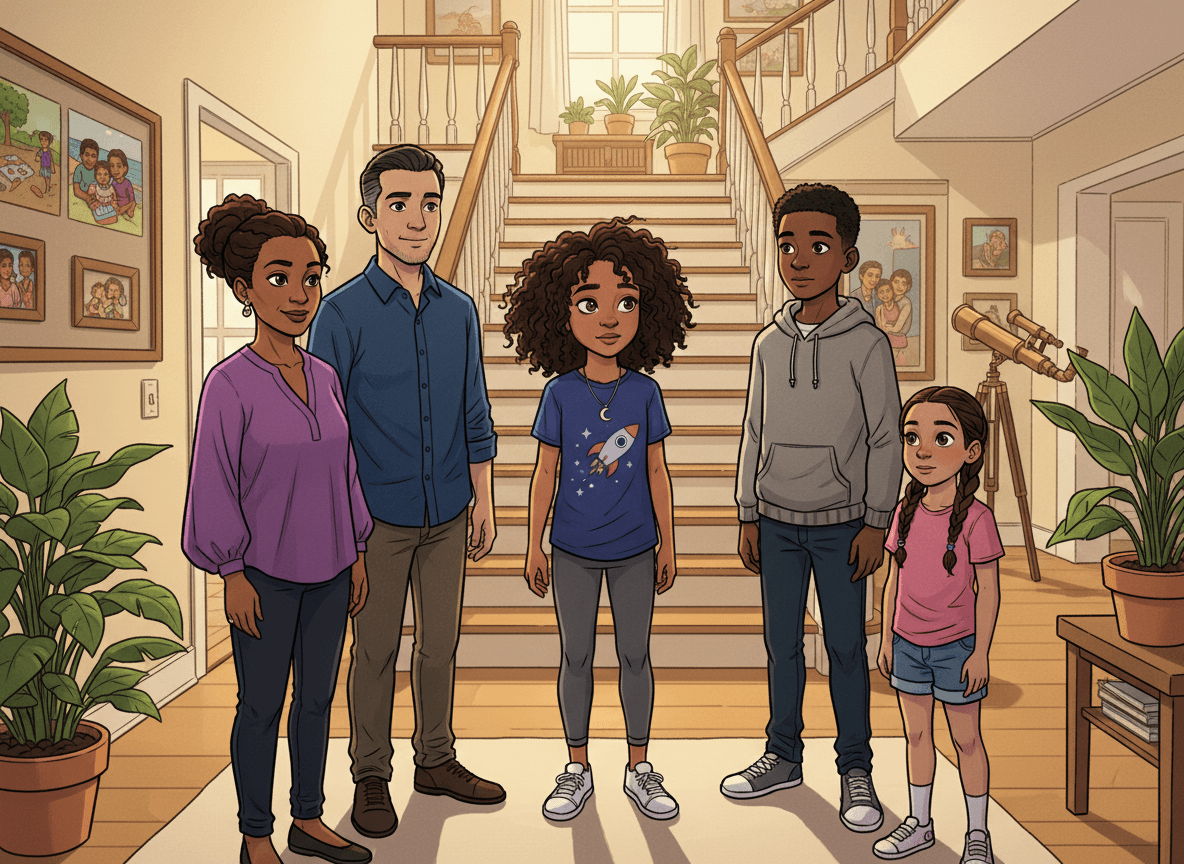
My Bigger, Blended Family
Aisha learns to navigate her new blended family as her mom remarries and she gains step-siblings. This story explores the feelings, changes, and opportunities that come with this transition, helping Aisha understand her step-family members' perspectives and find ways to build new connections.