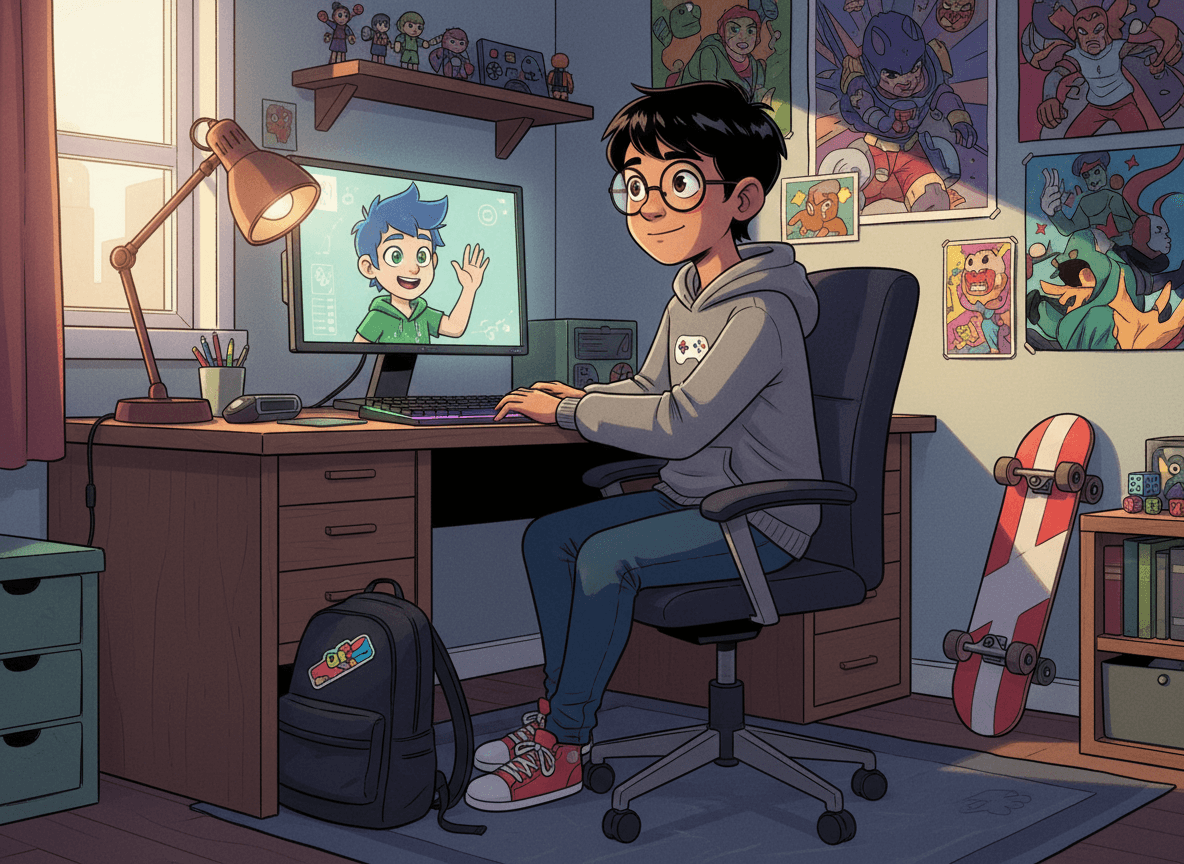
Kai's Safe Online Friends
This story helps Kai understand what healthy online friendships look like, recognize when someone is being unkind online, and learn specific strategies to stay safe and happy when using the internet.
Free to read and print — no account required
Want this story in your inbox?
We’ll email you the link so you can read and print it whenever you need it. Free, and no account required.
One email with your story. We won’t pass your address on, and you can unsubscribe any time.
Read the Story
12 pages · 9 min read read
Show text
Read the Story
12 pages · 9 min read read
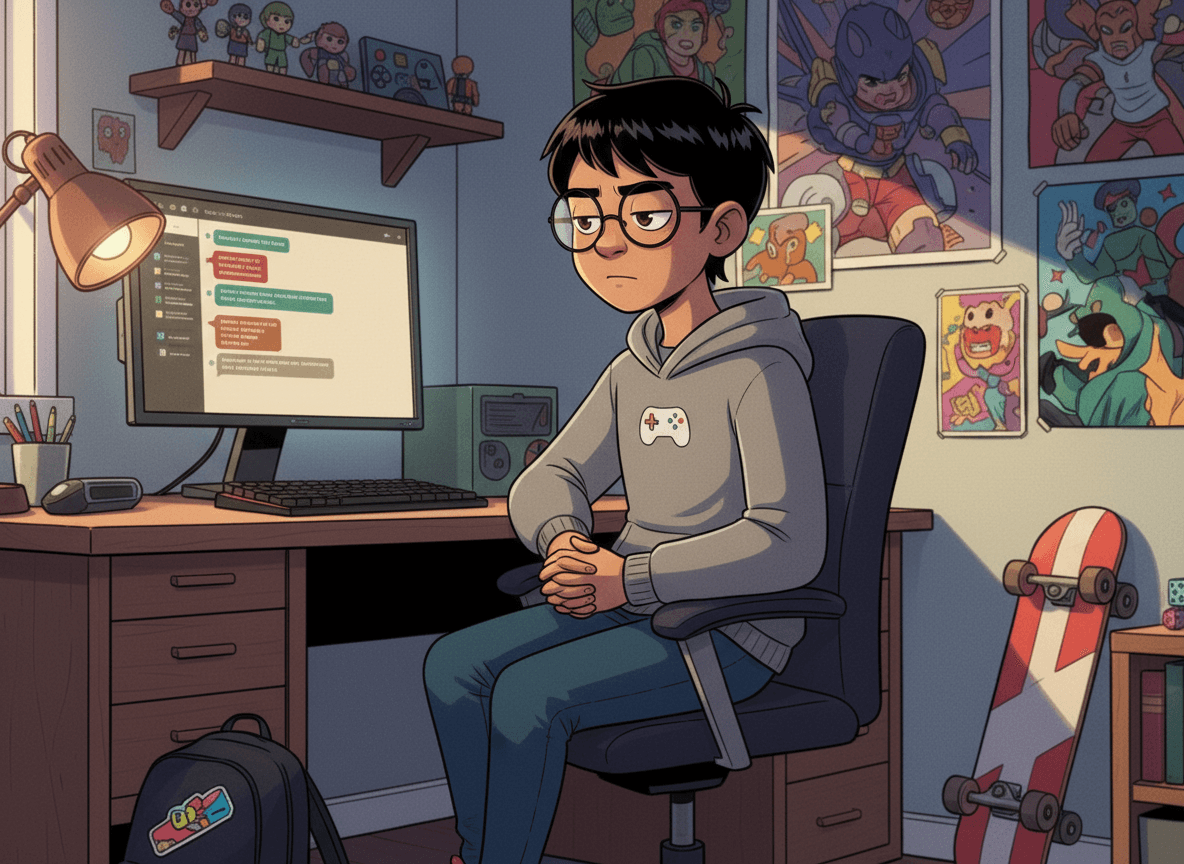
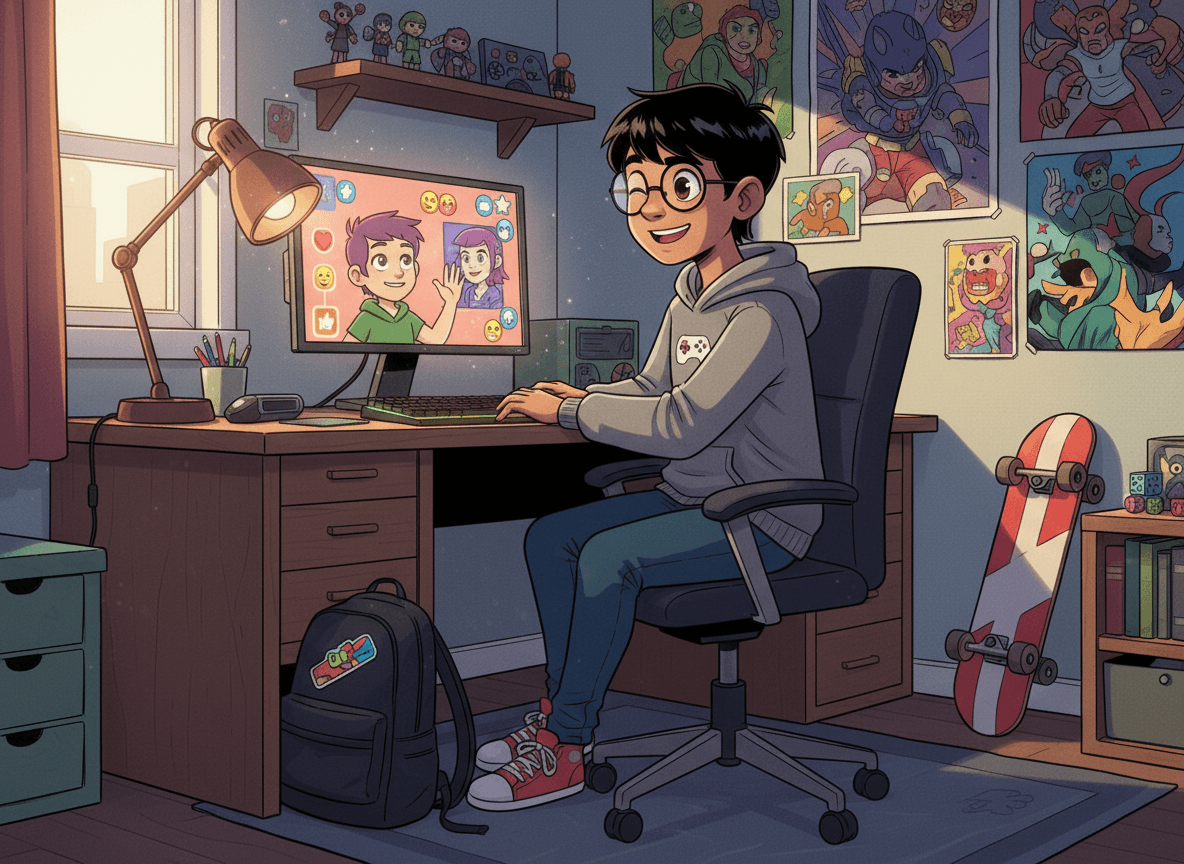
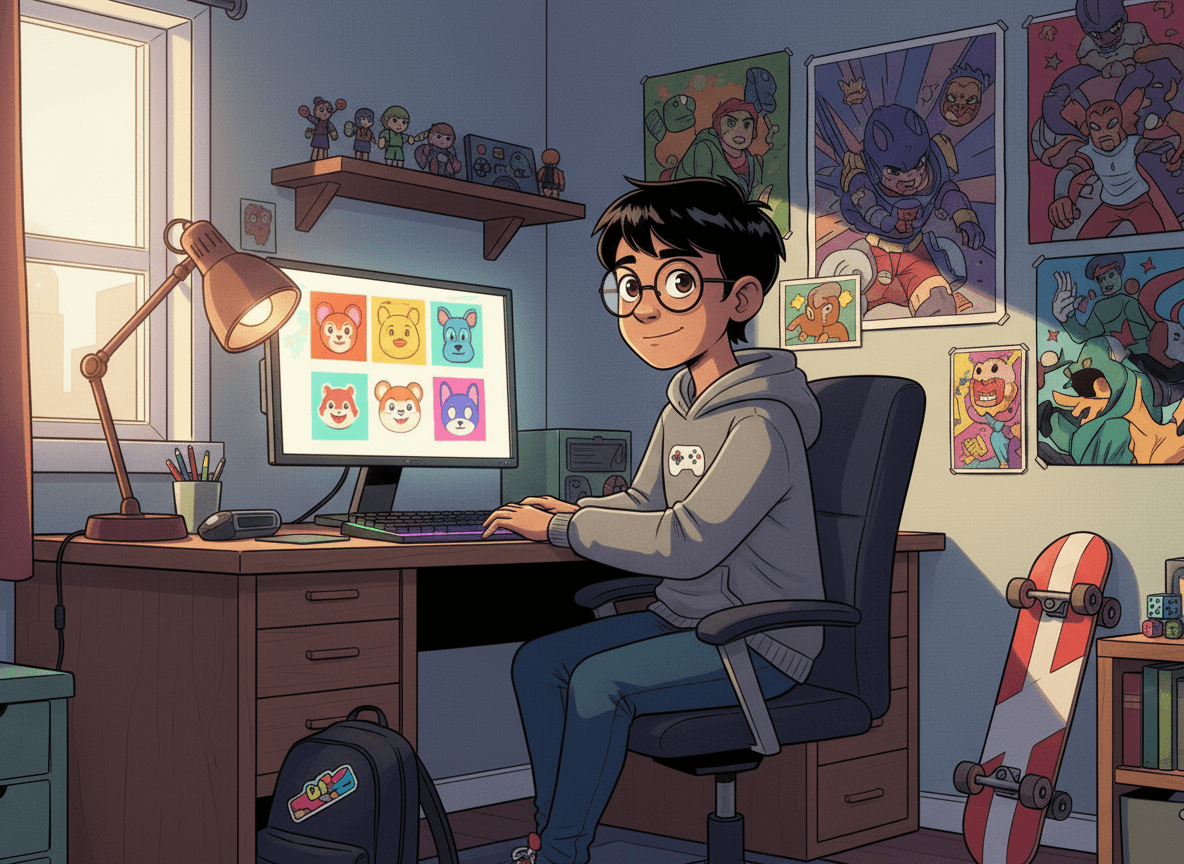
My name is Kai, and I like spending time online with friends. Sometimes I play games, watch videos, or talk to people I know. Online friendships can be really fun and make me feel happy. This story is about how to have safe and kind online friendships.
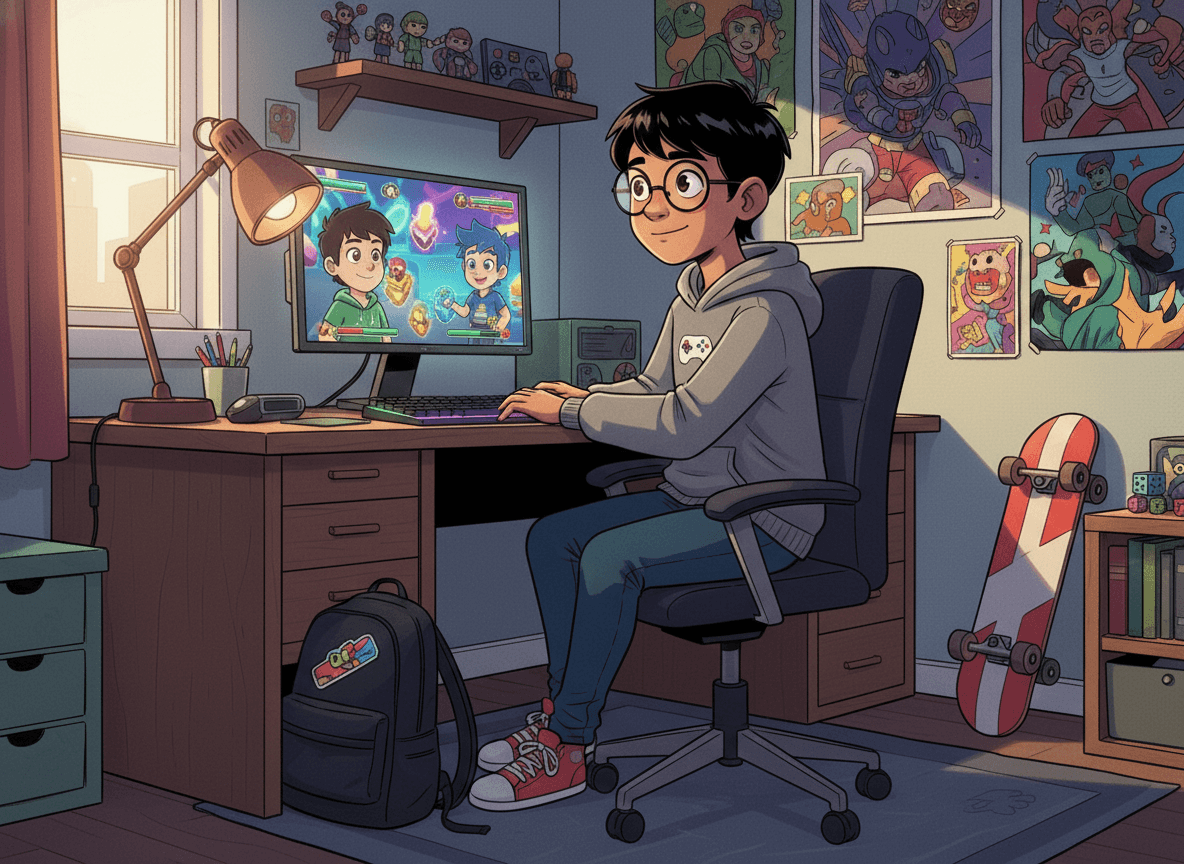
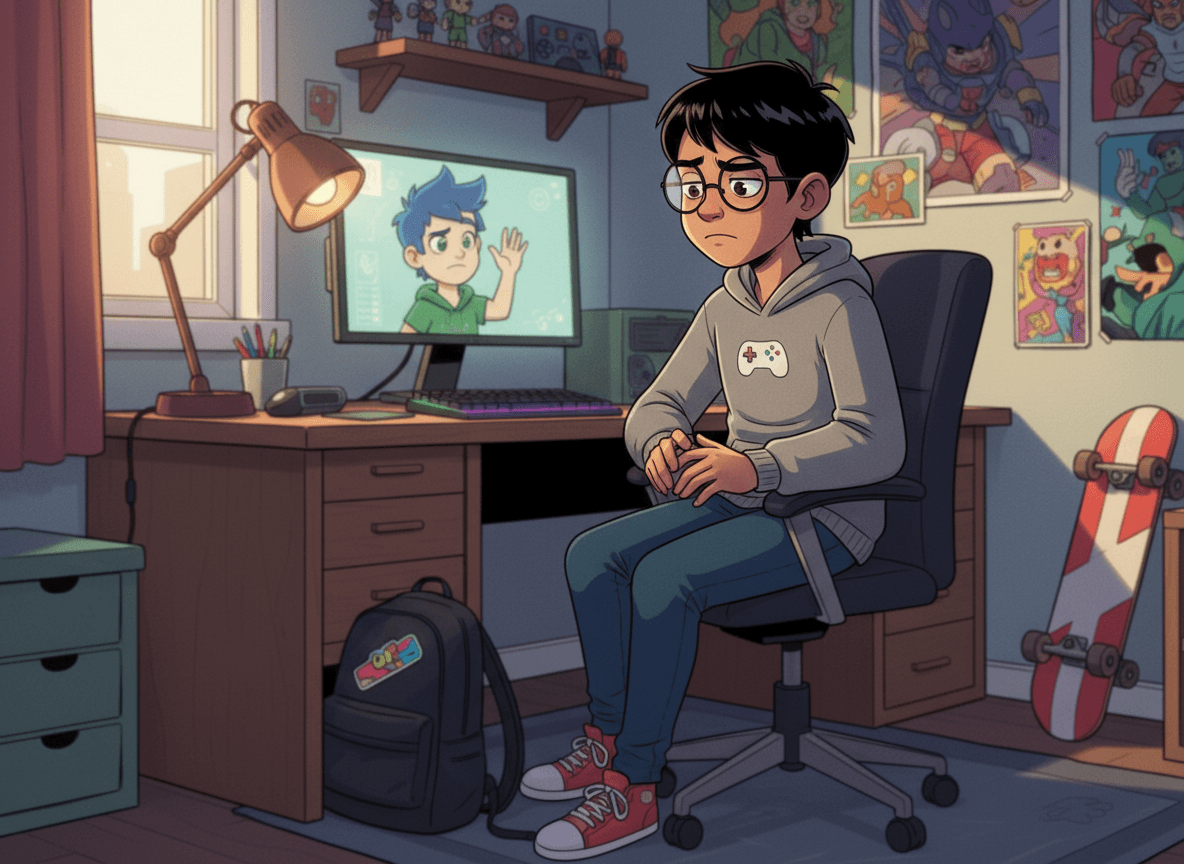
A safe online friend is someone who is kind to me, even when we are not in the same room. Safe online friends say nice things to me because kind words make me feel good inside. They listen to what I say and remember things I tell them because that shows they care about me.
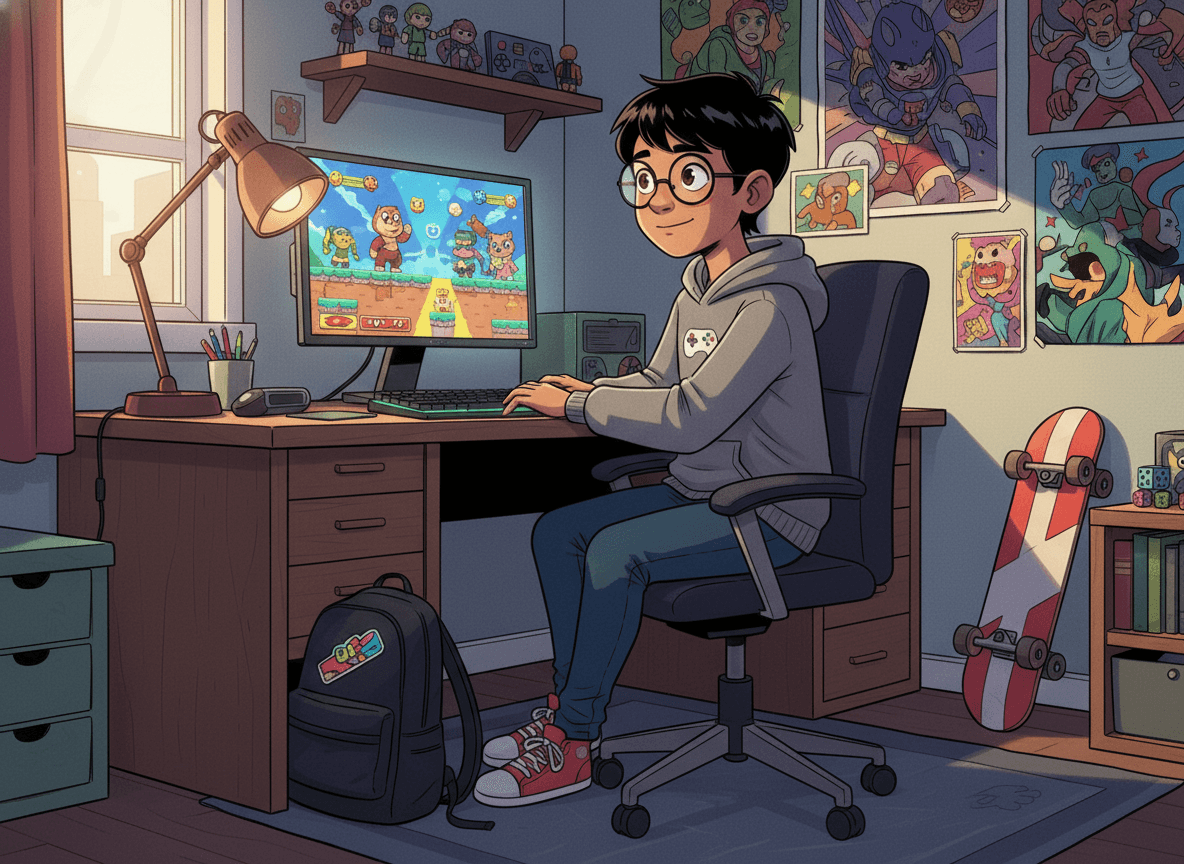
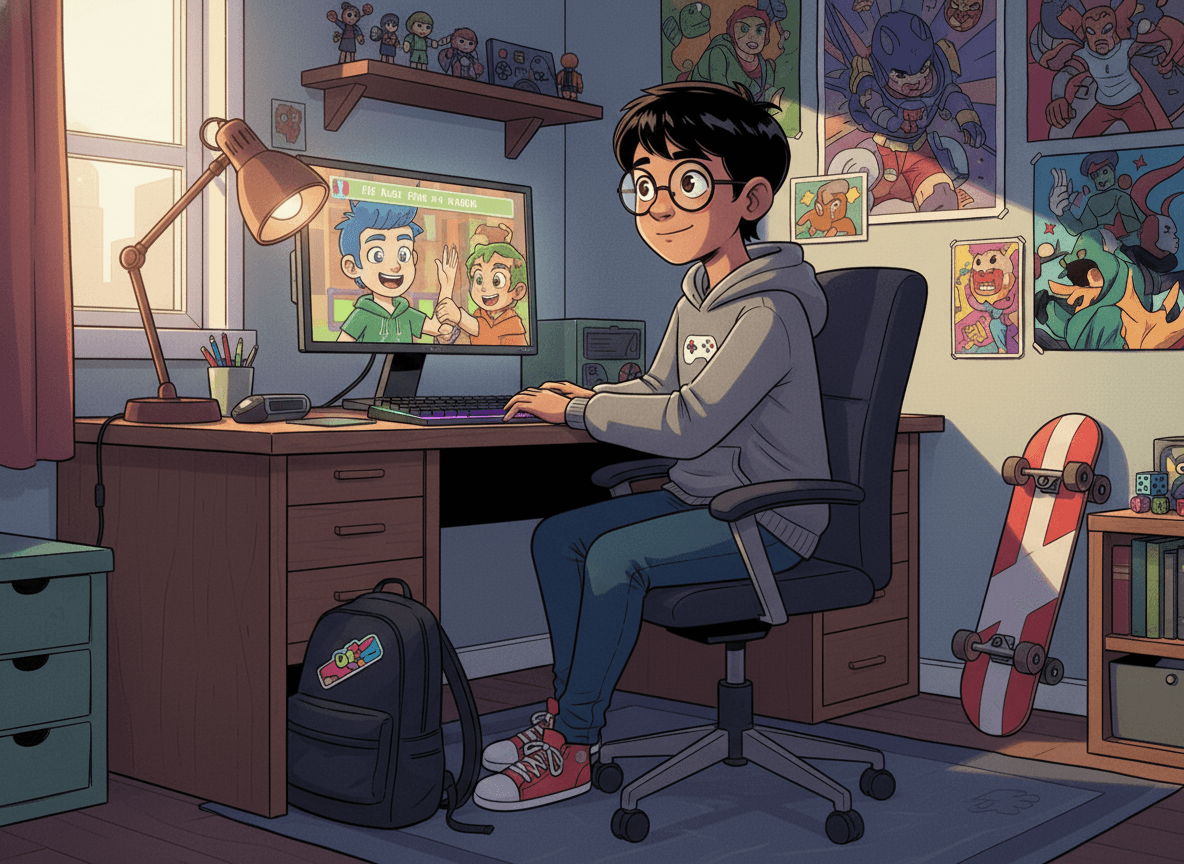
Safe online friends play games with me fairly and follow the rules because playing fairly means everyone has fun. They do not try to trick me or take my things in games. When I win, they say 'good job,' and when they win, I can say 'good job' to them too because being a good sport means we both keep having fun together.
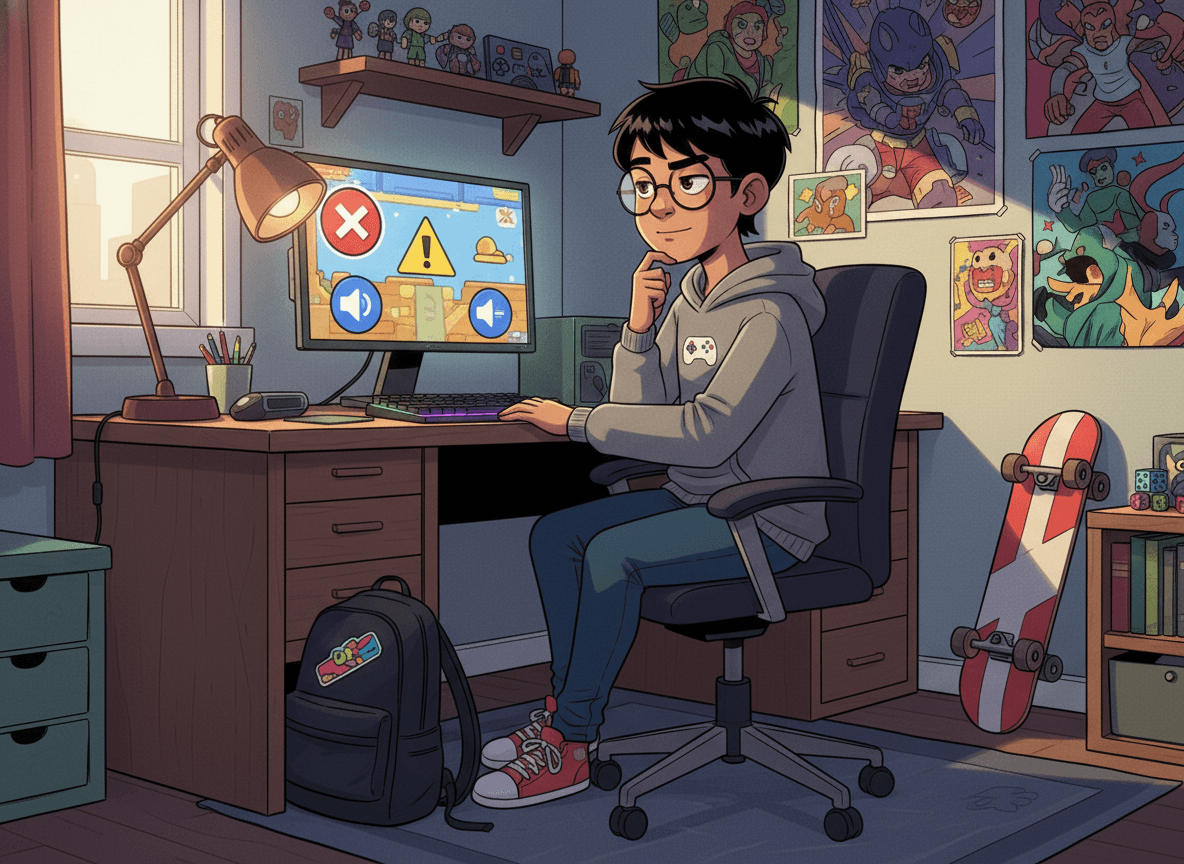
Sometimes, people online are not kind. An unkind person might say mean things to me because they want to make me feel bad, or sometimes they are having a bad day and take it out on others. An unkind person might ask me to share secrets or private information because they want to use it in ways that are not safe for me.
I can recognize when someone is being unkind online. Unkind people might call me names or say mean things about how I look or what I like. They might tell me to keep secrets from the grown-ups I trust because secrets like that are a sign something is not safe. Unkind people might ask me for my real name, where I live, or what school I go to because they want information they should not have.
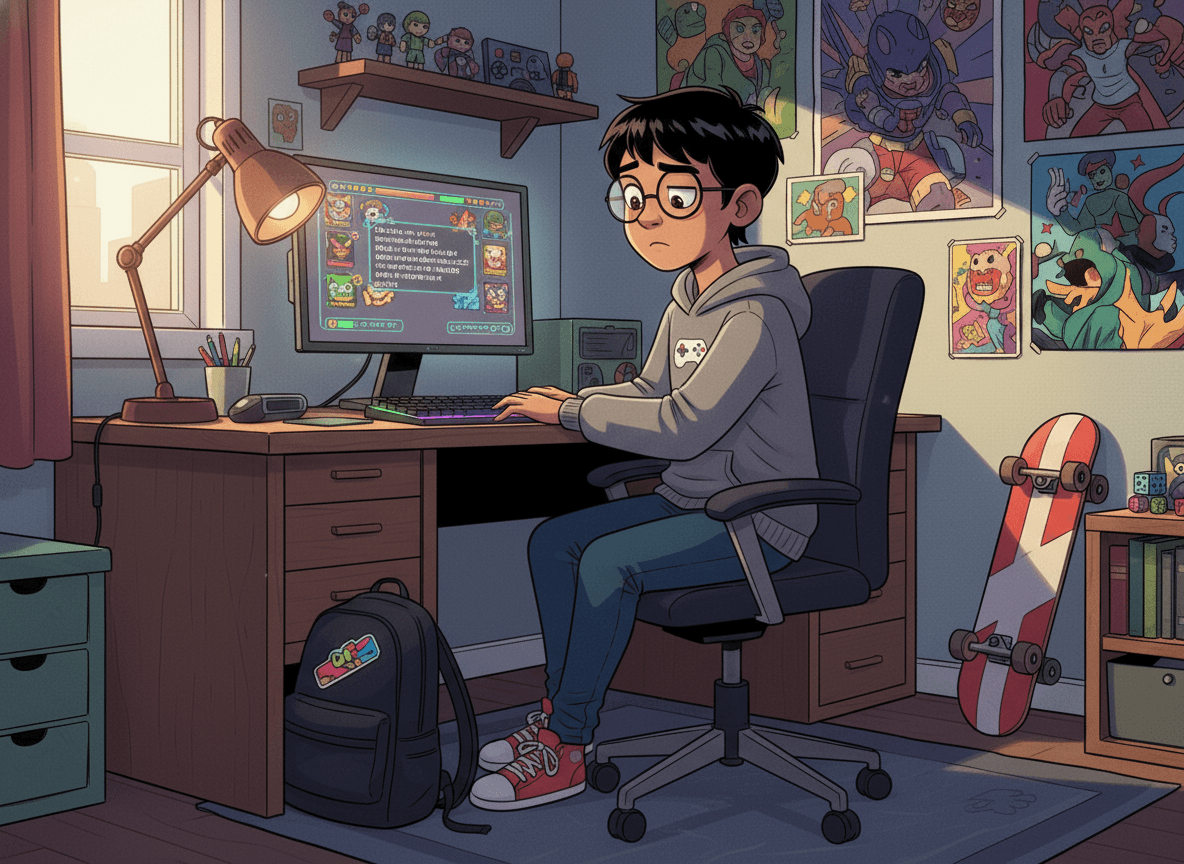
When someone online is unkind to me, I feel sad or worried inside. These feelings are okay to have because my body is telling me something is not right. I do not have to keep talking to someone who is unkind to me. I can stop playing with them or stop reading their messages because my safety and happiness are very important.
If someone online is unkind to me, I have a special strategy to help me feel calmer. I will take three deep breaths: I breathe in slowly through my nose for 4 counts, hold the air in for 4 counts, then breathe out through my mouth for 4 counts. I repeat this three times so my body can relax. This helps my brain think clearly about what to do next.
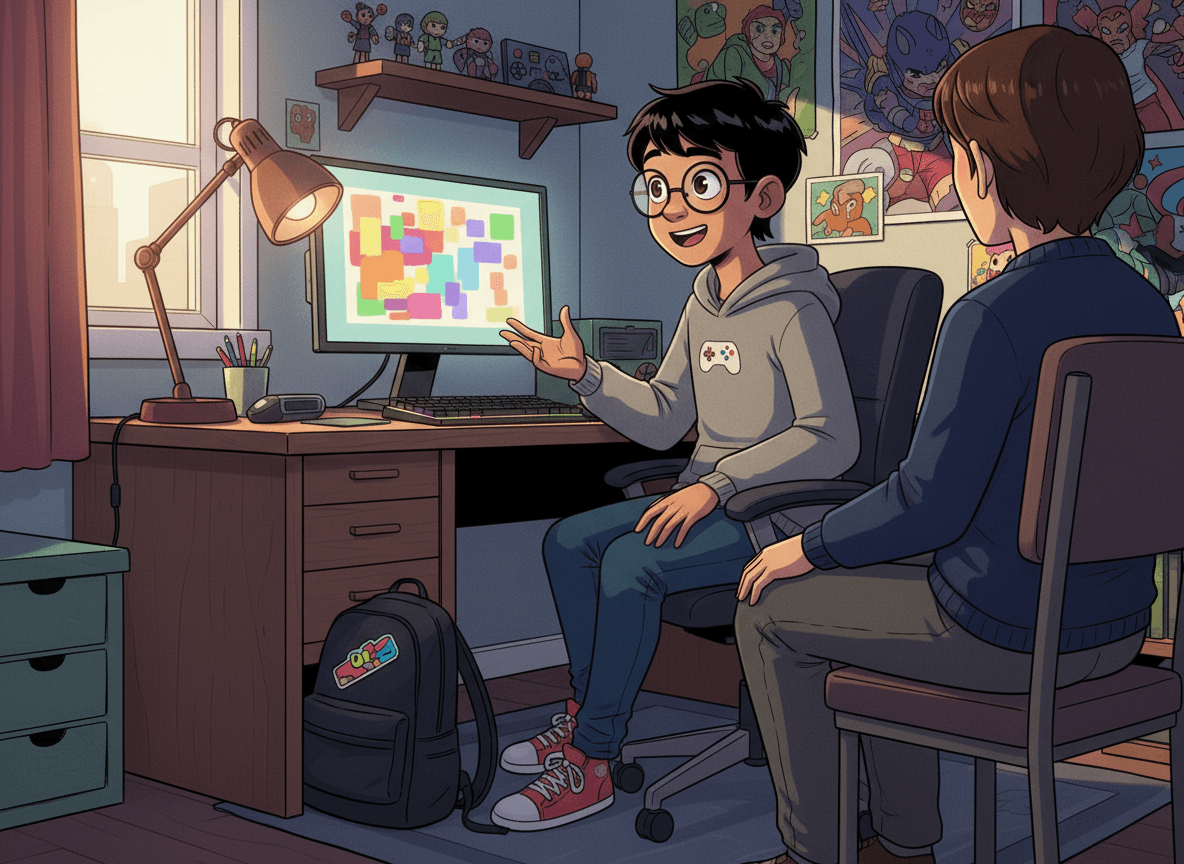
After I feel calmer, I will tell a trusted grown-up right away about what happened. I can tell my parent, teacher, or another adult I trust because they know how to help me stay safe. I will show them what the unkind person said or did because grown-ups need to see it to help me. Telling a trusted adult is the right thing to do because they can make sure I am protected.
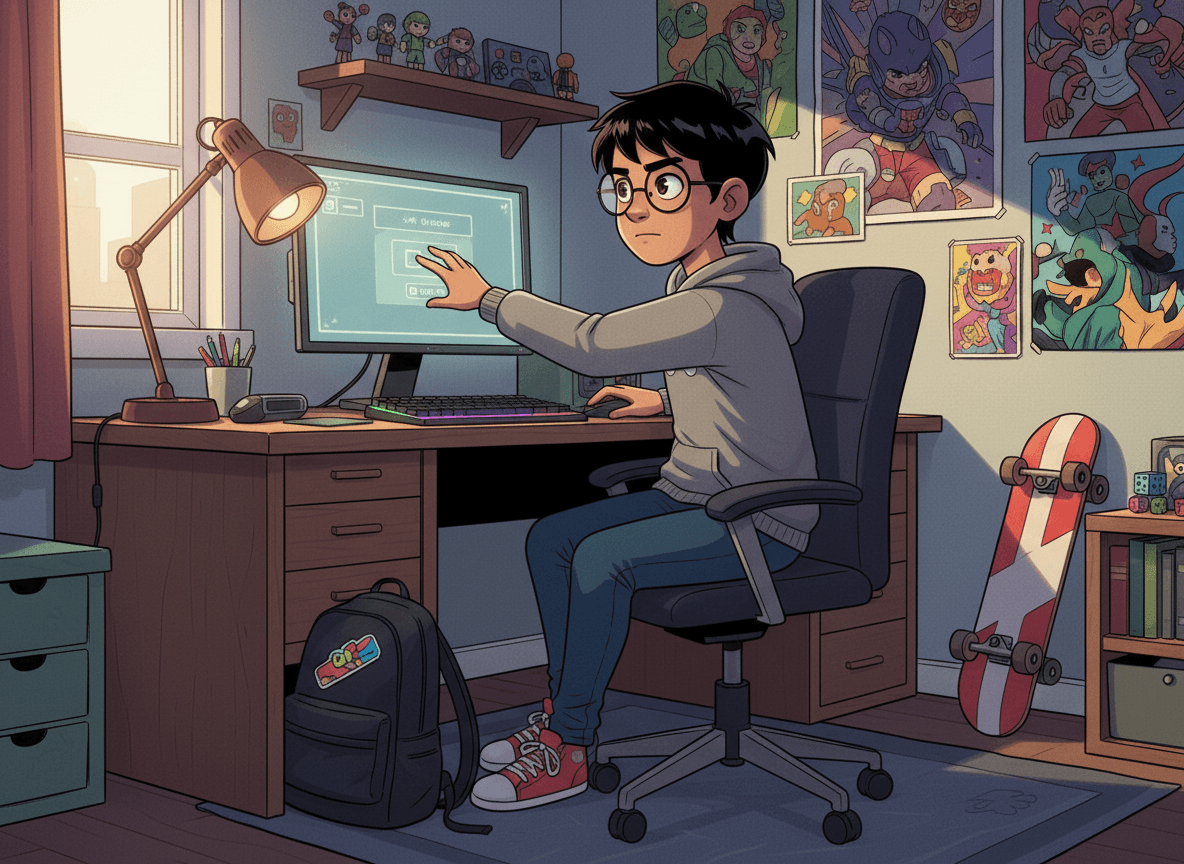
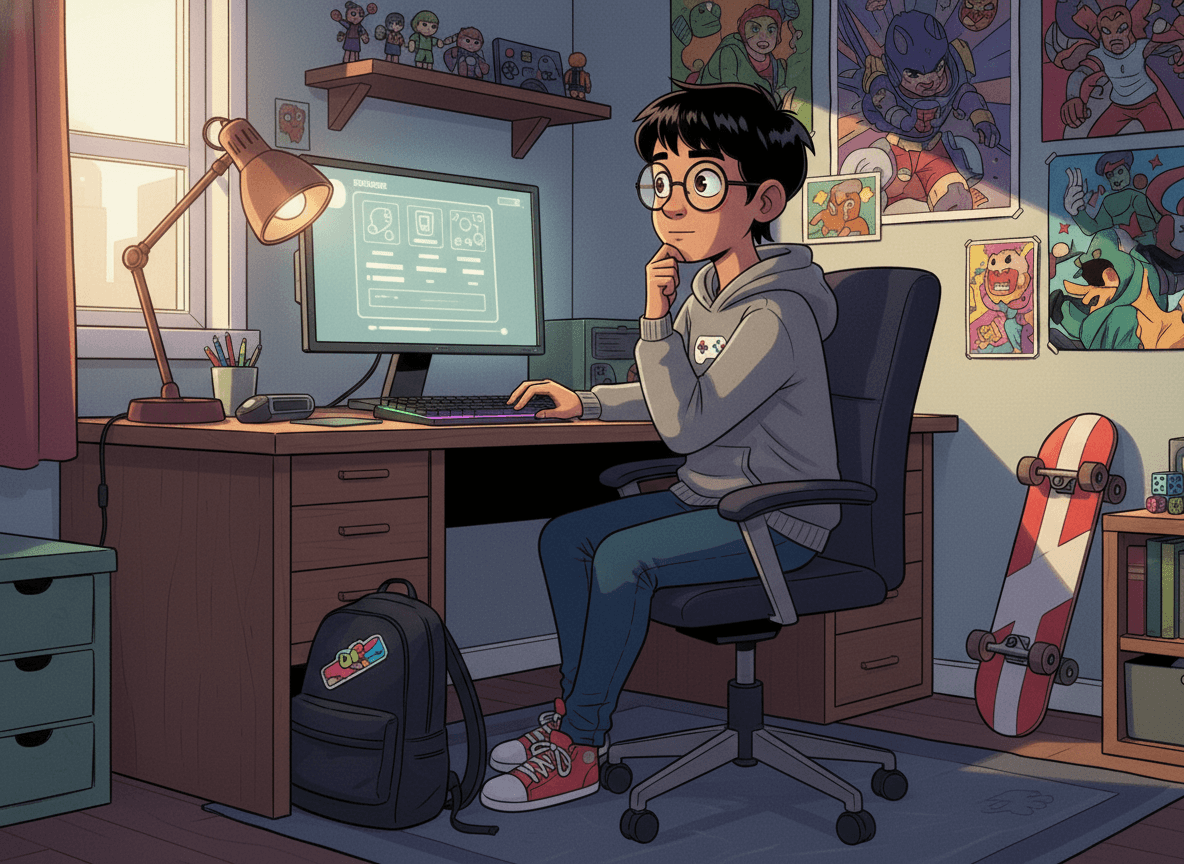
I can also use the 'block' or 'report' buttons on websites and games because these buttons help keep unkind people away from me. When I block someone, they cannot send me messages or play with me anymore because the website stops letting them reach me. Reporting someone tells the people who run the website that this person is being unkind so they can stop them from hurting other kids too.
Safe online friends respect my feelings and my privacy. They do not ask me for pictures or videos of myself because my body is private and belongs only to me. They do not pressure me to do things I am not comfortable with because real friends respect what I say. Safe online friends make me feel good about being me.
I can remember these important rules about online safety: I share my real personal information only with grown-ups I trust, I tell a trusted adult if someone online makes me feel bad, and I block or report anyone who is unkind to me. These rules help keep me safe because they stop people who might want to hurt me from getting close to me.
I am smart and brave, and I know how to stay safe online. When I have kind, safe online friends, I can have lots of fun playing and talking together. I remember that I can always talk to a trusted grown-up if something does not feel right, because that is what keeps me happy and healthy. Online friendships are great when they are safe and kind.
Social Story Methodology
Why This Story Works
Kai's Safe Online Friends addresses a critical gap for children with autism and ADHD: the invisible social rules of digital spaces where tone, intent, and safety cues are harder to read. Using Carol Gray's concrete, reassuring language, this story names specific unsafe behaviors (mean comments, requests for personal information, pressure to keep secrets) so children can recognize them rather than internalize shame. The story also teaches a concrete coping strategy—the 4-4-4 breathing technique—paired with a clear action plan (tell a trusted adult), which reduces anxiety by replacing uncertainty with a step-by-step response.
Story Structure
How It's Written
Sentence Types
Voice & Perspective
Story Structure
Practical Guidance
Ways to Use This Story
Practice the 4-4-4 Breathing
Role-Play Unkind Scenarios
Create a 'Tell a Trusted Adult' Plan
Show Kai the Block and Report Buttons
Revisit Page 12 After Difficult Moments
Want this story made just for your child?
Create a version with your child's name, appearance, and the specific details only they face — in minutes.
from $2.99 · no subscription · pay per story
More Social Skills Stories
Free to read and print
When Friends Play Without Me
Kai feels left out when friends start playing a game without including them, and learns how to join in and make new connections.
Waiting My Turn in Line
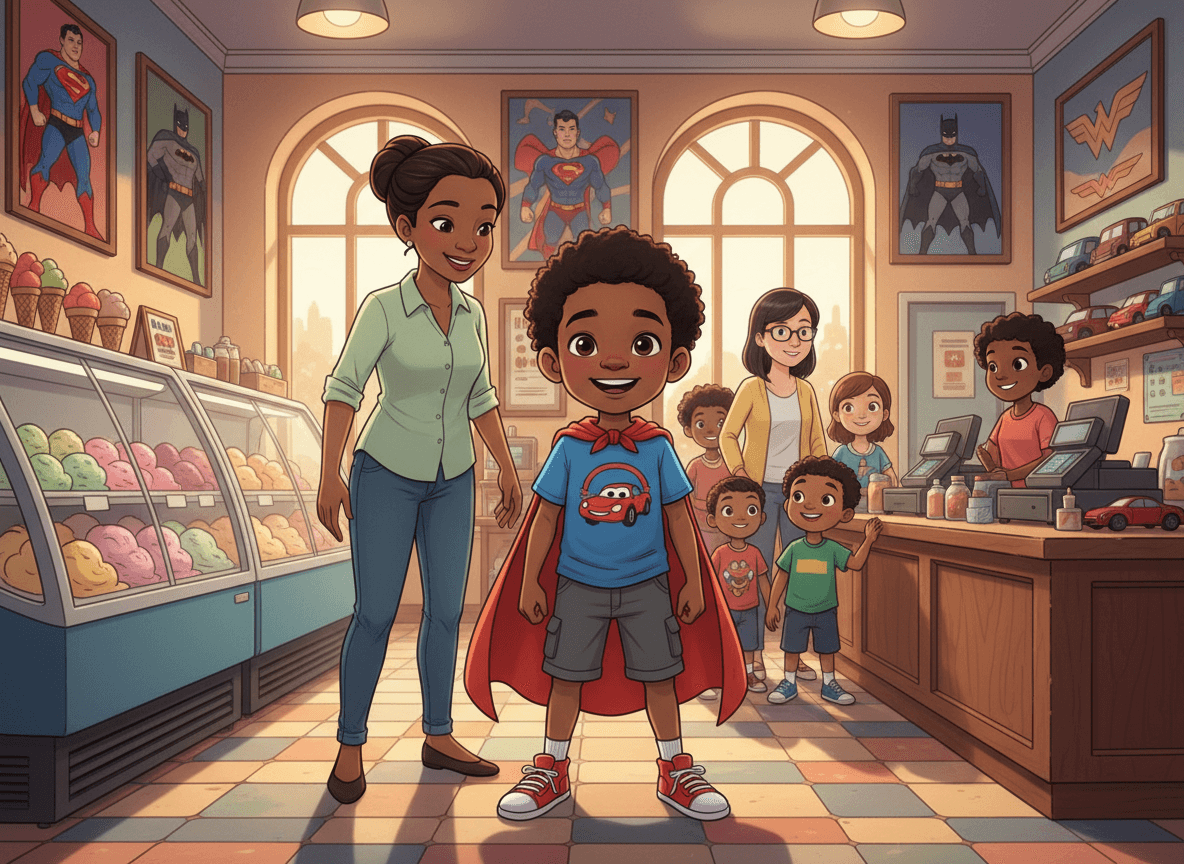
Marcus learns that waiting in line helps everyone get a turn, and discovers strategies to stay calm while waiting. Set at a superhero-themed ice cream shop, this story shows Marcus practicing patience and seeing why lines work.

Taking Turns With Friends
Priya learns that taking turns and sharing toys with classmates helps everyone have fun together and makes friendships stronger.