Working Together on Projects
Jordan learns how group projects work, discovers their own strengths to contribute, and finds ways to share ideas with classmates even when speaking up feels difficult.
Free to read and print — no account required
Want this story in your inbox?
We’ll email you the link so you can read and print it whenever you need it. Free, and no account required.
One email with your story. We won’t pass your address on, and you can unsubscribe any time.
Read the Story
9 pages · 7 min read read
Show text
Read the Story
9 pages · 7 min read read
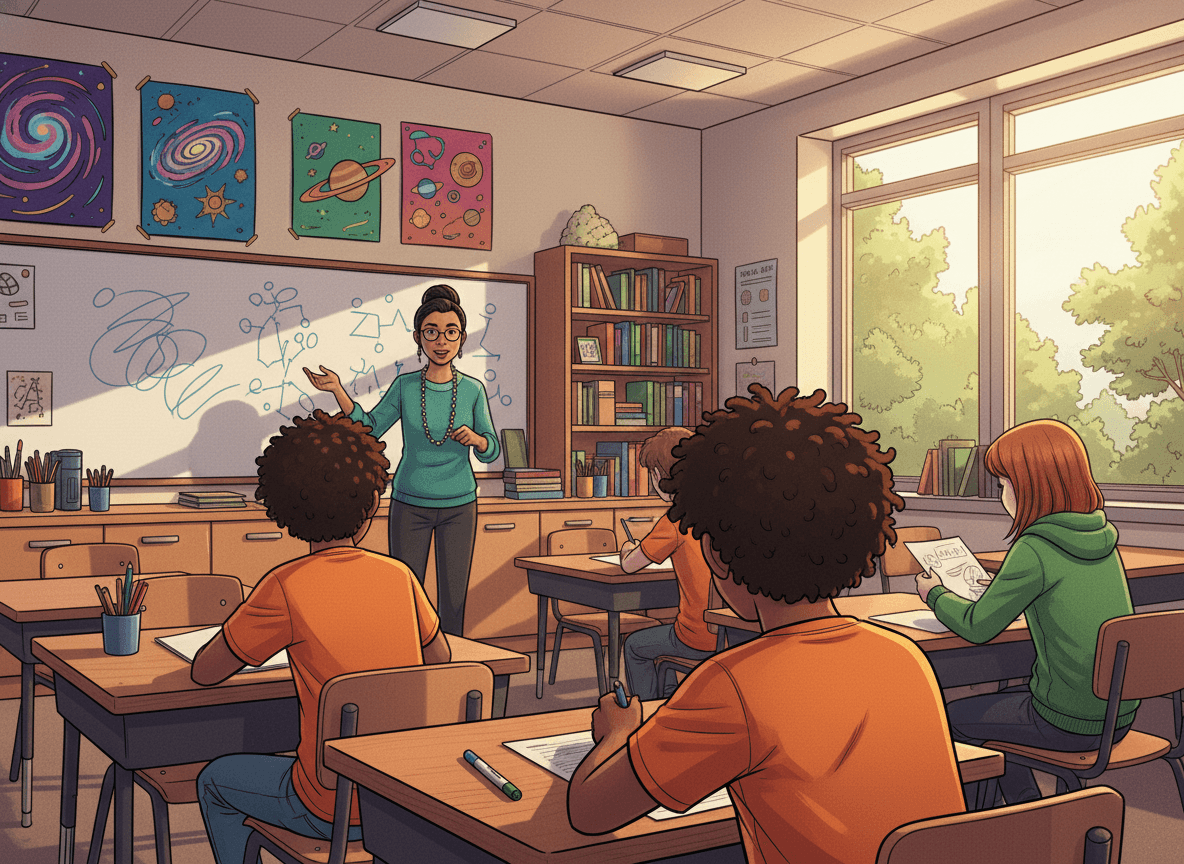
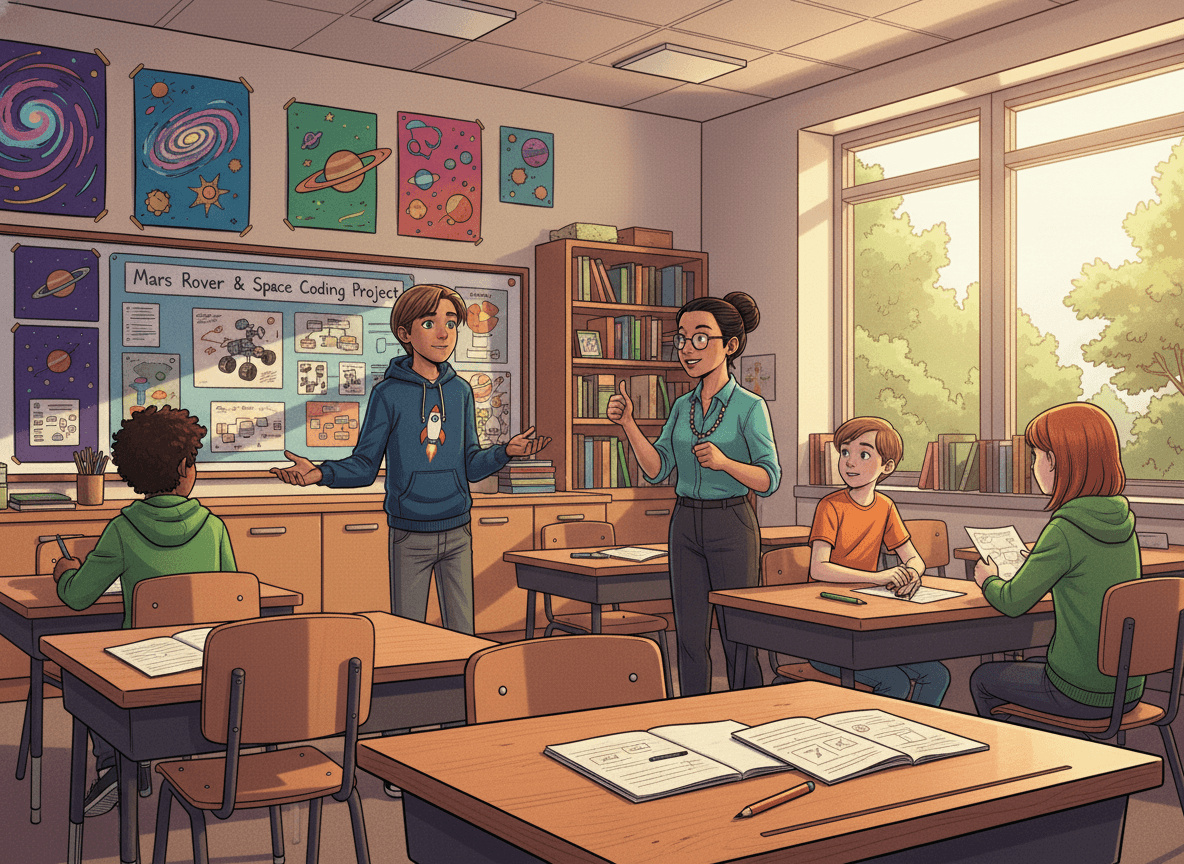
My teacher, Ms. Chen, is explaining that our class will be working on group projects. She says we'll work in teams of three to research and create a presentation about space exploration topics. I like learning about space, so this topic interests me. Ms. Chen explains that group projects help us learn how to work together and share ideas—skills that will help us in school and later in life.
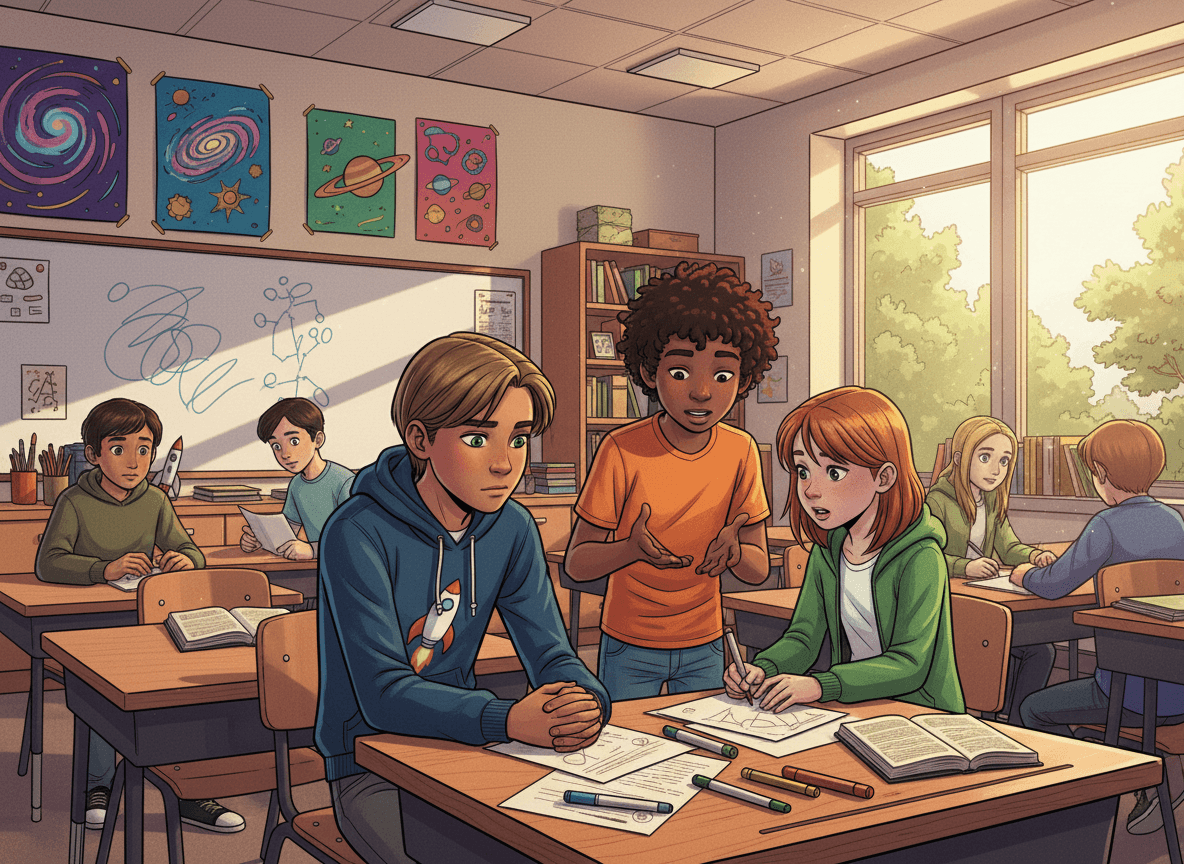
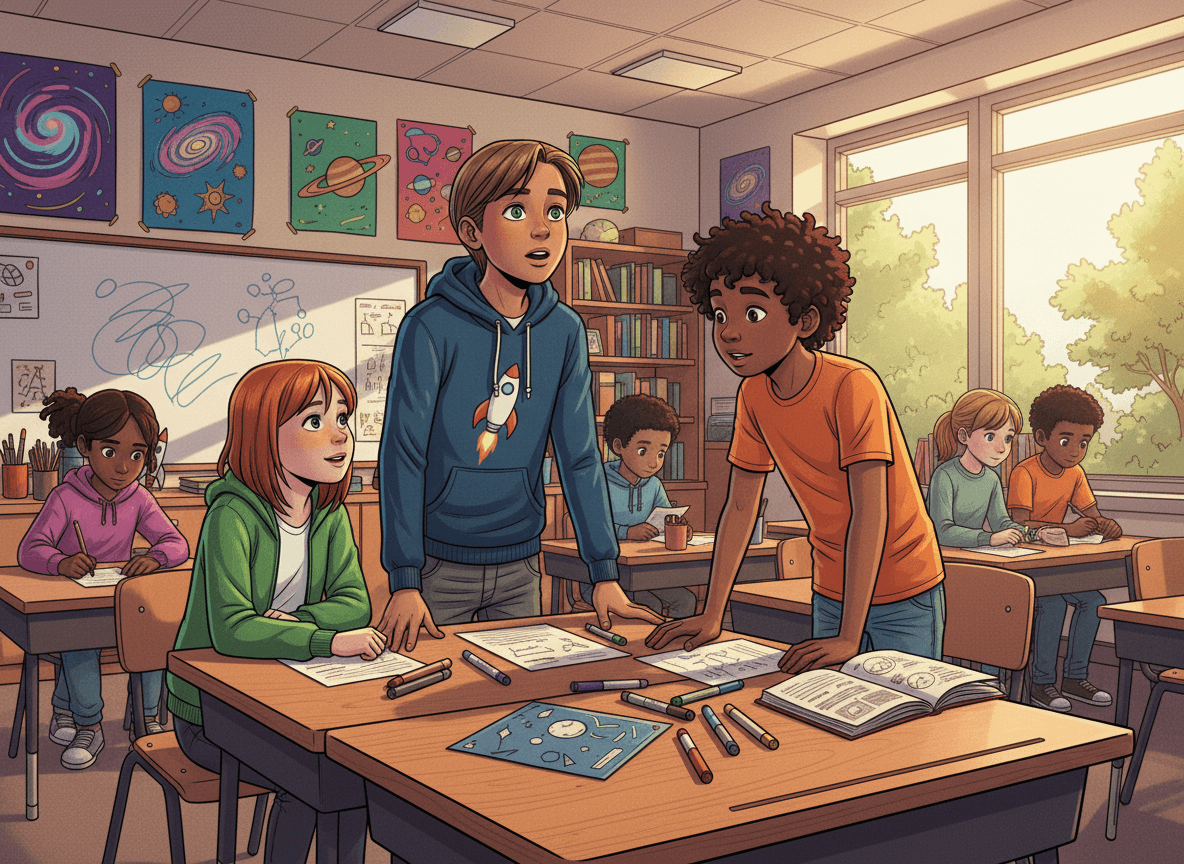
Ms. Chen assigns me to work with Alex and Sam. My stomach feels tight. I wonder what will happen if I don't contribute enough, or if I disagree with their ideas. Group projects mean I'll have to speak and share my thoughts with classmates. This feels harder than just doing the work alone. But I remind myself that many people feel uncertain about new things. Ms. Chen chose us for a reason—she knows we can work together.
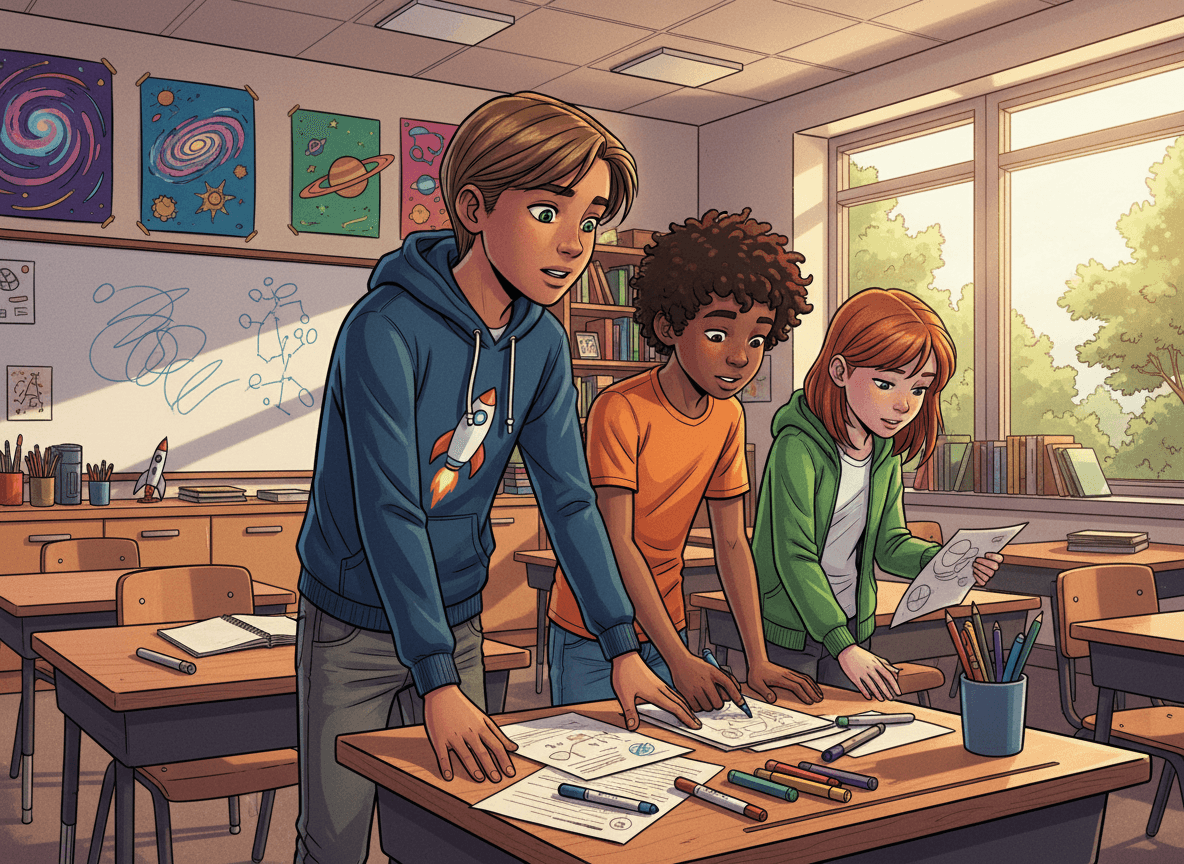
Our group meets at a table to start planning. Alex and Sam are already talking about different space topics. I sit quietly, listening to their ideas. Sam wants to research black holes. Alex suggests studying Mars exploration. I have an idea too—I want to research how coding is used in space missions—but I'm not sure if I should say it. I realize that staying quiet means my ideas never get heard. Even if my idea isn't used, sharing it helps the group know what I'm thinking.
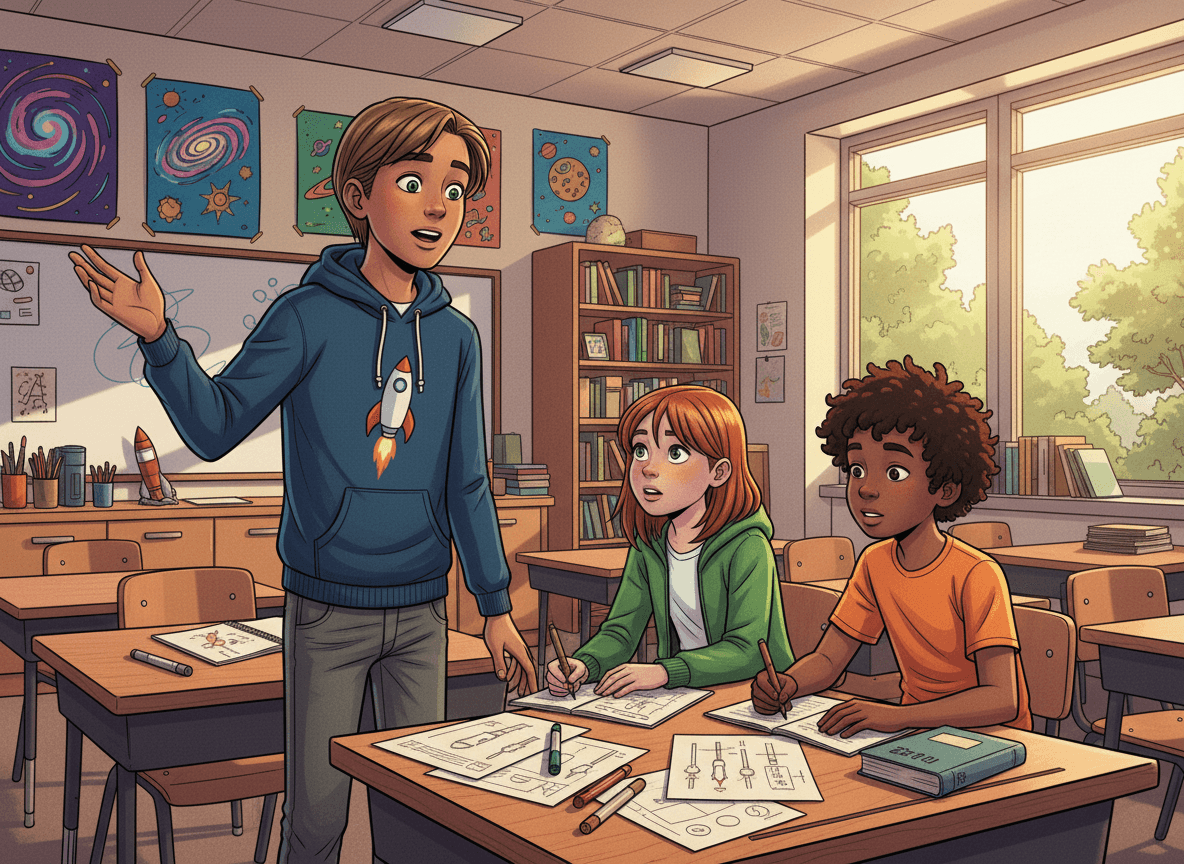
I take a slow breath and speak up. I say, 'I've been thinking about how coding helps space missions work. We could research that topic.' My voice is quiet, but I said it. Alex and Sam both look interested. Alex says, 'That's cool! We could combine topics—research Mars exploration AND how coding helps rovers work on Mars.' When my classmates respond positively, I realize they were waiting to hear what I thought. My idea added something valuable to the group.
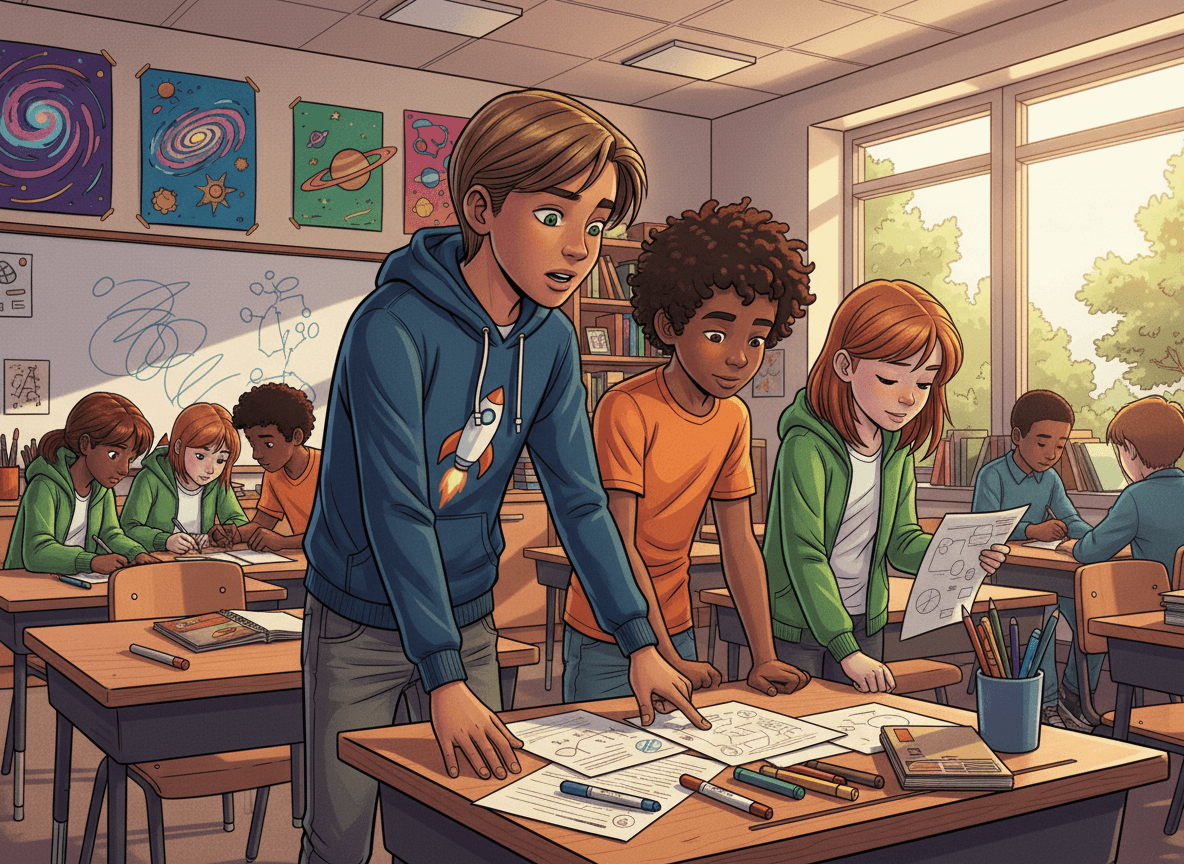
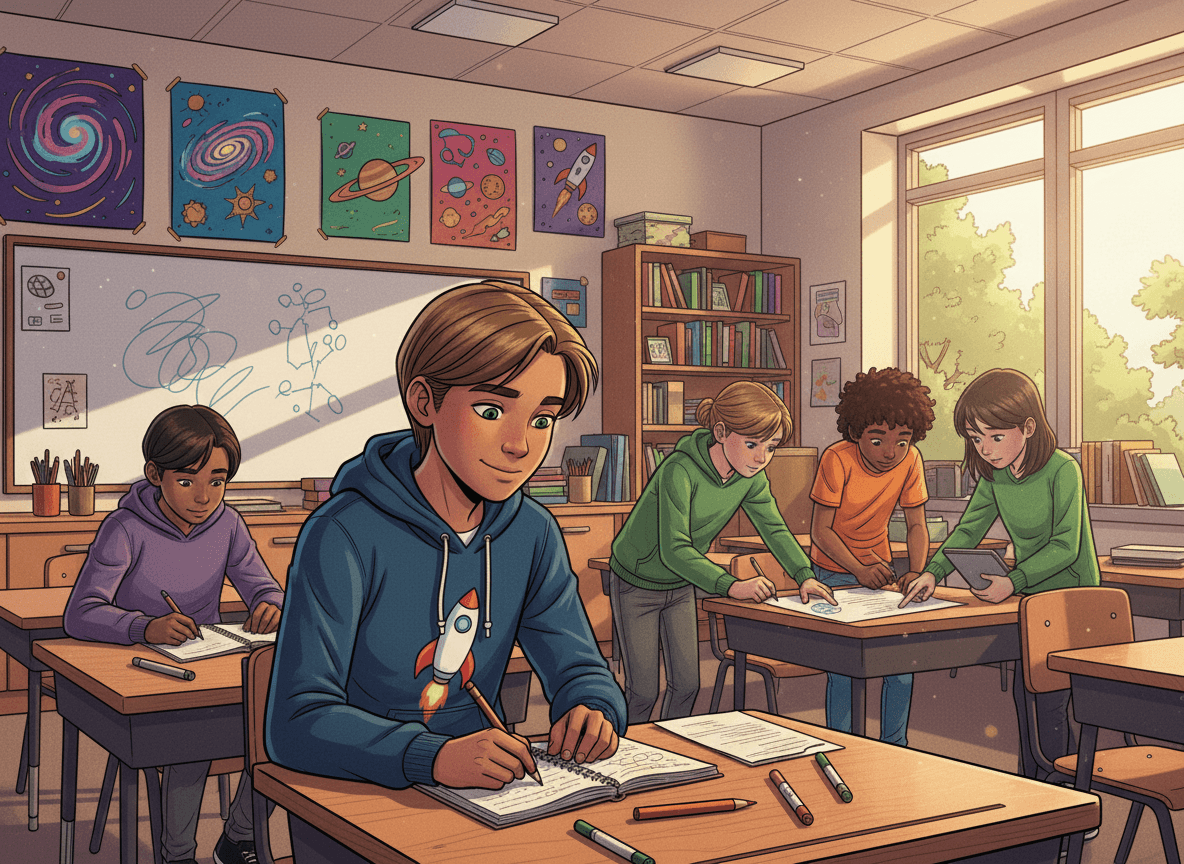
Now the three of us decide how to divide the work. We realize we each have different strengths. Sam is good at organizing information and creating outlines. Alex is good at finding resources and research. I'm good at understanding how systems work and explaining them clearly. By dividing tasks based on our strengths, everyone contributes in a meaningful way. This is more efficient than everyone trying to do everything together.
Over the next week, we work on our parts of the project. When we meet to check progress, I notice Sam is stuck on understanding how rocket propulsion works. Even though it's not my assigned section, I know about rockets. I explain it to Sam using a simple example: 'It's like how video games calculate physics—the game figures out force and motion using code, and rockets use the same math principles.' Sam understands better and can finish their section. Helping each other means the whole group does better work.
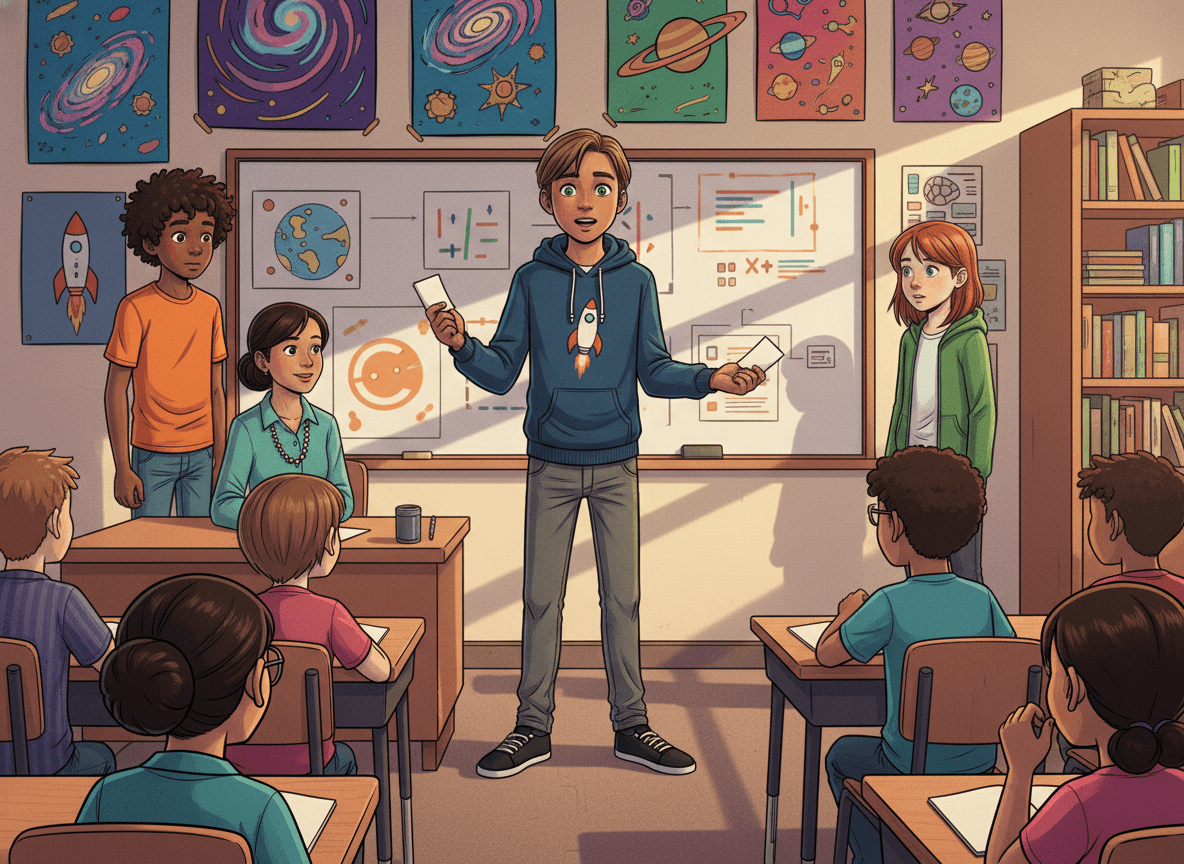
When it's time to present our project, I feel nervous about speaking in front of the class. But I remind myself that Alex and Sam are presenting too—we're doing this together. My part is explaining how coding powers Mars rovers. I've practiced what I want to say, so I know I can do it. I look at my notes, speak clearly, and explain the concepts in a way that makes sense. When I finish, several classmates ask questions. Their questions mean they were listening and interested in what I shared.
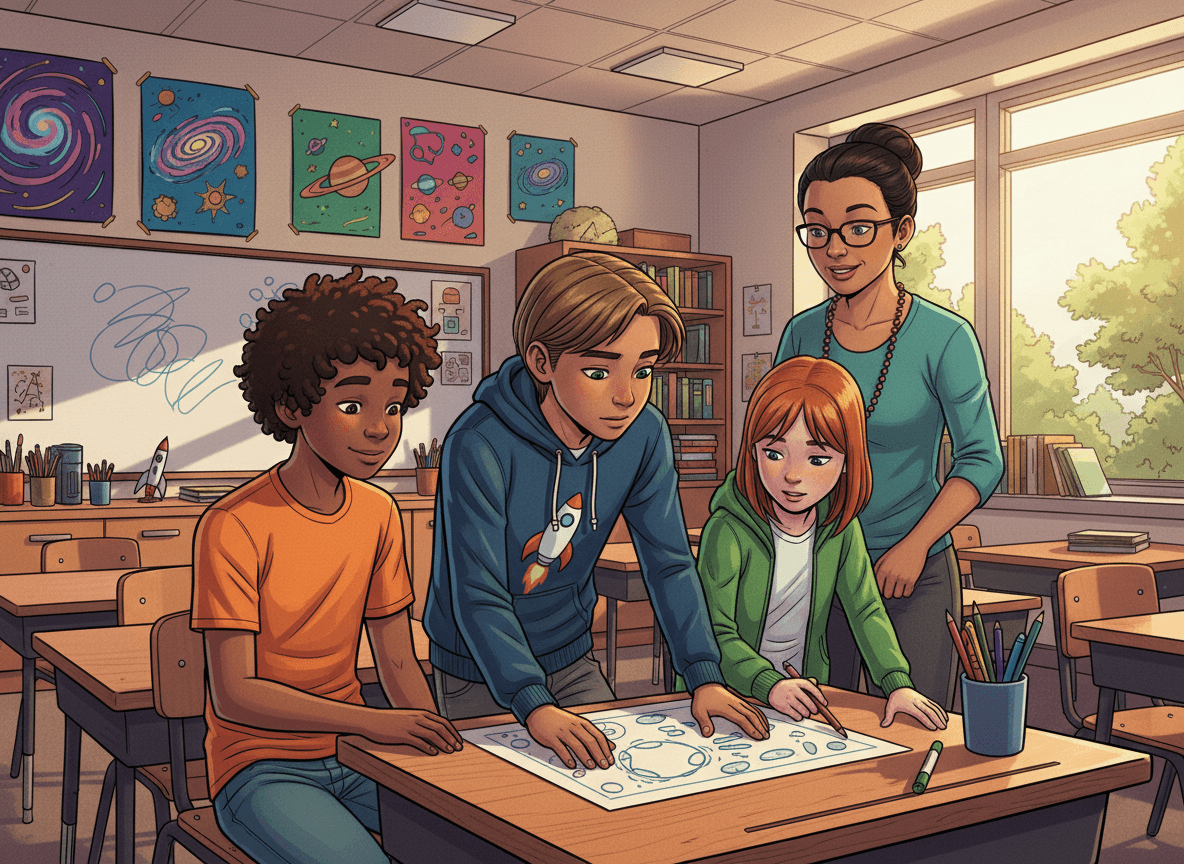
After the presentation, Ms. Chen tells our group we did excellent work. She says the combination of topics—Mars exploration, coding, and how rovers work—was creative and well-researched. She also comments that our presentation showed real teamwork. I realize that the project turned out better because all three of us contributed different ideas and skills. Working together created something none of us could have made alone.
I've learned that group projects work when everyone participates, even if speaking up feels uncomfortable at first. My ideas and skills matter to the group. When I contribute my thoughts, I help make the project better. Sharing tasks based on our strengths makes the work easier and faster. And helping classmates when they need it strengthens our teamwork. Next time we have a group project, I'll remember that working together is often better than working alone.
Social Story Methodology
Why This Story Works
This story normalizes the anxiety that comes with group work—a common challenge for children with autism and anxiety—by showing the exact internal experience (tight stomach, worry about contributing) alongside concrete strategies for moving through it. Carol Gray's methodology shines here: the story walks through the child's perspective moment-by-moment, validates their feelings, and demonstrates that speaking up, even with a quiet voice, leads to positive peer response and belonging. By the end, the child understands that their unique strengths and ideas are genuinely needed, which builds both self-advocacy skills and confidence in collaborative settings.
Story Structure
How It's Written
Sentence Types
Voice & Perspective
Story Structure
Practical Guidance
Ways to Use This Story
Practice Speaking Up First
Identify Their Strength Before the Project
Teach the Analogy Trick for Explaining
Plan Presentation Practice Separately
Celebrate the Quiet Contribution
Want this story made just for your child?
Create a version with your child's name, appearance, and the specific details only they face — in minutes.
from $2.99 · no subscription · pay per story
More School Stories
Free to read and print
Playing at Recess
Aisha joins her classmates on the playground during recess, learning how to play together, take turns, and have fun with friends.

Eating Lunch in the Cafeteria
Amara navigates lunchtime in the school cafeteria, learning about the routine, managing sensory experiences, and discovering she can enjoy her meal with friends and classmates.

Fire Drill at School
Rohan learns what happens during a fire drill at school, understanding the steps and why they're important for keeping everyone safe.