
My Regular Checkup
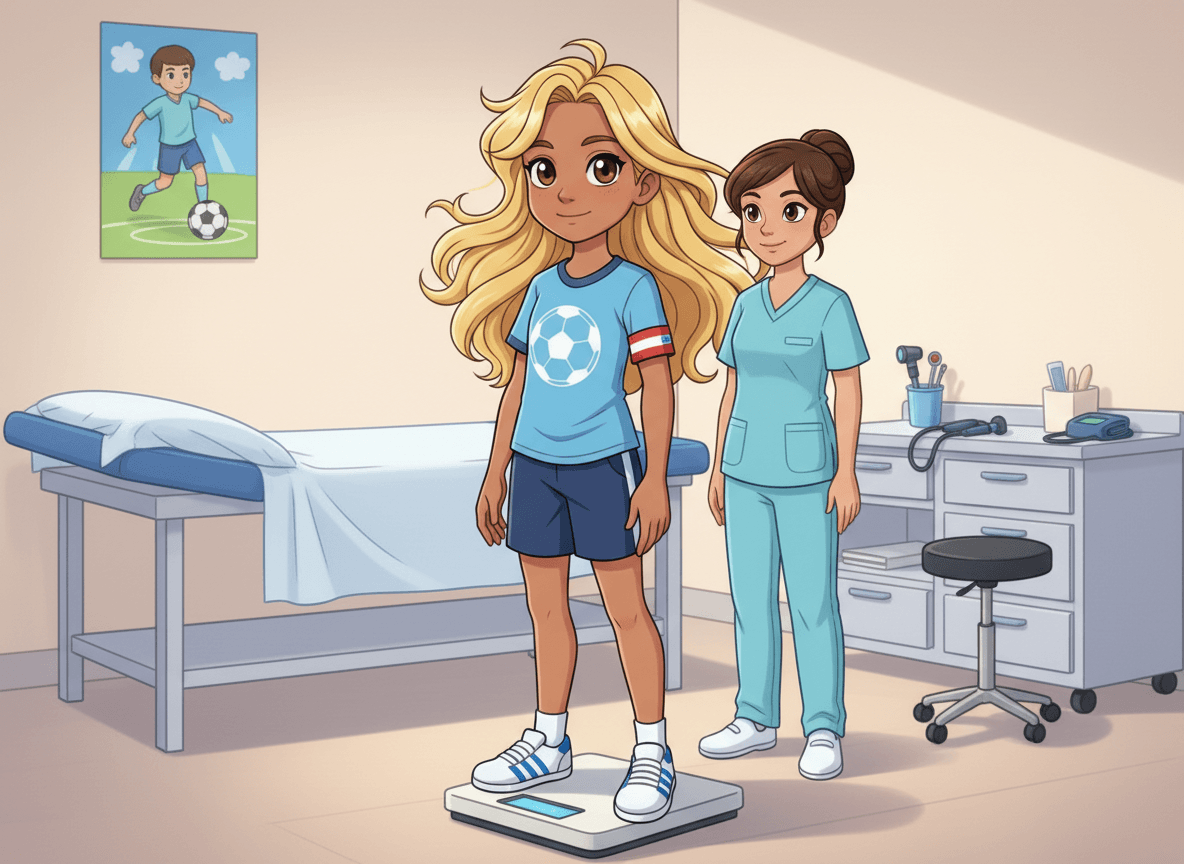
Sophie visits her doctor for a regular checkup. This story helps her understand what happens during a routine medical visit and why doctors check our health.
Free to read and print — no account required








Read the Story
9 pages · 7 min read read
Show text
Read the Story
9 pages · 7 min read read
Today I am visiting my doctor for a regular checkup. Regular checkups help doctors make sure my body is healthy and growing well. My doctor's name is Dr. Martinez, and I've seen her for my checkups many times before. Even though I have been to the doctor before, I sometimes wonder what will happen during my visit.
A medical assistant calls my name and leads me to the examination room. The room is clean and has different tools and equipment on the counter. I can see a poster of a soccer player on the wall, which makes me feel more relaxed. The medical assistant explains that we will measure my height and weight first. Doctors measure these things because they want to see how I am growing and developing.
After measuring my height and weight, the medical assistant takes my blood pressure using a soft cuff around my arm. The cuff gently squeezes for a few seconds, and then it releases. Blood pressure is measured because it shows doctors how well my heart is working and pumping blood throughout my body. The cuff doesn't hurt—it just feels like a gentle squeeze.
Dr. Martinez enters the examination room with a warm smile and greets me. She asks me questions about how I am feeling, how I am doing in school, and how my soccer team is going. These questions help her understand more about my life and how I am doing overall. Doctors ask questions because they care about understanding their patients as whole people, not just checking physical things.
Dr. Martinez uses her stethoscope to listen to my heart and lungs. The stethoscope earpieces are cool when she puts them in her ears, and then she places the round metal part on my chest and back. She is listening to make sure my heart sounds healthy and my lungs are working properly. This helps her check that my breathing and circulation are normal.
Dr. Martinez checks my ears, eyes, and throat using different tools. She looks in my ears with an otoscope, which is a small light tool that helps her see inside. She shines a light in my eyes to check how my pupils respond. She uses a tongue depressor so she can look at my throat and see if it looks healthy. These checks help her notice any problems early.
Dr. Martinez also checks my reflexes by gently tapping my knee and elbow with a small hammer. My leg and arm reflexes happen automatically—I don't have to think about them. Reflexes help doctors make sure my nervous system is working correctly. Sometimes reflexes might make me jump a little, but that is a normal response.
After the examination, Dr. Martinez tells me that everything looks great. My checkup shows that I am healthy and growing well. She compliments my work on keeping active through soccer, which is great for my heart and muscles. Dr. Martinez explains that regular checkups help catch any small health problems before they become bigger issues. This is why visiting the doctor regularly is important.
As I leave the doctor's office, I feel proud that my checkup went smoothly. I understand now that visiting the doctor is not something to worry about—it is a way doctors care for me and help keep me healthy. Regular checkups are an important part of staying strong and feeling my best, especially since I play soccer. I look forward to my next checkup, knowing it will help me continue to be healthy and strong.
Social Story Methodology
Why This Story Works
Regular checkups combine predictable sequences, brief physical sensations, and social interaction in a contained medical setting—all common anxiety triggers for children with autism and ADHD. This story follows Carol Gray's approach by narrating the *why* behind each step (the assistant measures height "to see how I am growing") and emphasizing the doctor's relational warmth, which helps children understand both the sensory experience and the caring intent behind it.
Story Structure
How It's Written
Sentence Types
Voice & Perspective
Story Structure
Practical Guidance
Ways to Use This Story
Take Photos of the Exam Room
Read Before Each Checkup
Use a Visual Schedule for the Visit
Ask the Doctor to Narrate During the Exam
Plan a Calm Activity After the Appointment
Want this story made just for your child?
Create a version with your child's name, appearance, and the specific details only they face — in minutes.
from $2.99 · no subscription · pay per story
More Health & Safety Stories
Free to read and print

Buckle Up for Every Ride
Riley learns why wearing a seatbelt in the car keeps them safe, and discovers that buckling up is a quick, easy habit they can do every time.

Wearing My Mask
Liam learns why masks are important and how wearing one helps keep him and others healthy. Through a concrete scenario with his dad, he discovers that masks are a helpful tool, not something to fear.

My First Swimming Lesson
Priya goes to her first swimming lesson and discovers the pool with the help of her teacher Mr. Park. Through sensory exploration, gentle encouragement, and concrete coping strategies, she learns that the water can be fun and safe.