Getting My Hair Cut
Kai visits the barbershop for a haircut and learns what to expect during the experience. The story follows Kai through each step of the haircut process, with a focus on understanding why haircuts happen and what the barber is doing.
Free to read and print — no account required
Read the Story
7 pages · 6 min read read
Show text
Read the Story
7 pages · 6 min read read
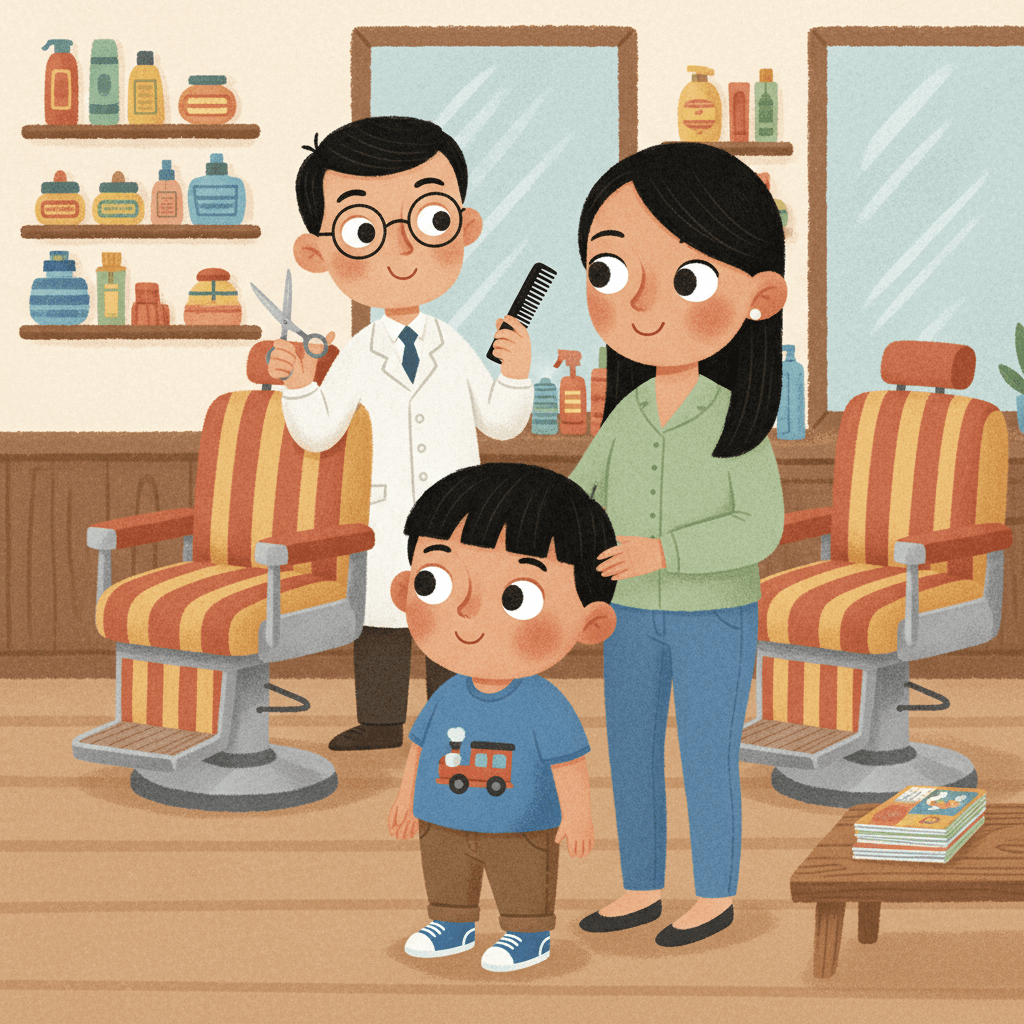
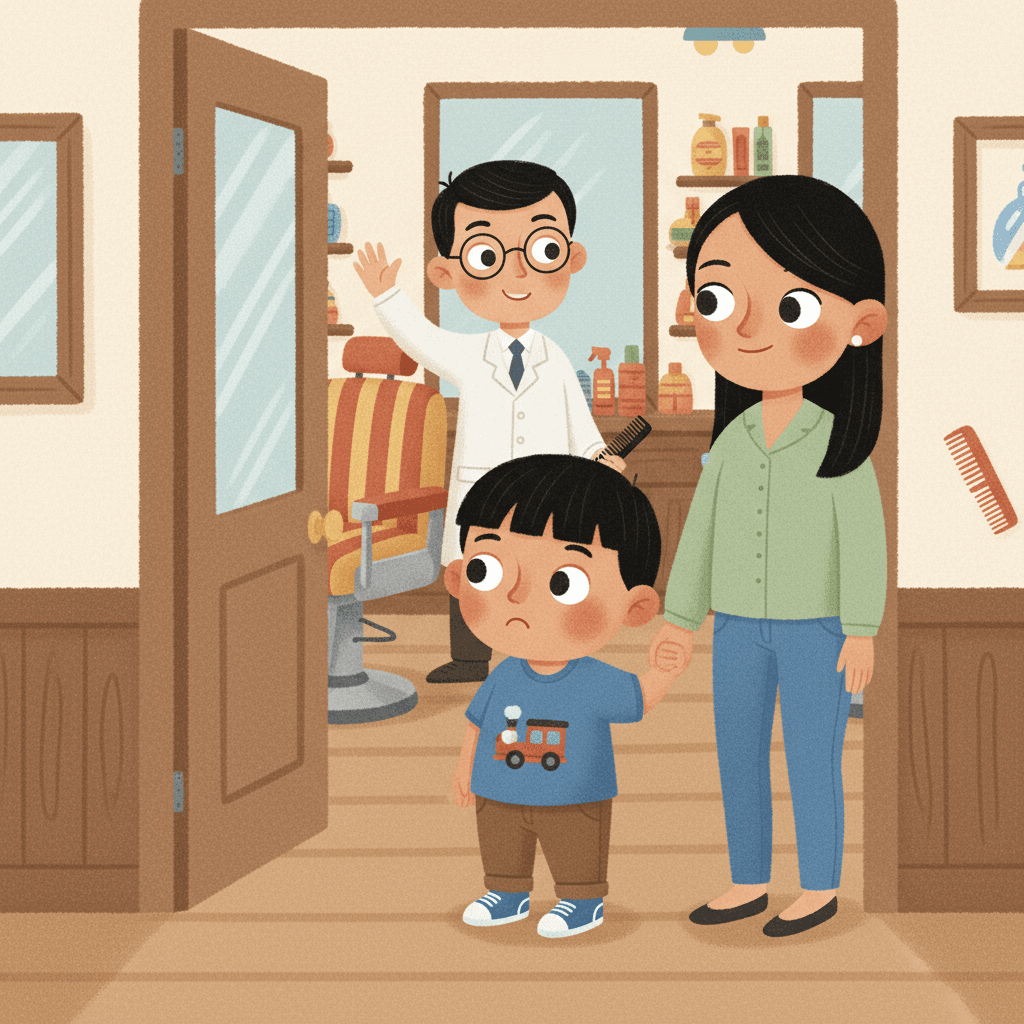
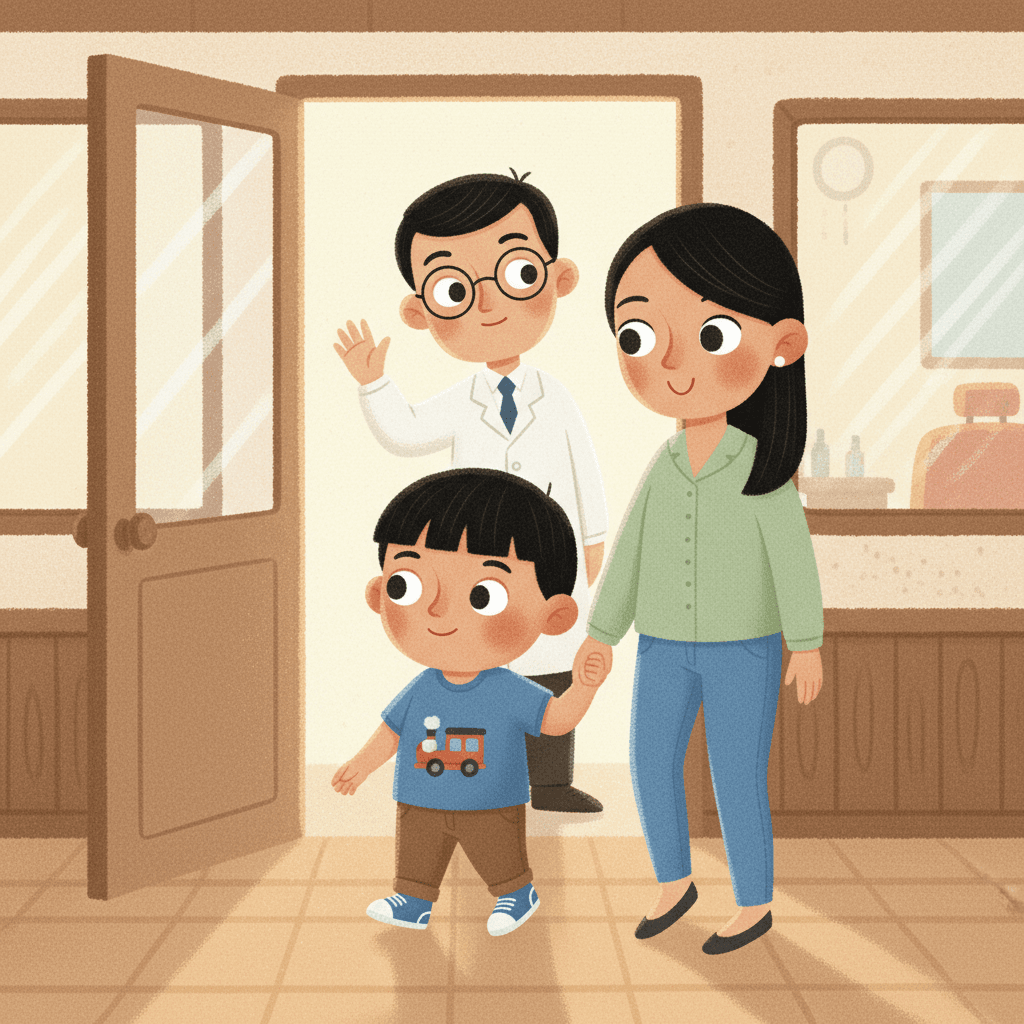
Today Mom and I are going to the barbershop. My hair has grown longer, and it is time for a haircut. Mr. Chen is the barber who cuts hair at this barbershop.
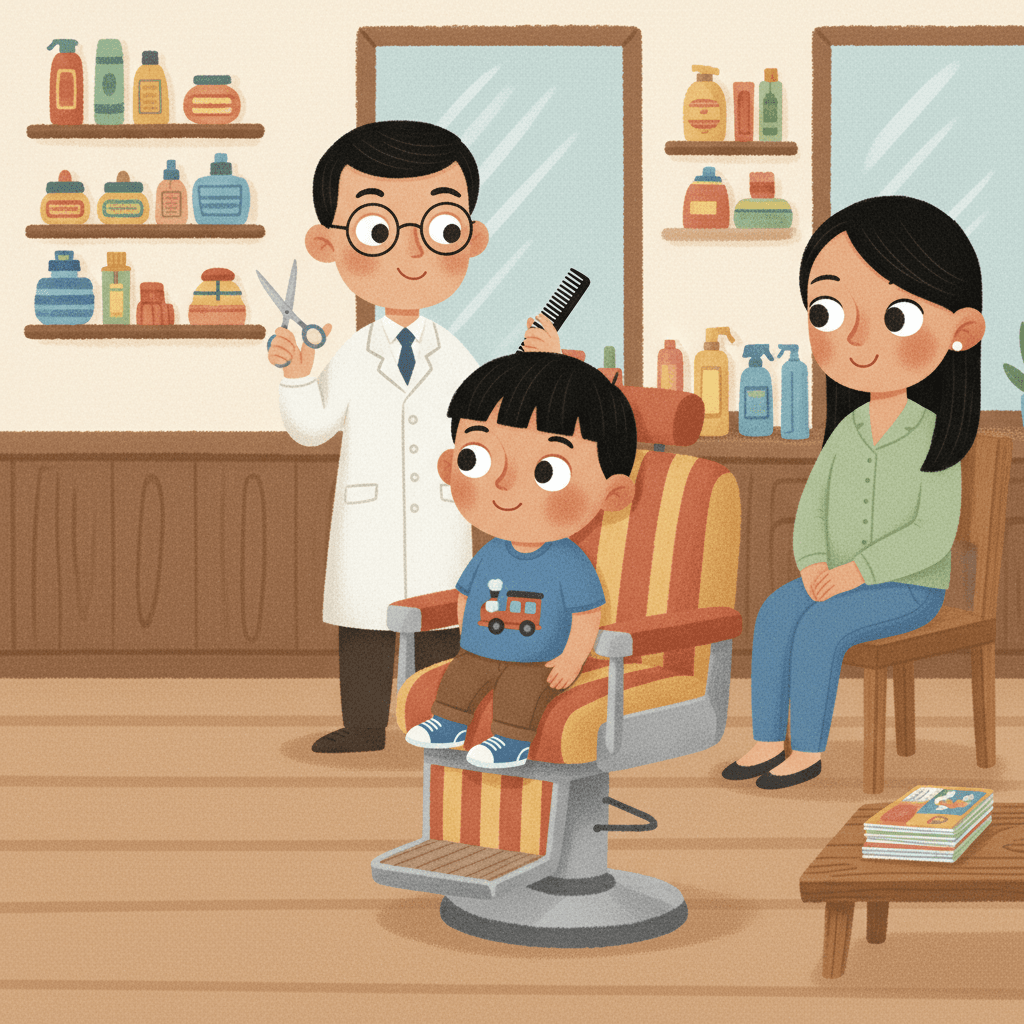
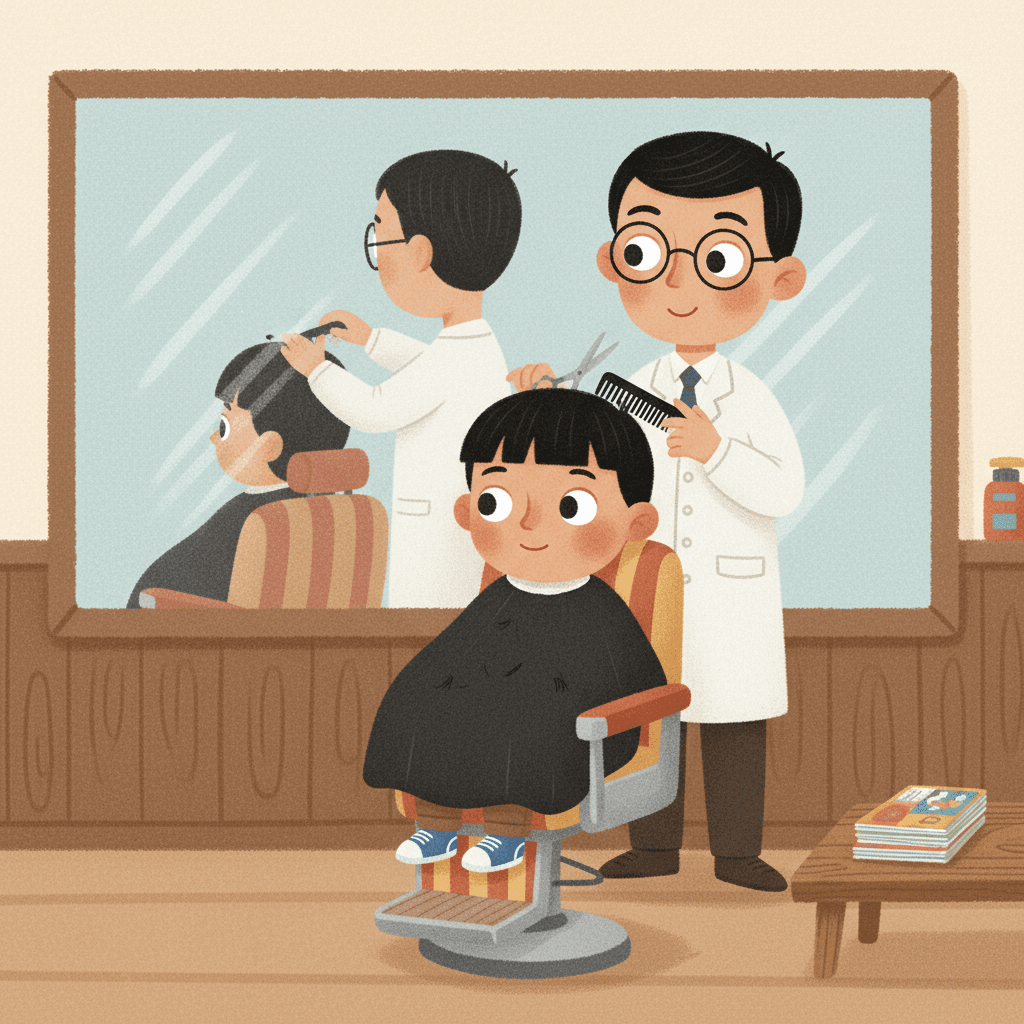
Mr. Chen asks me to sit in the big barber chair. The chair is comfortable and can move up and down. Mom sits nearby so I can see her.
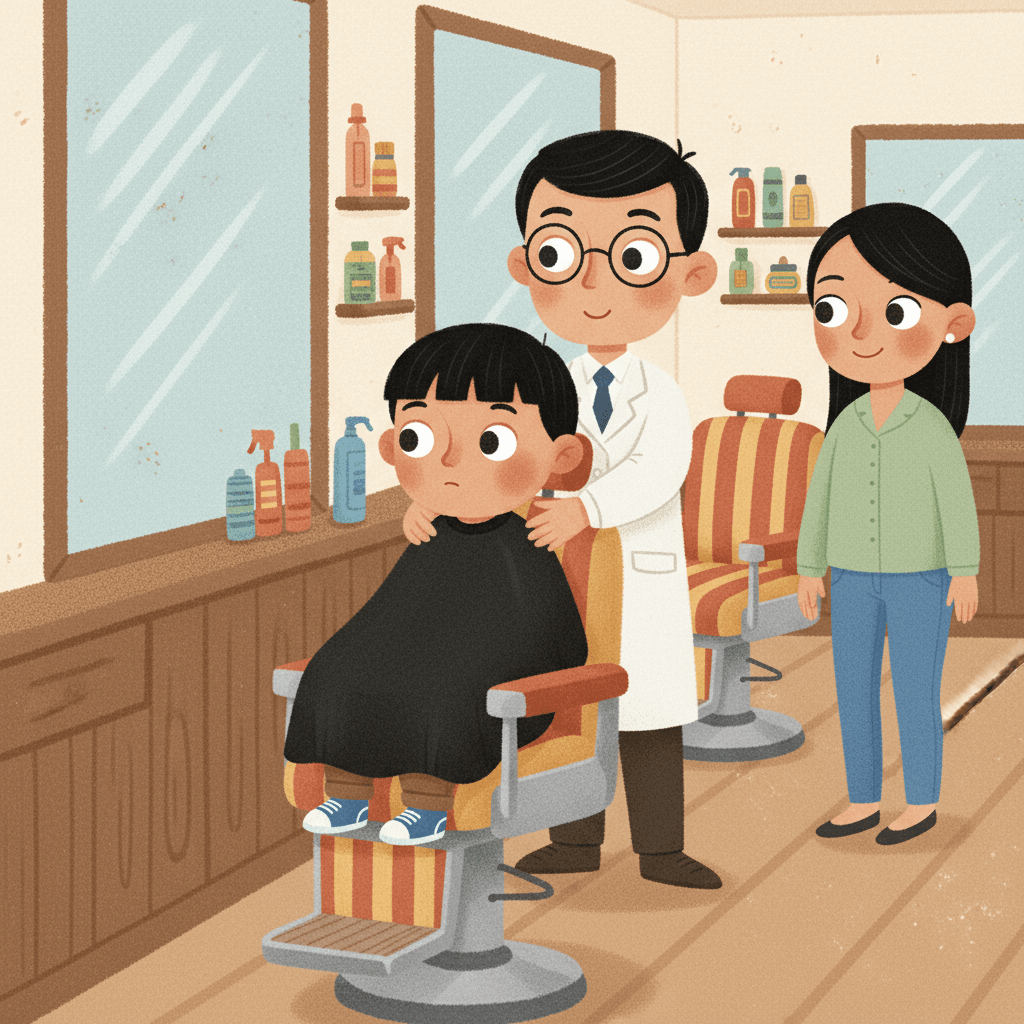
Mr. Chen drapes a cape around my shoulders. The cape is soft and keeps loose hair off my clothes. My hair needs to be cut because it grows and grows. If I don't cut my hair, it will fall in my eyes and block my view.
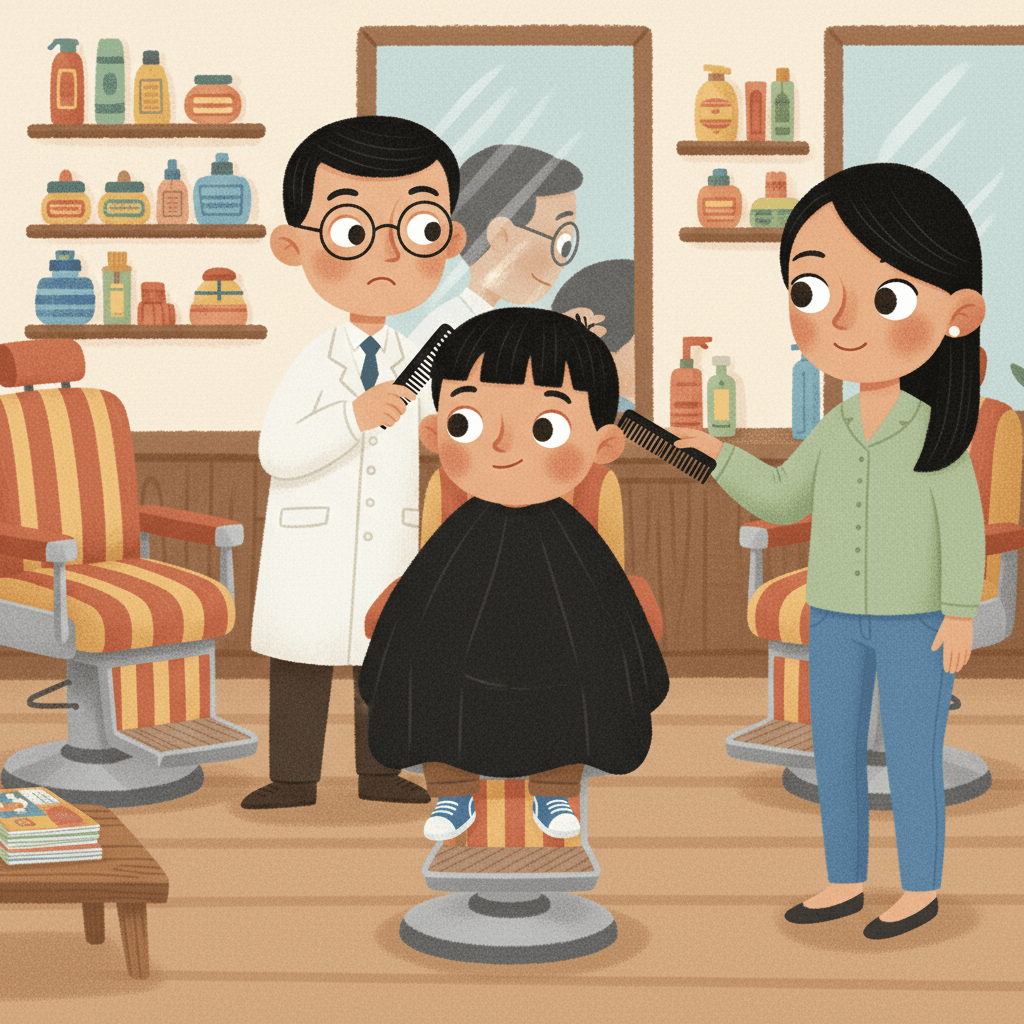
Mr. Chen uses scissors to cut my hair. The scissors go snip, snip, snip. He cuts my hair because short hair does not tickle my neck or fall in my eyes. If my hair gets too long, it can feel itchy on my skin. When I feel the scissors near my head, I can squeeze my hands together for 3 seconds, then let go slowly. This helps me stay calm.
Mr. Chen uses a comb to make my hair neat. He brushes it gently so it looks nice and even. The comb feels smooth on my head. My new haircut helps me see better because hair is not in my eyes anymore.
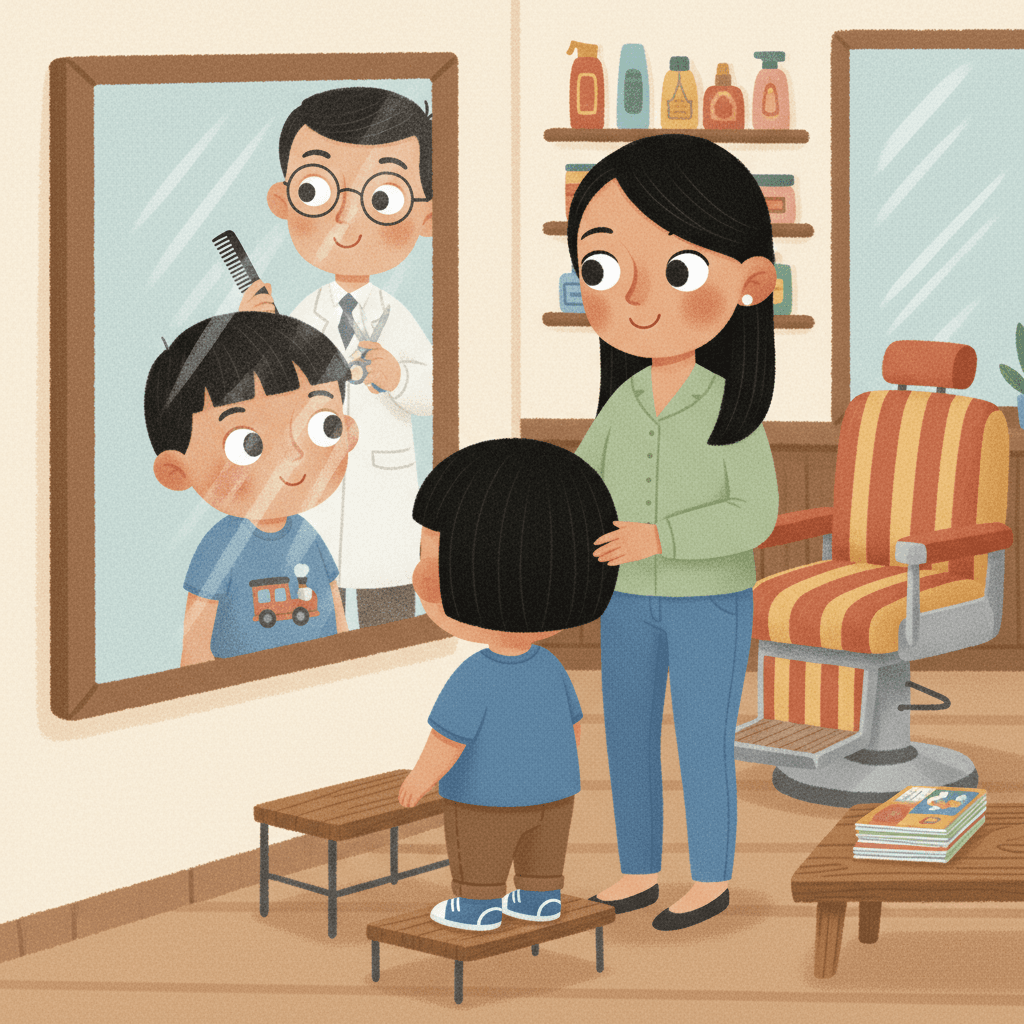
Mr. Chen removes the cape and shows me my new haircut in the mirror. My hair looks short and neat. Mom and I thank Mr. Chen for the good haircut.
Getting a haircut is something many people do. My hair will grow again, and I can come back to Mr. Chen another time. I did a good job sitting still today.
Social Story Methodology
Why This Story Works
Getting a haircut combines sensory unpredictability (scissors sounds, cape texture, unfamiliar touch) with a confined space and stranger interaction—a perfect storm for anxiety. This story uses Carol Gray's descriptive and perspective-taking approach to demystify each step, normalize the sensations, and teach a concrete coping strategy (the 3-second hand squeeze) that your child can use when anxiety rises. By naming what happens and why it happens, the story transforms an overwhelming experience into a predictable sequence.
Story Structure
How It's Written
Sentence Types
Voice & Perspective
Story Structure
Practical Guidance
Ways to Use This Story
Visit the Barbershop First
Practice the Hand-Squeeze Technique
Read Before and After
Take a Photo of the New Haircut
Praise Effort, Not Just Behavior
Want this story made just for your child?
Create a version with your child's name, appearance, and the specific details only they face — in minutes.
from $2.99 · no subscription · pay per story
More Health & Safety Stories
Free to read and print

Buckle Up for Every Ride
Riley learns why wearing a seatbelt in the car keeps them safe, and discovers that buckling up is a quick, easy habit they can do every time.
Wearing My Mask
Liam learns why masks are important and how wearing one helps keep him and others healthy. Through a concrete scenario with his dad, he discovers that masks are a helpful tool, not something to fear.

My First Swimming Lesson
Priya goes to her first swimming lesson and discovers the pool with the help of her teacher Mr. Park. Through sensory exploration, gentle encouragement, and concrete coping strategies, she learns that the water can be fun and safe.