
My Bedtime Routine
Aisha learns why a consistent bedtime routine helps her sleep better and feel more energized for the activities she loves. The story explains the science behind sleep and provides concrete strategies for winding down each night.
Free to read and print — no account required








Read the Story
10 pages · 8 min read read
Show text
Read the Story
10 pages · 8 min read read
My name is Aisha, and I love learning about space and the stars. I also love coding and reading graphic novels on my computer. But sometimes I stay up too late doing things I enjoy, and then I feel tired the next day. I've noticed that when I'm tired, it's harder to focus on what matters to me. So I decided to create a bedtime routine to help me get better sleep.
My brain is like a powerful computer that's been running programs all day. When bedtime comes, my brain needs time to shut down the active programs and rest. If I try to sleep while my brain is still running at full speed, it takes much longer to fall asleep. This is why I have a routine—it's like a shutdown sequence that helps my brain get ready to power down.
Step one of my routine happens one hour before bed. I stop using screens—my laptop, phone, and tablet. Screen light tells my brain to stay awake because it looks like sunlight. When I stop looking at screens, my brain begins to understand that nighttime is coming. I find other activities instead, like reading a graphic novel or looking at a print book about space.
Step two of my routine is getting my body ready. About 30 minutes before bed, I take a warm shower or bath. Warm water helps my muscles relax and my body temperature drop. When my body temperature drops, my brain recognizes it as a signal to sleep. I enjoy this time because the warm water feels calming, and I can think about interesting things like space exploration.
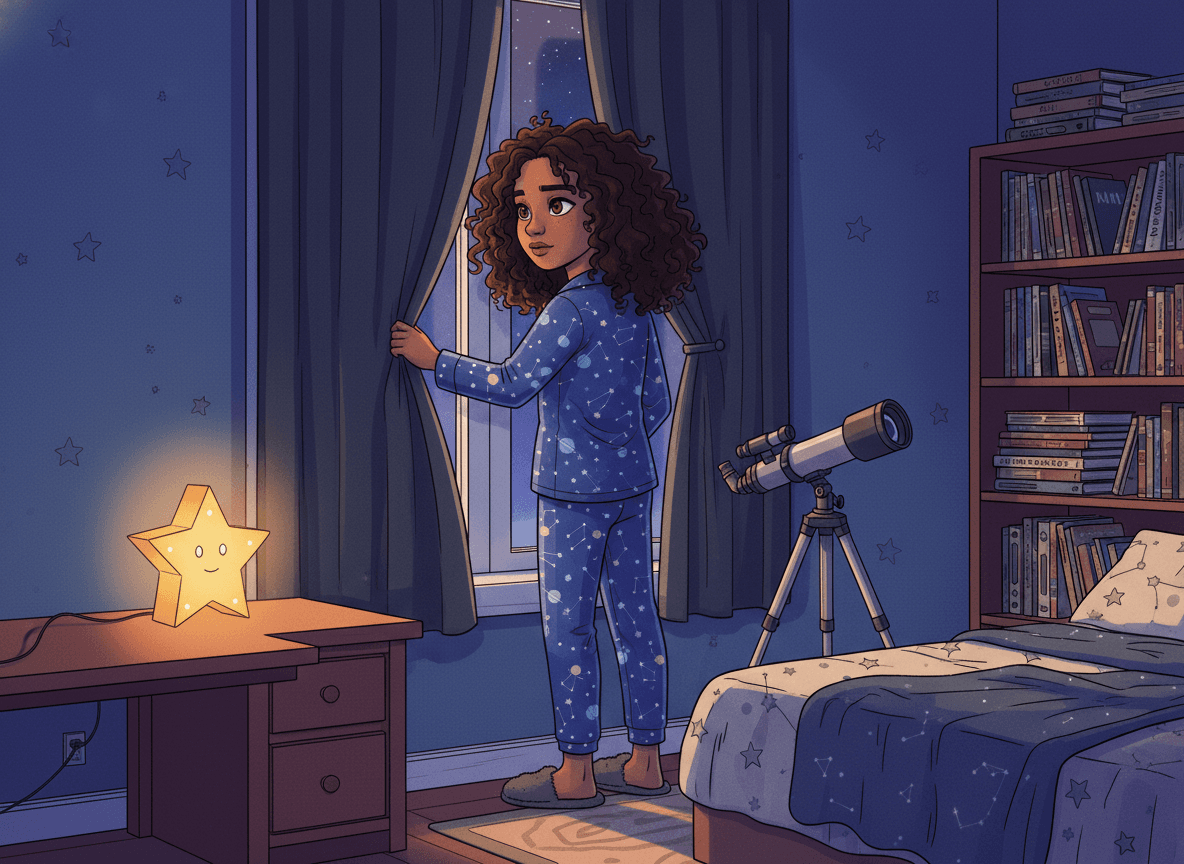
Step three of my routine is preparing my bedroom environment. A good sleep environment is dark, cool, and quiet. I close my curtains to block out light from outside, which helps my brain produce melatonin—the chemical that makes us feel sleepy. I keep my room temperature a little bit cool, around 65 to 68 degrees. A dark, cool room is like the perfect space for my brain to rest.
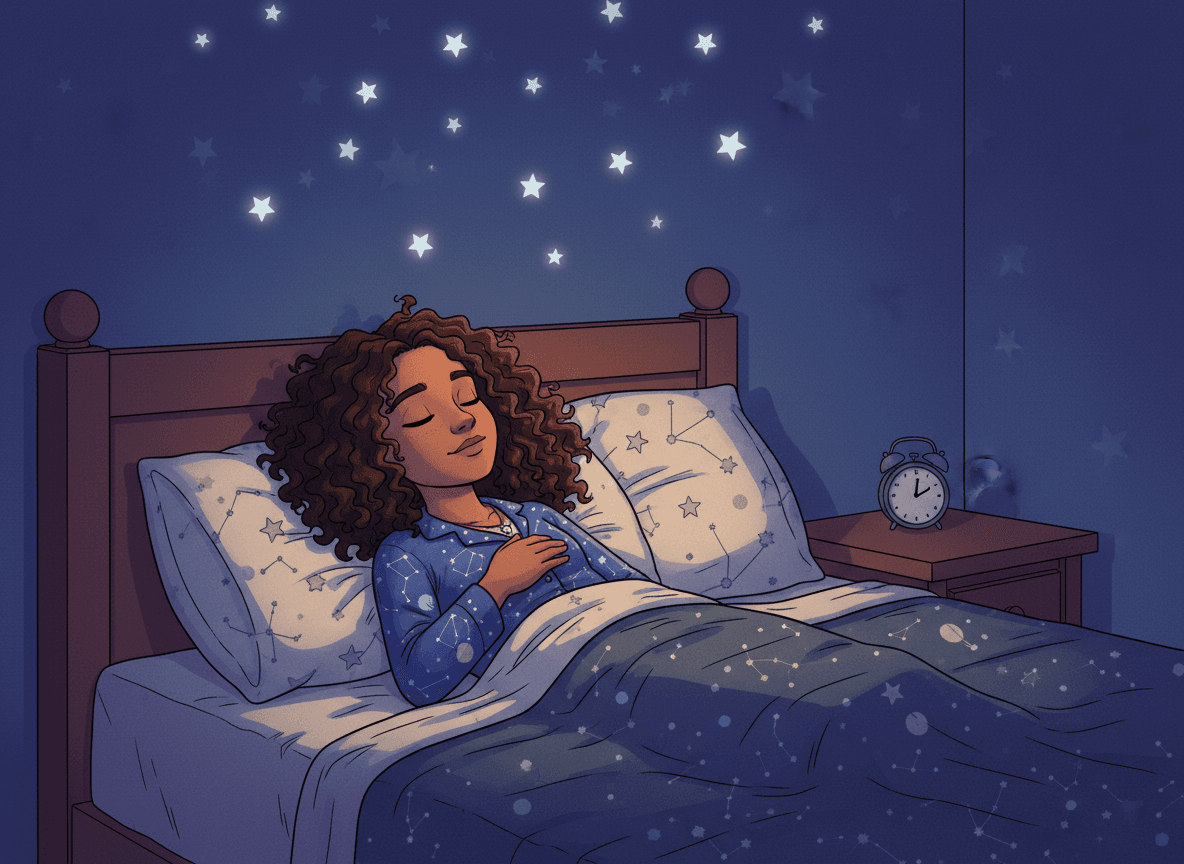
Step four is my wind-down activity. I spend 15 to 20 minutes doing something calm and quiet. Sometimes I read my graphic novels, sometimes I journal about things I learned that day, or sometimes I simply lie in bed and look at my glow-in-the-dark star stickers on my ceiling. These activities keep my mind engaged but peaceful, not active or stressful.
Step five is what I call my 'brain calm' time. I lie down, close my eyes, and practice a simple breathing pattern. I breathe in slowly through my nose for 4 counts, hold the breath for 4 counts, then breathe out slowly through my mouth for 4 counts. I repeat this 10 times. This breathing pattern slows my heart rate and tells my nervous system that it's safe to rest.
When I follow my bedtime routine every night, I notice real changes. I fall asleep faster—usually within 10 to 15 minutes instead of lying awake for an hour. I sleep more deeply, which means I wake up fewer times during the night. Most importantly, I feel more energized and focused during the day. My brain works better for coding, volleyball, and learning about astronomy when it's had enough rest.
I understand now that sleep isn't lazy or boring—it's actually when my brain does important work. While I sleep, my brain processes everything I learned that day, stores memories, and fixes things that are worn out. Sleep makes me better at everything I care about. My bedtime routine has become something I look forward to, because I know it helps me wake up as my best self.
My bedtime routine is something I've created for myself, and I'm proud of it. When I stick to my routine, I feel better, think more clearly, and have more energy for the things I love—like exploring the mysteries of space, writing code, and spending time with people I care about. Getting enough sleep is one of the best things I can do for myself.
Social Story Methodology
Why This Story Works
This story transforms bedtime from an abstract demand into a logical, step-by-step shutdown sequence that mirrors how Aisha's brain actually works—a framework that resonates deeply with children who think in systems and need concrete reasons for transitions. By connecting each routine step to specific neurological outcomes (screens suppress melatonin, warm water lowers body temperature, breathing slows the nervous system), the story validates the child's need for predictability while teaching self-advocacy through understanding. Carol Gray's methodology shines here: the story uses Aisha as a relatable peer narrator who discovered the routine herself, modeling how children can become architects of their own coping strategies rather than passive recipients of adult rules.
Story Structure
How It's Written
Sentence Types
Voice & Perspective
Story Structure
Practical Guidance
Ways to Use This Story
Post the Five-Step Timeline
Explore the Brain Shutdown Metaphor Together
Customize Wind-Down Activities
Practice the Breathing Technique During the Day
Track Energy and Focus as Evidence
Want this story made just for your child?
Create a version with your child's name, appearance, and the specific details only they face — in minutes.
from $2.99 · no subscription · pay per story
More Daily Routines Stories
Free to read and print
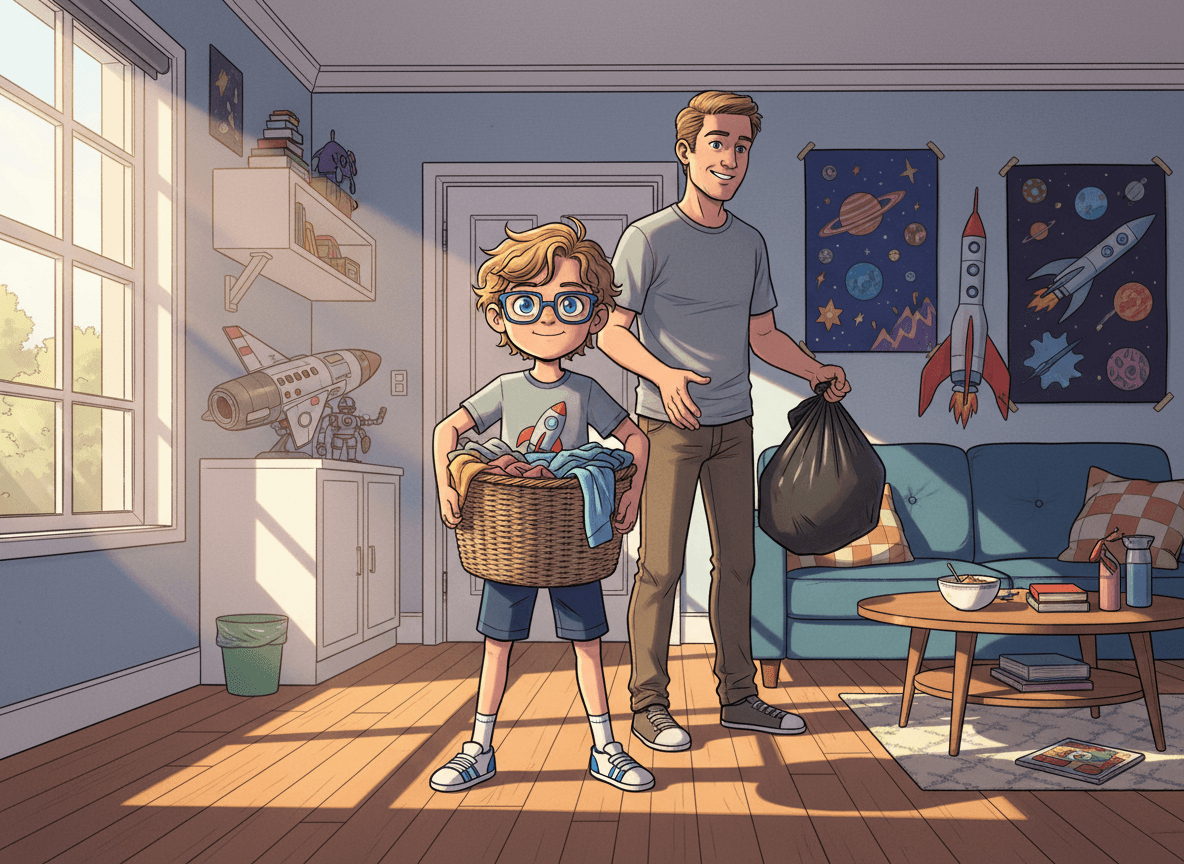
Helping Dad With Chores
Liam learns why helping with household chores matters and discovers how his contributions make a real difference to his family. Through a specific Saturday morning scenario, he sees the connection between his actions and the comfort of his home, and learns a coping strategy to manage frustration.
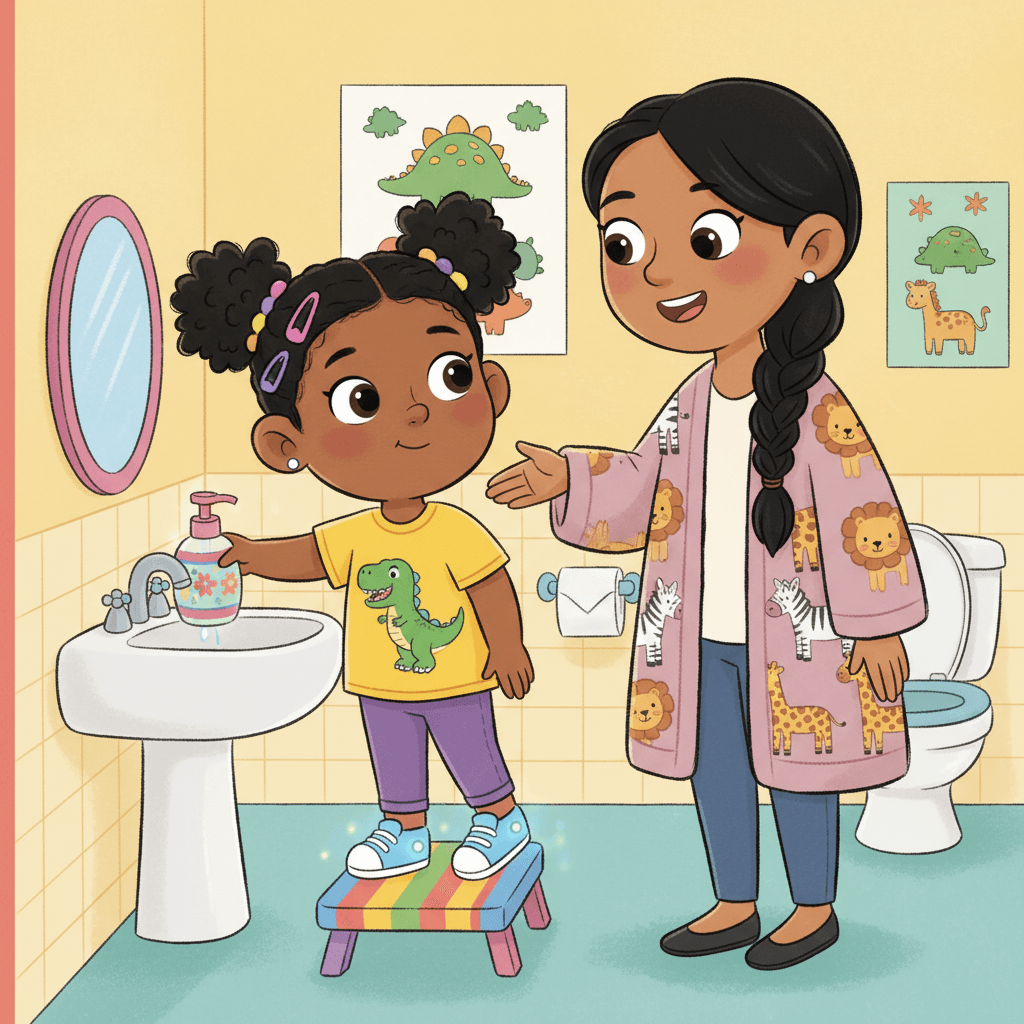
Using the Bathroom at Preschool
Aisha learns the steps for using the bathroom independently at preschool, with support from her teacher Ms. Rodriguez. This story helps her understand the routine and build confidence.

Trying New Foods with Aisha
Aisha discovers that trying new foods can be an adventure, with support from Mama. This story helps children understand why we try new foods and gives them strategies to feel brave during mealtime.